
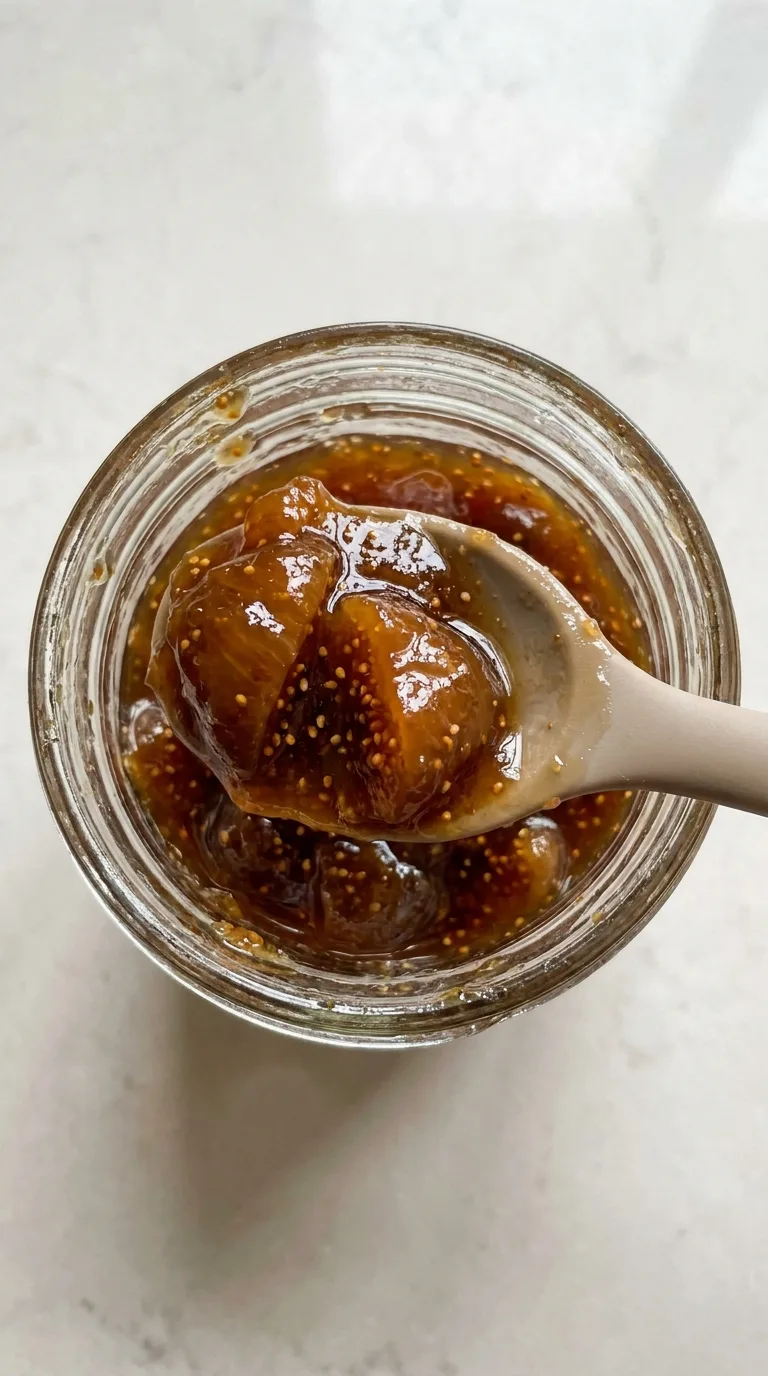
Fig Preserves are made by gently simmering fresh figs with sugar, lemon juice, and a little water until the fruit becomes tender and the syrup thickens into a glossy, spoonable preserve. The figs stay in noticeable pieces, giving the finished preserve a soft, jammy texture with a sweet-tart flavor.
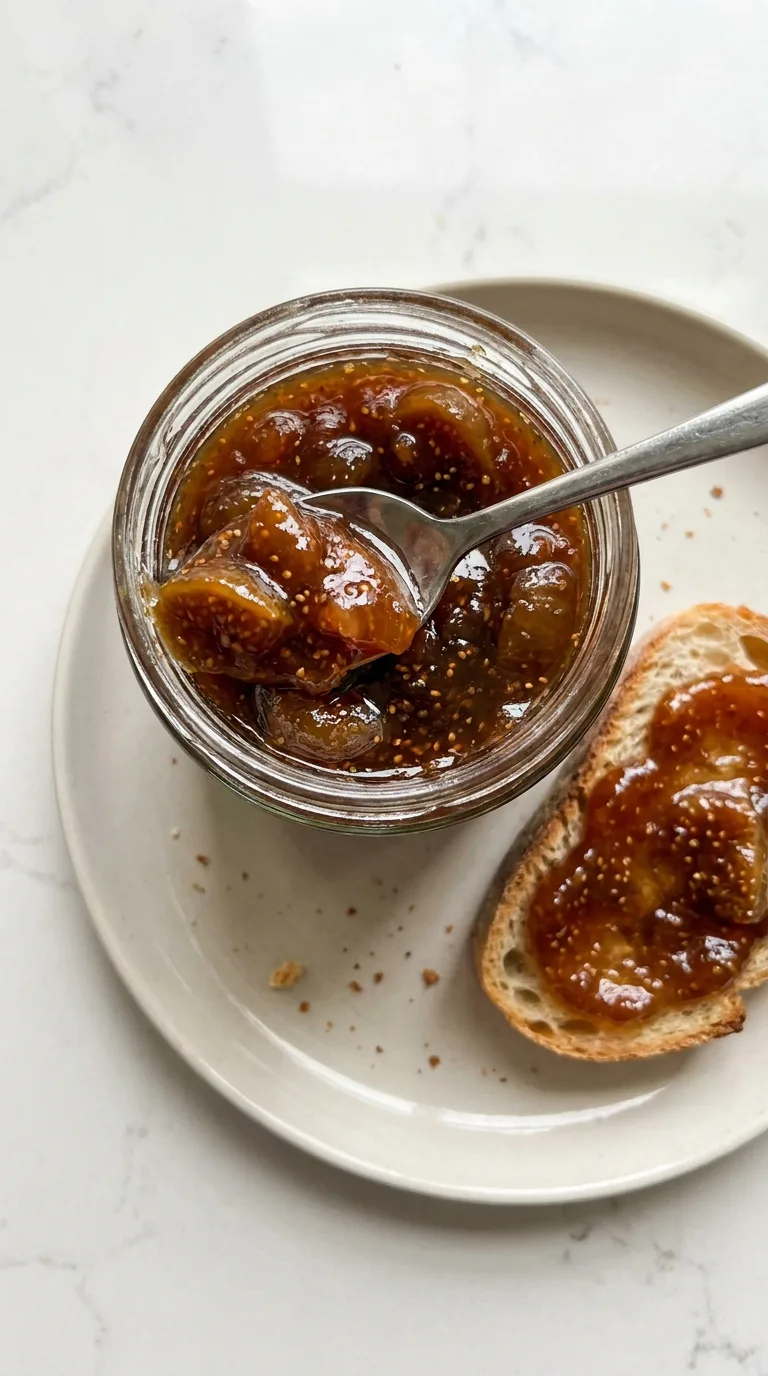
This small-batch method keeps the ingredient list simple and lets the natural flavor of the figs stand out. Serve it with toast, biscuits, pancakes, or a cheese board, or spoon it over yogurt and oatmeal for an easy breakfast topping.
Why This Recipe Works
- Fresh figs are cooked gently: Moderate heat softens the fruit without completely breaking it apart, so the finished preserve has distinct pieces of fig.
- Sugar creates the syrup: As the sugar dissolves and water evaporates, it concentrates into a thick, glossy coating around the fruit.
- Lemon juice balances the sweetness: The acidity keeps the preserve from tasting flat while complementing the figs' natural honey-like flavor.
- A resting period improves the texture: Allowing the preserves to cool and sit overnight gives the syrup time to thicken and the fruit time to absorb more flavor.
- Small-batch cooking is easier to control: A moderate quantity makes it simpler to monitor the syrup as it reduces and avoid scorching.
Equipment Needed
- Large, heavy-bottomed saucepan or Dutch oven, at least 3-quart capacity
- Wooden spoon or heat-resistant spatula
- Ladle
- Clean 8-ounce (240 ml) jars or containers for refrigerator storage
- Canning jars and water-bath canning equipment, if preserving for shelf storage
Ingredients List
- 2 pounds fresh ripe figs (900 g), stems trimmed and figs quartered
- 1 1/2 cups granulated sugar (300 g)
- 1/4 cup fresh lemon juice (60 ml), from about 1 to 2 lemons
- 1/2 cup water (120 ml)
- 1 teaspoon finely grated lemon zest (2 g), from 1 lemon
- 1/4 teaspoon kosher salt (1.5 g)
Ingredient Notes and Substitutions
- Fresh figs: Choose ripe but not mushy figs. Black Mission, Brown Turkey, and other sweet fresh figs work well. The variety can change the color and flavor of the finished preserve.
- Granulated sugar: Sugar provides sweetness and helps create the thick syrup. Reducing the sugar substantially can produce a thinner, less stable preserve, so it is not a recommended substitution for this formula.
- Lemon juice: Fresh lemon juice adds acidity and balances the sweetness. Bottled lemon juice can be used in the same quantity, although fresh lemon generally gives a brighter flavor.
- Lemon zest: Zest adds concentrated citrus aroma without adding much liquid. It can be omitted if necessary, but the preserve will have a simpler flavor.
- Kosher salt: A small amount enhances the fruit and balances the sweetness. Fine sea salt can replace it; use slightly less if measuring by volume because salt crystals vary in size.
Step-by-Step Instructions
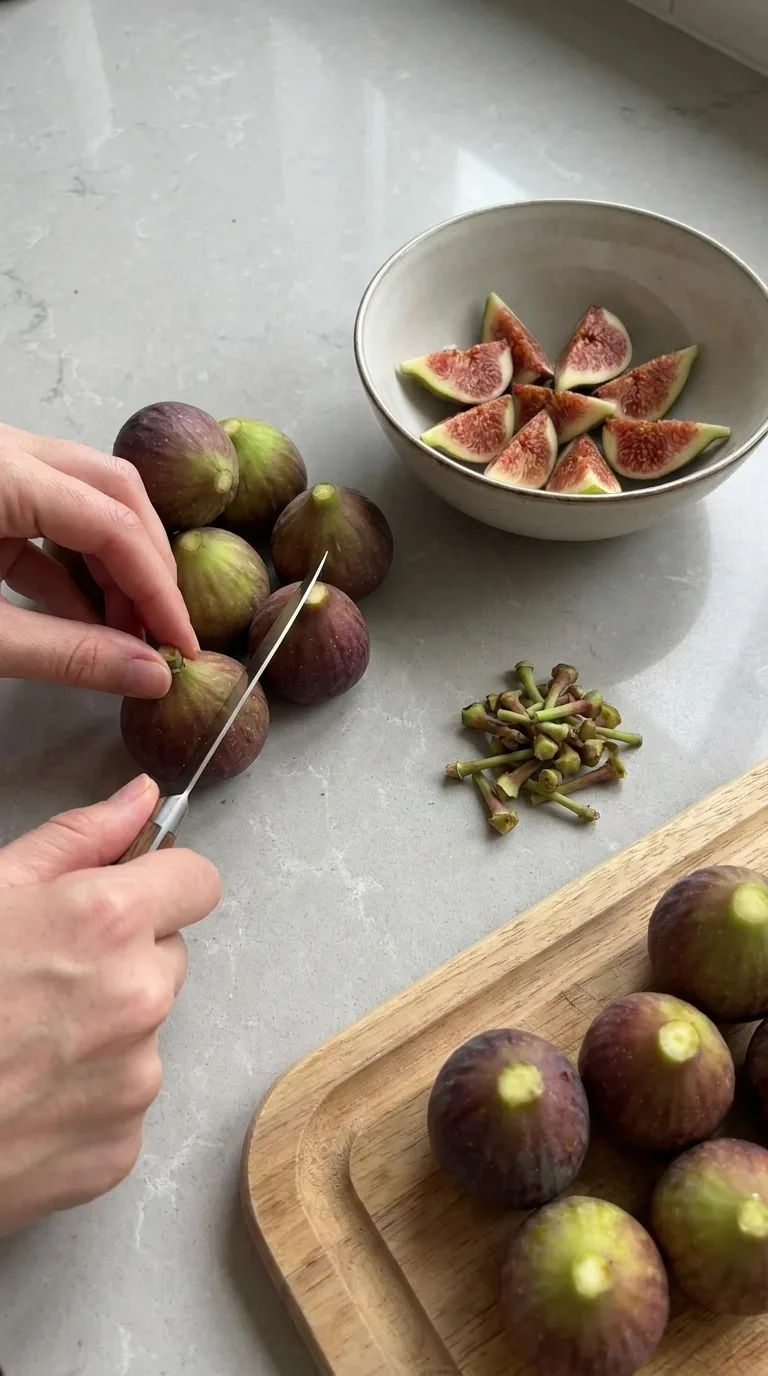
Step 1: Prepare the figs.
Trim the stems from the figs and quarter them. If the figs are particularly large, cut them into smaller pieces so they cook at a similar rate. There is no need to peel ripe figs.
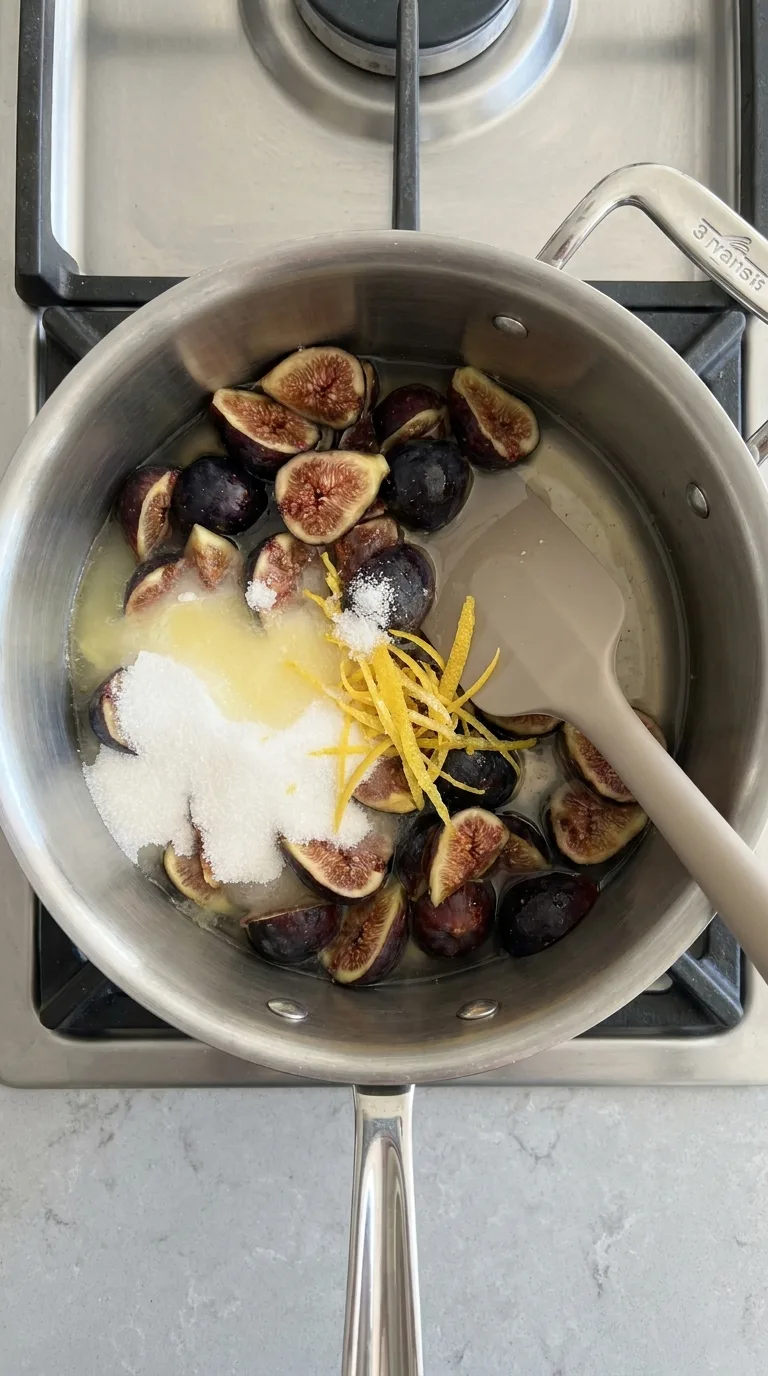
Step 2: Combine the ingredients.
Place the figs, sugar, lemon juice, water, lemon zest, and kosher salt in a heavy-bottomed 3-quart saucepan. Stir gently until the figs are evenly coated with the sugar mixture.
Step 3: Let the fruit macerate.
Cover the saucepan and let the figs stand at room temperature for 30 minutes. This allows the sugar to begin drawing moisture from the fruit and reduces the amount of liquid needed during cooking.
Step 4: Bring the mixture to a simmer.
Place the saucepan over medium heat. Stir occasionally until the sugar has dissolved and the liquid begins to simmer. Once bubbling, reduce the heat to medium-low.
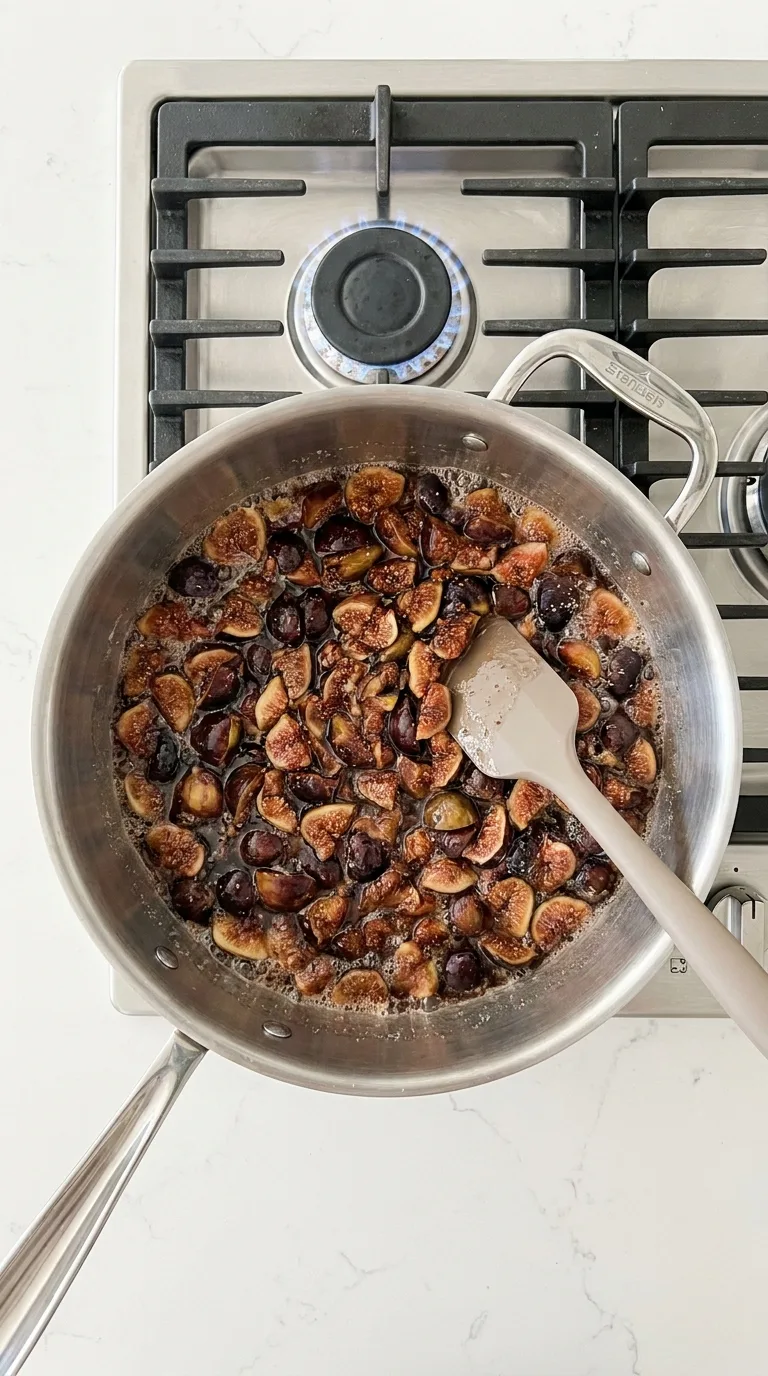
Step 5: Cook the figs gently.
Simmer uncovered for about 35 to 45 minutes, stirring every few minutes to prevent sticking. The figs should become tender and glossy while the syrup gradually thickens.
Step 6: Watch the syrup carefully.
Toward the end of cooking, stir more frequently. The preserve is ready when the syrup coats a spoon and slowly runs off rather than flowing like water. Do not cook until it looks completely dry; it will thicken considerably as it cools.
Step 7: Check the consistency.
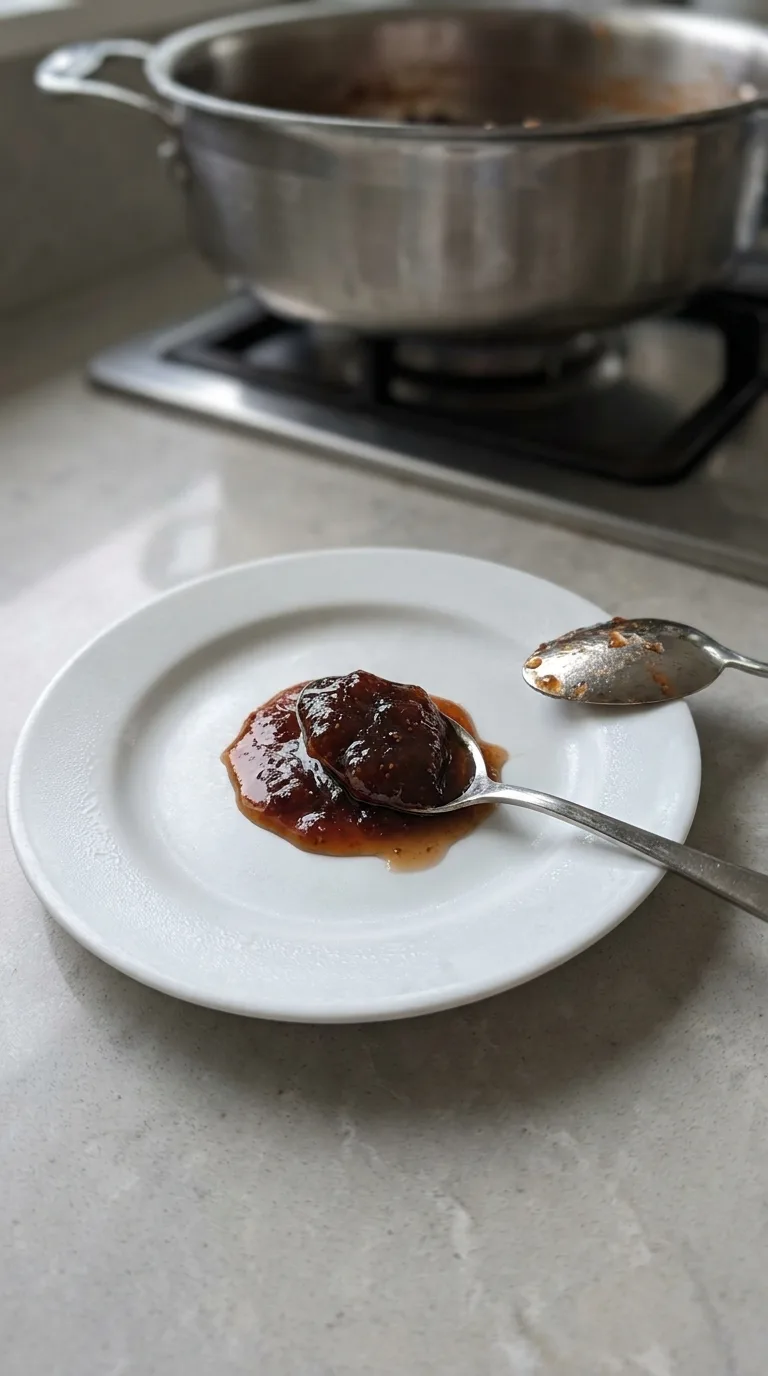
For a quick test, place a small spoonful on a chilled plate and let it sit for 30 seconds. Tilt the plate. The preserve should move slowly and remain somewhat mound-like rather than running freely. If it is very thin, continue cooking for another 3 to 5 minutes and test again.
Step 8: Cool the preserves.
Remove the saucepan from the heat and let the preserves cool for about 30 minutes. Transfer to clean containers, leaving the preserves uncovered until they have cooled enough to avoid trapping excess condensation.
Step 9: Chill and set.
Cover the containers and refrigerate the preserves for at least 12 hours. The syrup will become thicker and more jam-like as it chills.
Step 10: Serve.
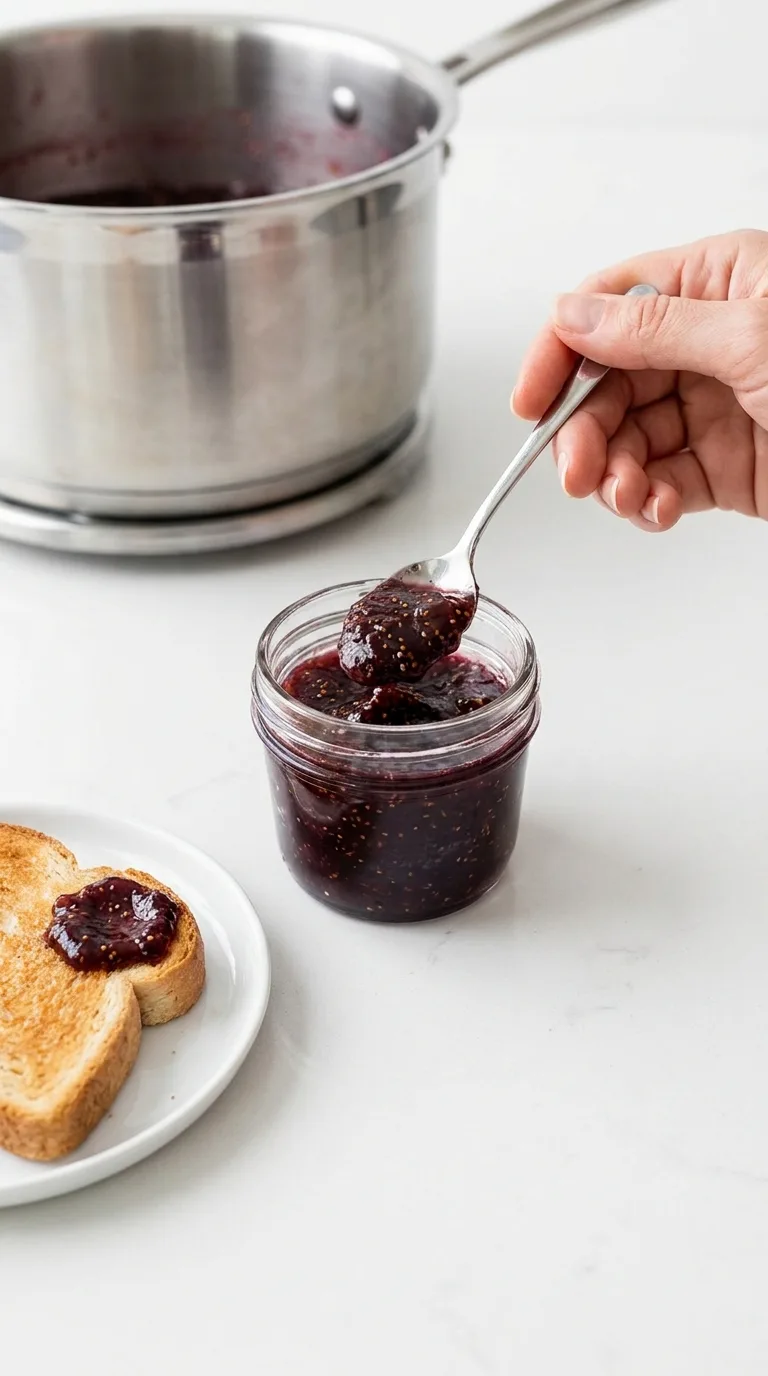
Bring the desired amount to room temperature for easier spreading, or serve chilled. Spoon the preserves over toast, biscuits, yogurt, oatmeal, or cheese as desired.
Storage, Freezing, and Make-Ahead Instructions
- For refrigerator storage, transfer the cooled preserves to clean airtight jars or containers and refrigerate for up to 3 weeks. Always use a clean spoon when serving to reduce the chance of contamination.
- The preserves can be frozen in freezer-safe containers for up to 6 months. Leave about 1/2 inch (1.3 cm) of headspace to allow for expansion. Thaw overnight in the refrigerator and stir before serving.
- For make-ahead preparation, the preserves are well suited to being made a day or two before serving. The flavor and texture develop as the figs sit in the syrup.
- If you want shelf-stable preserves, use a tested water-bath canning recipe and follow current USDA or National Center for Home Food Preservation processing guidance. Do not assume this refrigerator-preserve formula has been validated for shelf-stable canning.
FAQ
Can I use dried figs instead of fresh figs?
This recipe is designed for fresh figs, so dried figs are not a direct substitute. Dried figs contain much less water and would require a different liquid balance and cooking method.
Why are my fig preserves too runny?
The syrup may not have reduced enough. Return the preserves to a saucepan and simmer gently for a few minutes, then test a small spoonful on a chilled plate. Remember that the preserves will also thicken after refrigeration.
Can I reduce the amount of sugar?
A substantial reduction is not recommended because sugar affects both the consistency and preservation qualities of the finished product. For a less-sweet preserve, it is better to use a tested recipe formulated with a lower sugar level.
Do I need to peel the figs?
No. The skins of ripe figs are edible and soften during cooking. Keeping them on also helps preserve the fruit's color and texture.
Can I make these preserves with frozen figs?
Yes, but thaw the figs first and drain away excess liquid. Because frozen fruit can release more water, the cooking time may need to increase slightly to reach the same syrup consistency.
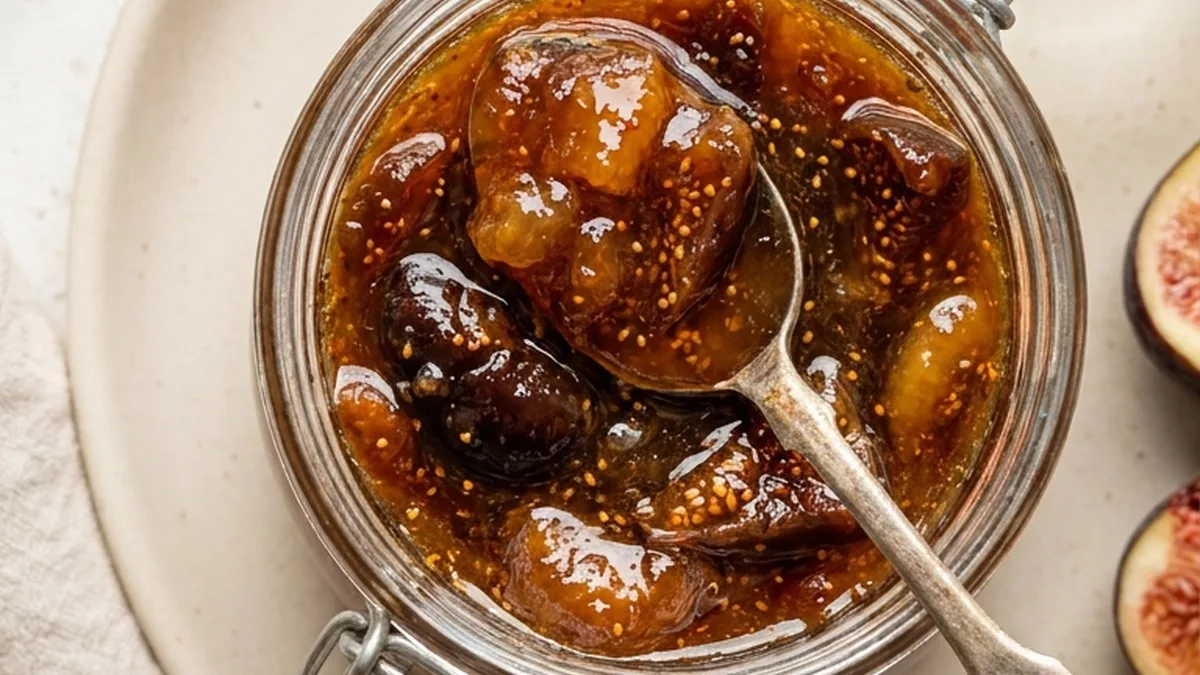
Fig Preserves
Ingredients
Method
- Prepare the figs: Trim the stems from the figs and quarter them. If the figs are particularly large, cut them into smaller pieces so they cook at a similar rate. There is no need to peel ripe figs.
- Combine the ingredients: Place the figs, sugar, lemon juice, water, lemon zest, and kosher salt in a heavy-bottomed 3-quart saucepan. Stir gently until the figs are evenly coated with the sugar mixture.
- Let the fruit macerate: Cover the saucepan and let the figs stand at room temperature for 30 minutes. This allows the sugar to begin drawing moisture from the fruit and reduces the amount of liquid needed during cooking.
- Bring the mixture to a simmer: Place the saucepan over medium heat. Stir occasionally until the sugar has dissolved and the liquid begins to simmer. Once bubbling, reduce the heat to medium-low.
- Cook the figs gently: Simmer uncovered for about 35 to 45 minutes, stirring every few minutes to prevent sticking. The figs should become tender and glossy while the syrup gradually thickens.
- Watch the syrup carefully: Toward the end of cooking, stir more frequently. The preserve is ready when the syrup coats a spoon and slowly runs off rather than flowing like water. Do not cook until it looks completely dry; it will thicken considerably as it cools.
- Check the consistency: For a quick test, place a small spoonful on a chilled plate and let it sit for 30 seconds. Tilt the plate. The preserve should move slowly and remain somewhat mound-like rather than running freely. If it is very thin, continue cooking for another 3 to 5 minutes and test again.
- Cool the preserves: Remove the saucepan from the heat and let the preserves cool for about 30 minutes. Transfer to clean containers, leaving the preserves uncovered until they have cooled enough to avoid trapping excess condensation.
- Chill and set: Cover the containers and refrigerate the preserves for at least 12 hours. The syrup will become thicker and more jam-like as it chills.
- Serve: Bring the desired amount to room temperature for easier spreading, or serve chilled. Spoon the preserves over toast, biscuits, yogurt, oatmeal, or cheese as desired.


