Herb Roasted Cornish Hens with Stuffing are a cozy, flavorful dinner that feels special without being difficult to make. These small, tender chickens are seasoned with rosemary and thyme, filled with savory bread stuffing, and roasted until their skin turns golden brown. Each hen makes a generous individual serving, so they're a lovely choice for holiday dinners, Sunday meals, or a quiet celebration at home.
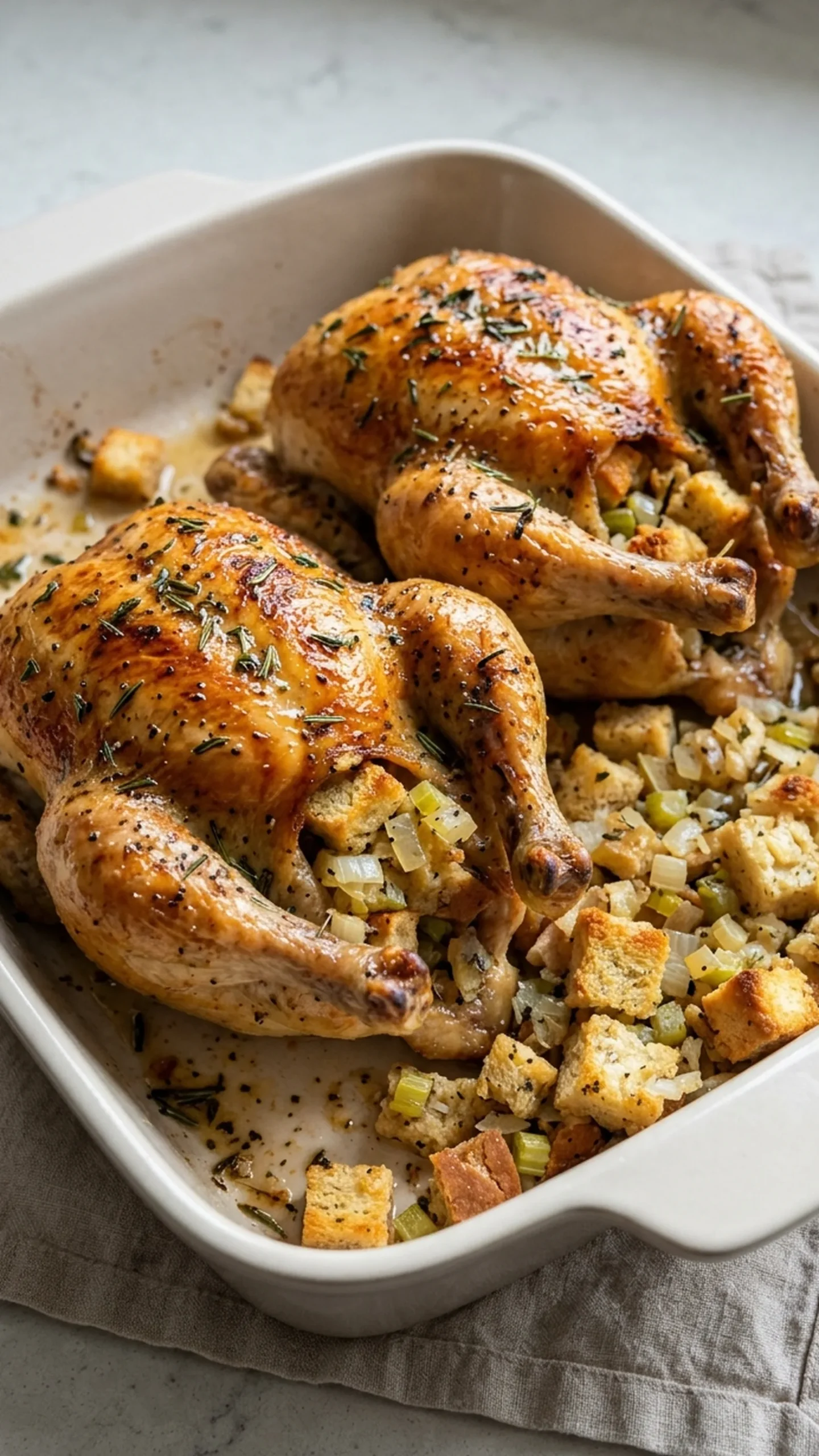
The secret is combining a simple herb seasoning with a moist bread stuffing made from onion, celery, butter, and chicken broth. As the hens roast, their juices add flavor to the stuffing while the olive oil helps the skin brown. You'll want to use a meat thermometer to make sure both the chicken and the center of the stuffing cook safely without relying on color alone.
Why This Recipe Works
- The combination of butter, onion, celery, and chicken broth gives the bread stuffing moisture and savory flavor. The bread absorbs the broth while keeping enough structure to avoid becoming a paste. You'll get a soft, spoonable filling when you add the liquid gradually.
- Rosemary and thyme bring an earthy, fragrant flavor that works especially well with roasted poultry. Rubbing the skin with olive oil helps it brown, while the herbs and seasonings give the hens a flavorful coating.
- Roasting at 350°F (177°C) allows the hens and their stuffing to cook at a moderate, steady temperature. The most important step is checking that the center of the stuffing and the thickest parts of both hens reach 165°F (74°C). That way, you'll know they're safely cooked even if the roasting time varies.
Equipment Needed
- 13 x 9-inch (33 x 23 cm) roasting pan
- 10-inch (25 cm) skillet
- Large mixing bowl
- Small mixing bowl
- Measuring cups and spoons
- Wooden spoon or silicone spatula
- Pastry brush
- Digital instant-read meat thermometer
- Cutting board
- Sharp kitchen knife
- Paper towels
- Aluminum foil
- Large serving platter
Ingredients List
For the Cornish Hens
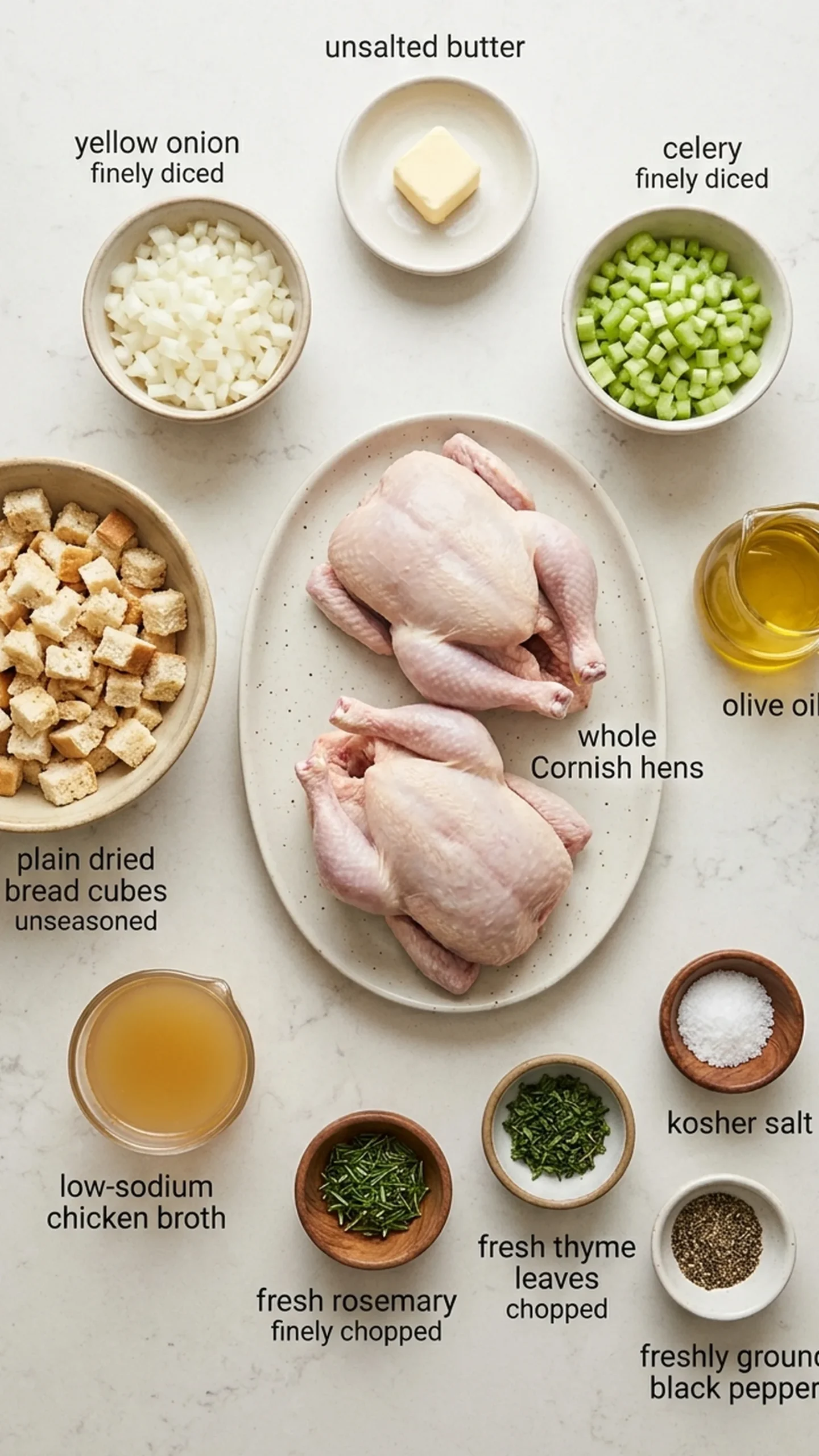
- 2 whole Cornish hens, 1 1/4–1 1/2 pounds (567–680 g) each, fully thawed with giblets removed
- 1 tablespoon (15 ml) olive oil
- 1 teaspoon (1 g) fresh rosemary, finely chopped
- 1 teaspoon (1 g) fresh thyme leaves, chopped
- 1 teaspoon (6 g) kosher salt
- 1/2 teaspoon (1 g) freshly ground black pepper
For the Bread Stuffing
- 1 1/2 cups (45 g) plain dried bread cubes, unseasoned
- 1/4 cup (40 g) yellow onion, finely diced
- 1/4 cup (25 g) celery, finely diced
- 1 tablespoon (14 g) unsalted butter
- 1/3 cup (80 ml) low-sodium chicken broth
Ingredient Notes and Substitutions
- Cornish Hens: These small chickens have tender meat and a convenient individual-serving size. Their smaller cavities also mean the stuffing needs to be added loosely. Substitution: Use one small whole chicken instead of the two hens. The flavor will be similar, but the roasting time will change according to the chicken's weight, and you'll still need to check both the meat and stuffing for safe doneness.
- Dried Bread Cubes: The dried bread absorbs chicken broth and creates a soft stuffing that still holds its shape. Don't worry if the cubes feel quite dry before you begin; they'll soften as you add moisture. Substitution: Use an equal volume of plain dried sourdough bread cubes. The stuffing will have a slightly tangier flavor and may need a different amount of broth depending on how dry the bread is.
- Fresh Rosemary: Rosemary adds a woodsy flavor that balances the richness of the roasted chicken and butter. Because it has a strong flavor, a small amount goes a long way. Substitution: Replace the fresh rosemary with 1/3 teaspoon (about 0.3 g) dried rosemary. The flavor will be more concentrated, so using less keeps the seasoning balanced.
Step-by-Step Instructions
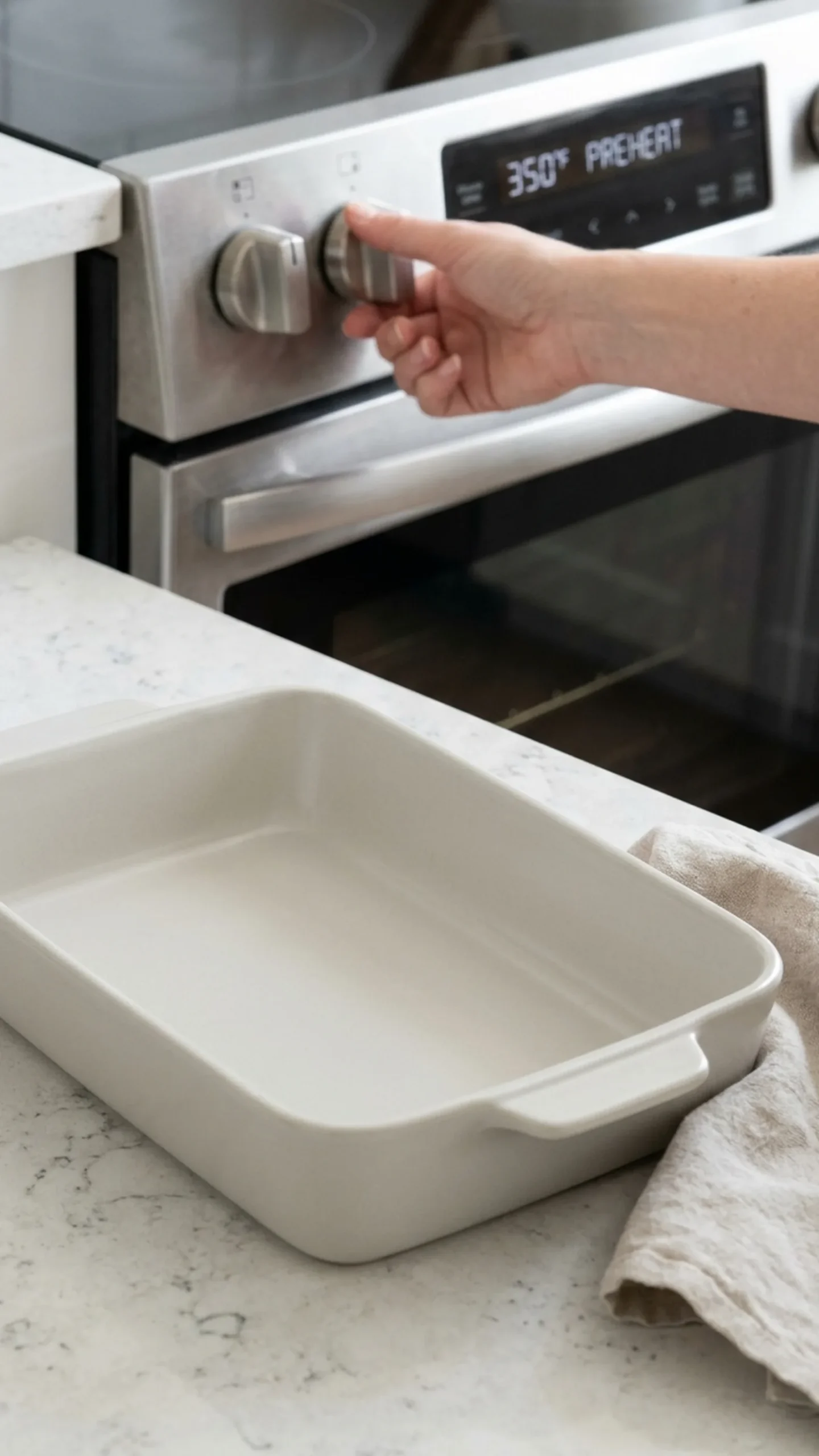
Step 1: Preheat the Oven.
Preheat your oven to 350°F (177°C). Set the 13 x 9-inch (33 x 23 cm) roasting pan nearby. Allow about 10–15 minutes for the oven to preheat fully. The oven should reach the set temperature before the hens go in.
Step 2: Prepare the Cornish Hens.
Remove the fully thawed Cornish hens from their packaging and check that the cavities are empty. Pat the skin and cavities dry with paper towels. Place the hens breast-side up in the roasting pan, leaving some space between them. The skin should feel dry rather than slippery, which helps it brown during roasting.
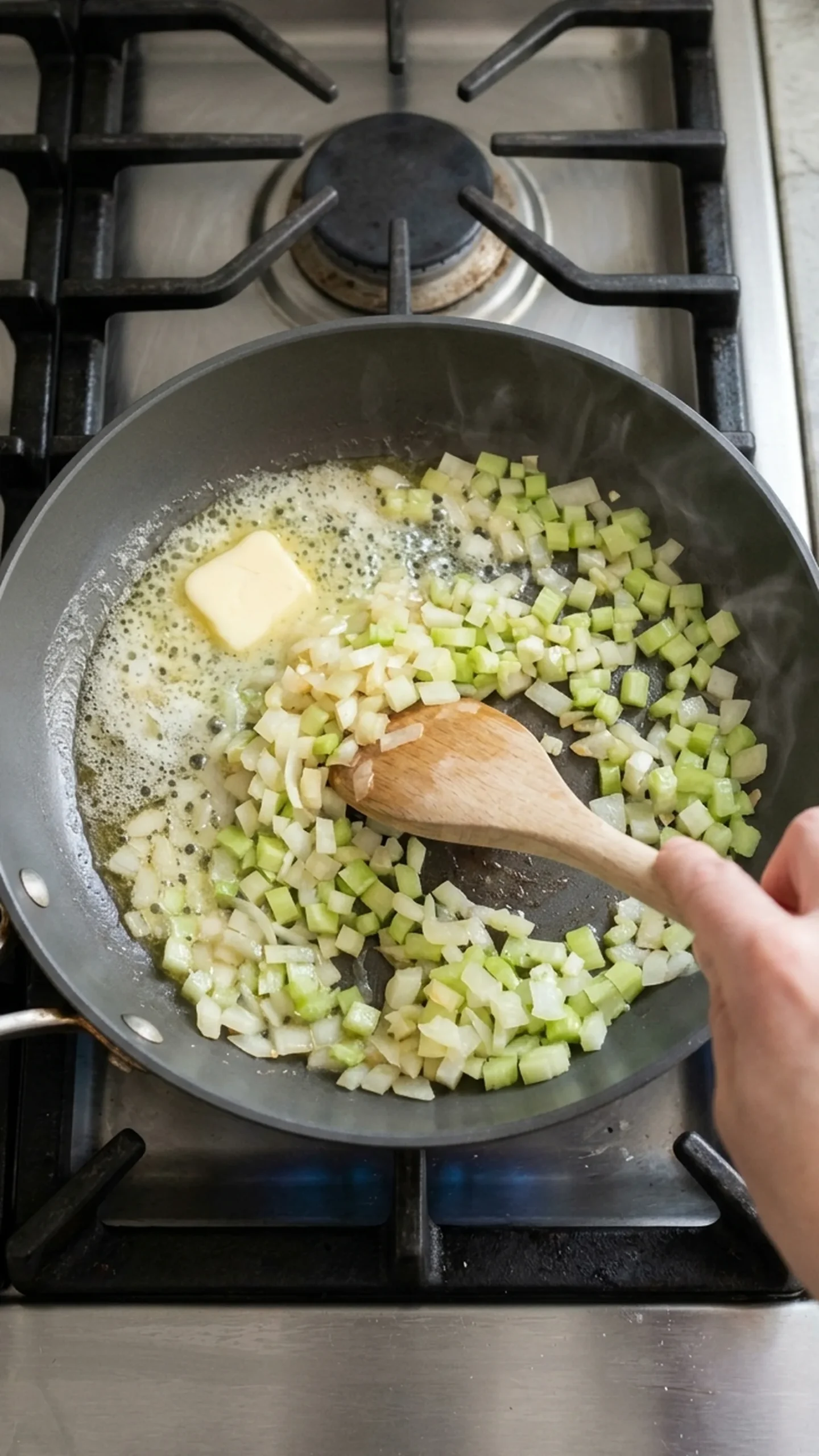
Step 3: Cook the Stuffing Vegetables.
Melt 1 tablespoon (14 g) unsalted butter in the 10-inch (25 cm) skillet over medium heat. Add 1/4 cup (40 g) diced yellow onion and 1/4 cup (25 g) diced celery. Cook for 6–8 minutes, stirring occasionally, until the vegetables soften and the onion looks translucent without turning dark brown.
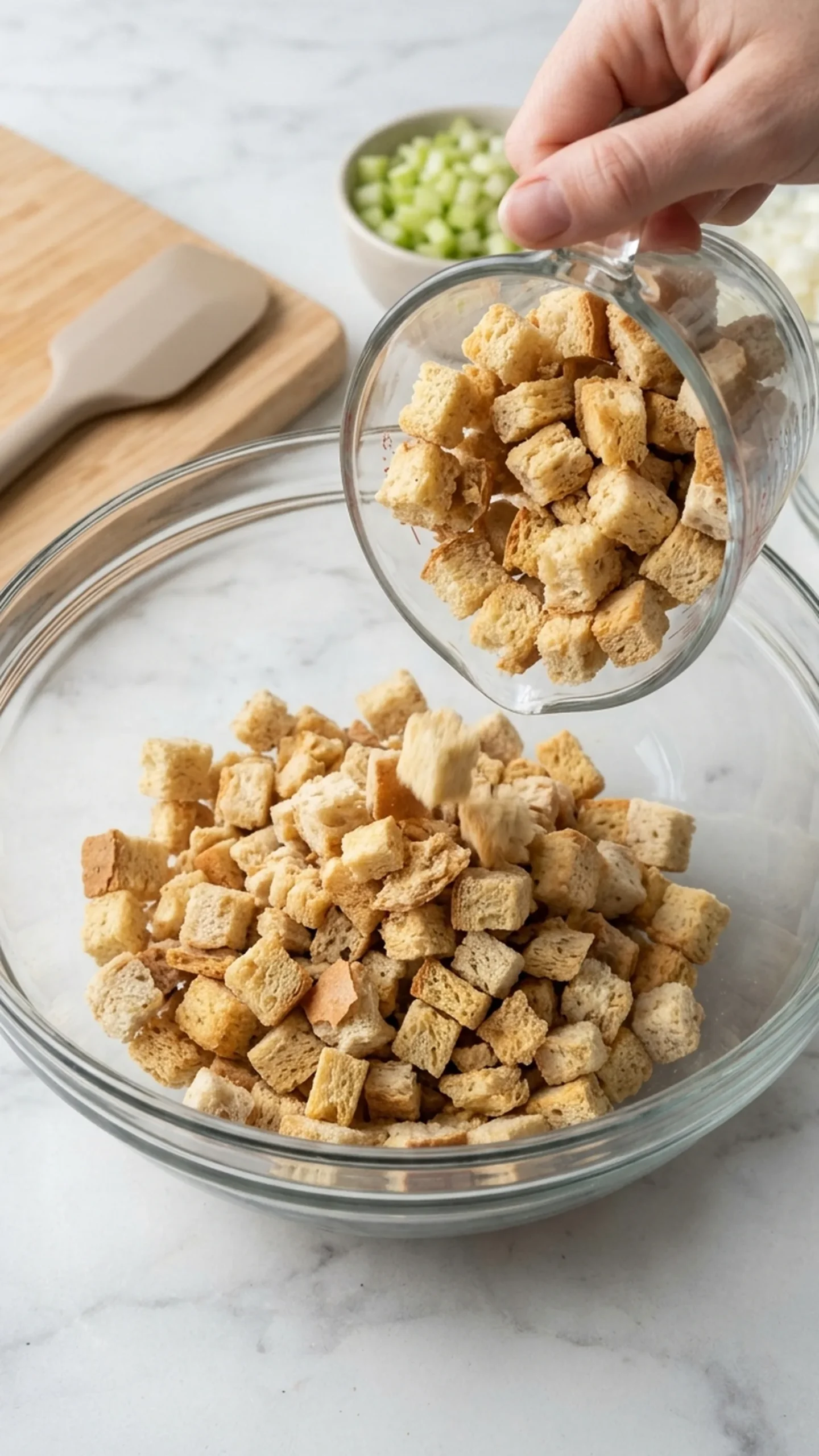
Step 4: Mix the Bread Stuffing.
Place 1 1/2 cups (45 g) dried bread cubes in the large mixing bowl. Add the cooked onion, celery, and melted butter. Pour in 1/3 cup (80 ml) low-sodium chicken broth gradually while stirring. Mix for 1–2 minutes until the cubes are evenly moistened but not falling apart. The stuffing should hold together lightly when pressed with a spoon.
Step 5: Prepare the Herb Seasoning.
Combine 1 teaspoon (1 g) chopped fresh rosemary, 1 teaspoon (1 g) chopped fresh thyme, 1 teaspoon (6 g) kosher salt, and 1/2 teaspoon (1 g) black pepper in the small mixing bowl. Stir for about 30 seconds until evenly blended. Brush the hens with 1 tablespoon (15 ml) olive oil, dividing it between both birds. Sprinkle the seasoning evenly over their skin.
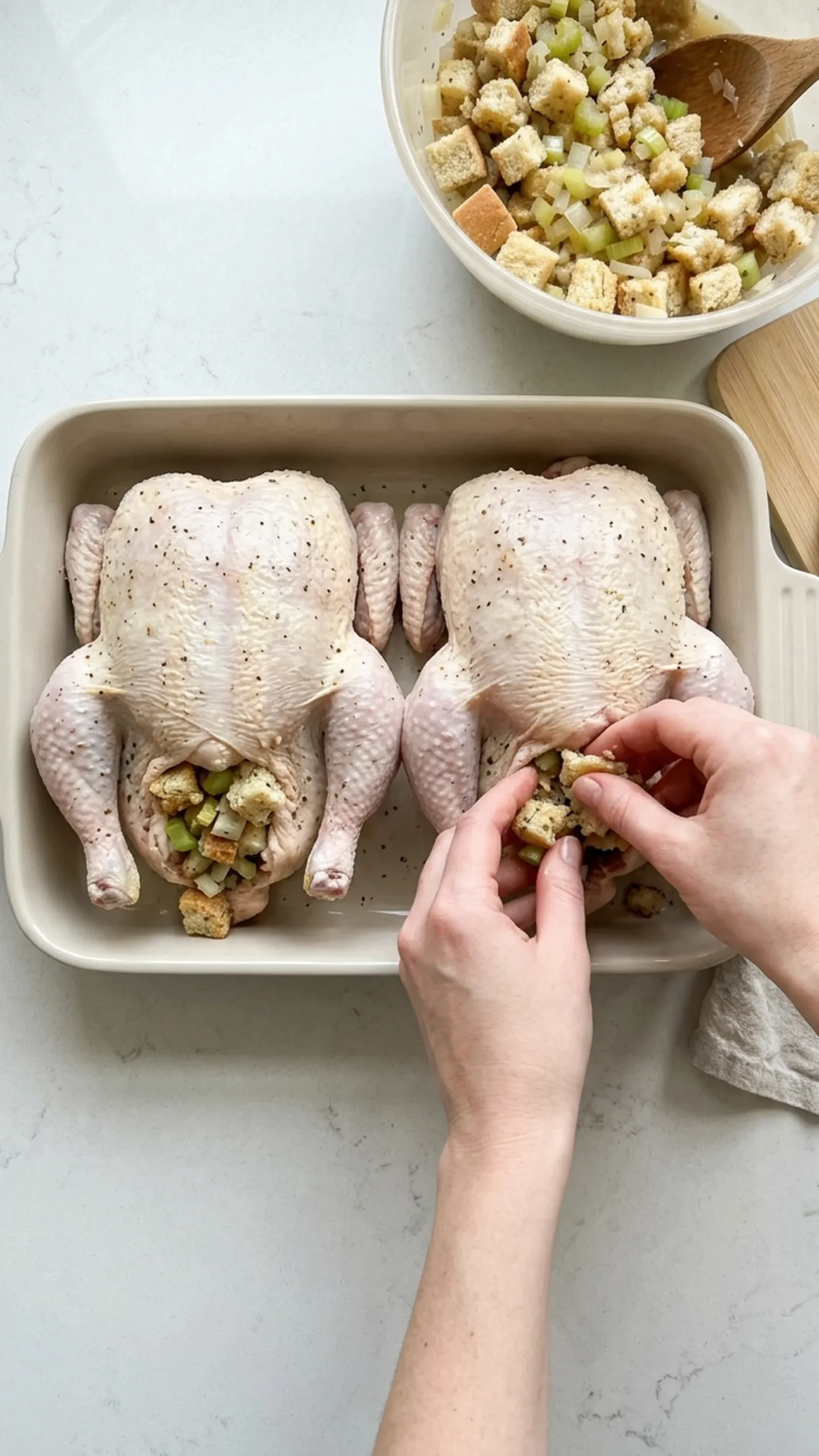
Step 6: Stuff the Cornish Hens.
Divide the prepared stuffing between the two hen cavities, filling each loosely without pressing the bread tightly together. Keep the filling inside the cavities rather than packing it against the openings. The stuffing should look lightly arranged, with room for heat to circulate. Put the filled hens into the oven immediately after stuffing.
Step 7: Roast Until Golden.
Roast the stuffed hens, breast-side up, at 350°F (177°C) for approximately 65–80 minutes. Begin checking the internal temperature around the 65-minute mark. Insert the thermometer into the thickest part of the breast and the innermost thigh and wing areas, avoiding bone, then check the center of the stuffing in each hen. Continue roasting until every checked location reaches at least 165°F (74°C). The skin should look golden brown, but the thermometer determines when the hens are done. If the skin browns too quickly, loosely cover the hens with aluminum foil.
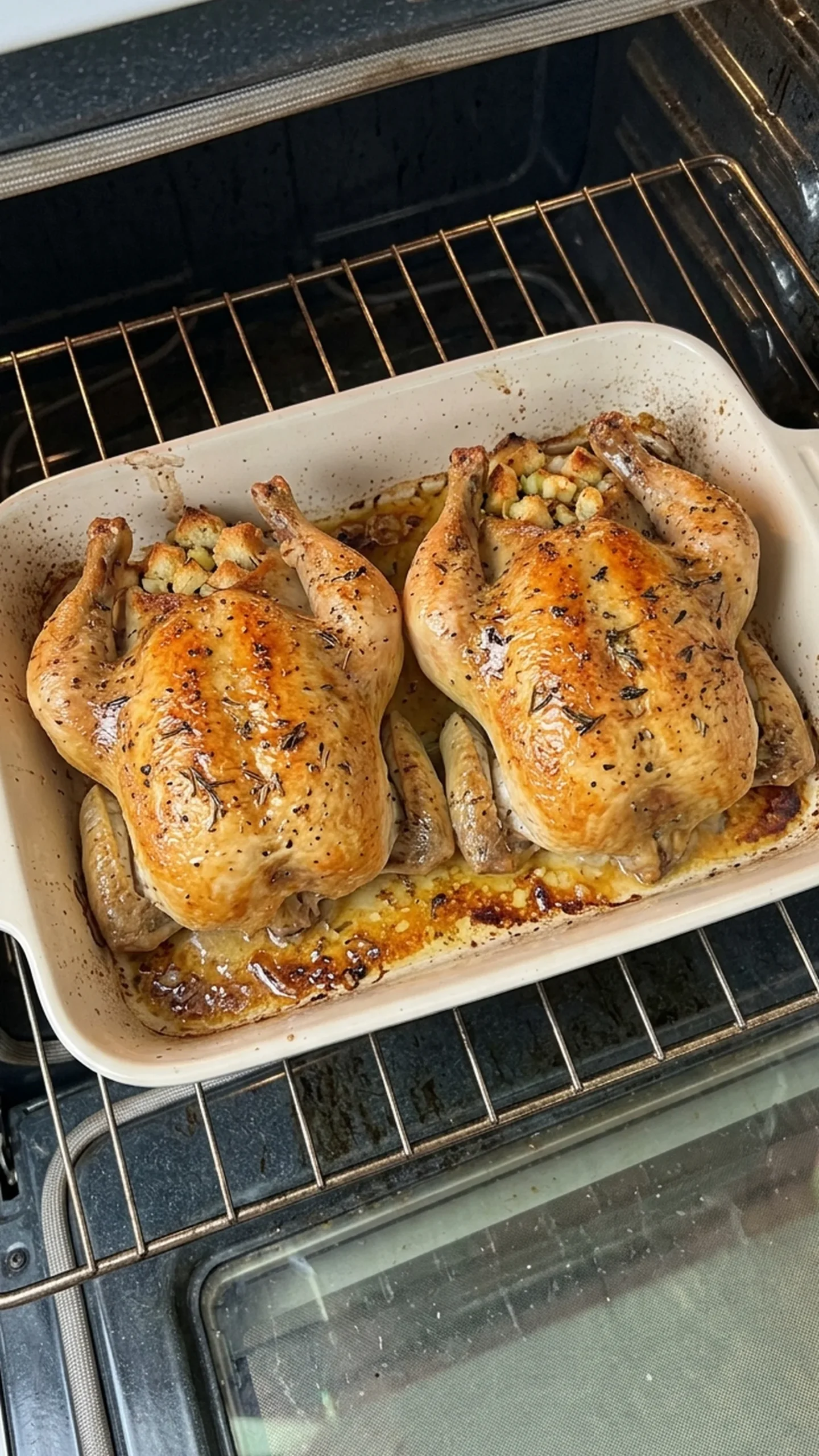
Step 8: Rest and Serve.
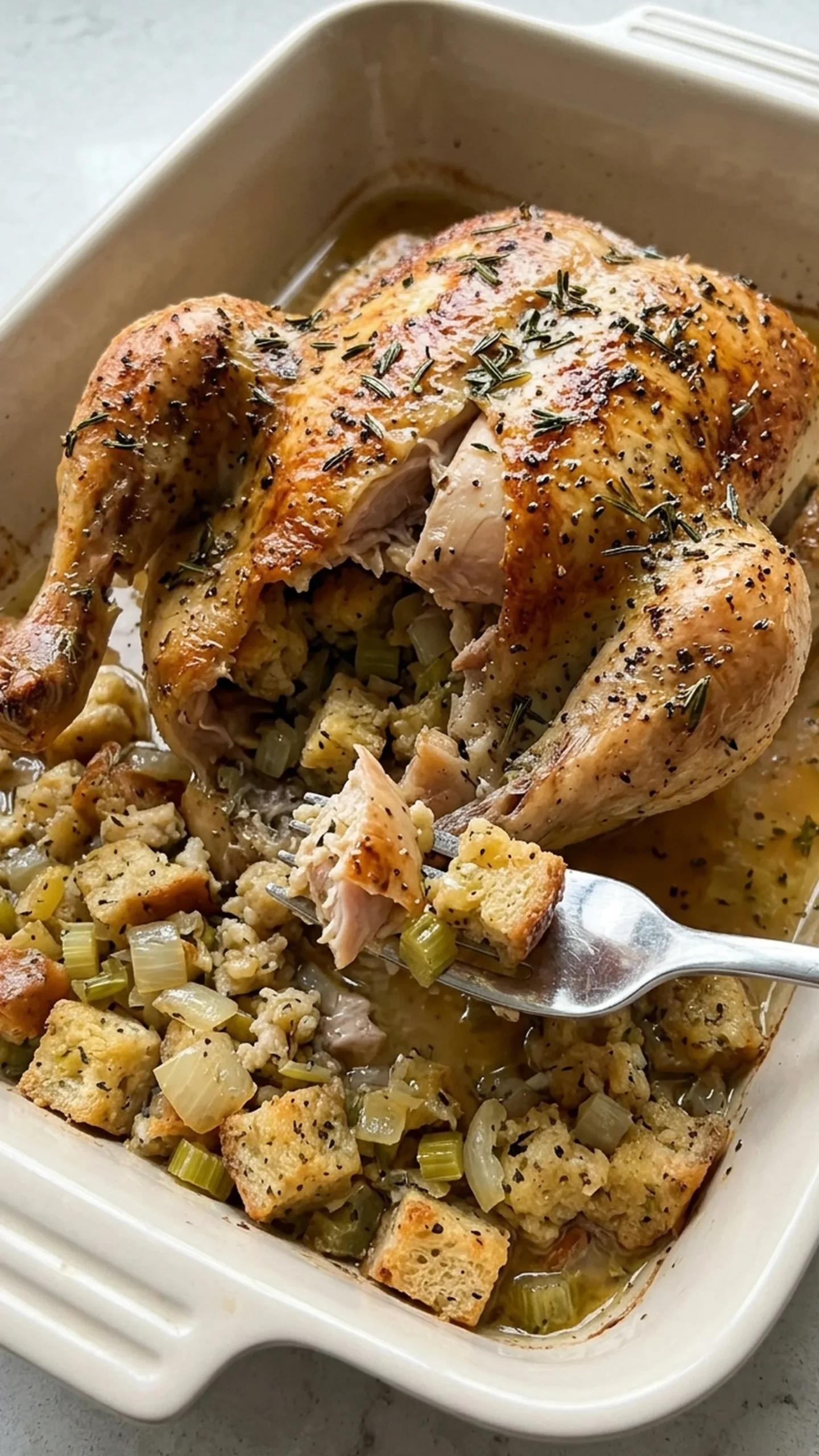
Transfer the hens to the serving platter and let them rest for 10 minutes under a loose sheet of aluminum foil. The skin should remain golden, and the meat should be fully cooked and firm but tender. Remove the stuffing from each cavity after resting and serve it alongside the hens. Each plate gets one stuffed Cornish hen.
Storage, Freezing, and Make-Ahead Instructions
- Refrigerator: Remove any remaining stuffing from the hens before storing. Place the cooked chicken and stuffing in separate airtight containers and refrigerate within 2 hours of cooking. Keep them at 40°F (4°C) or colder and use within 3–4 days. It's easier to portion the leftovers before refrigerating, especially if you want a quick meal the next day.
- Freezer: Cool the cooked chicken and stuffing promptly, refrigerating within 2 hours of cooking, then pack them separately in freezer-safe containers or bags. Freeze at 0°F (-18°C) for best storage. For the best texture and flavor, use within 2–3 months. Thaw in the refrigerator before reheating; thawing helps the meat warm more evenly.
- Make-Ahead and Reheating: You can chop the vegetables and herbs and measure the dried bread cubes up to 1 day ahead, keeping the vegetables and herbs refrigerated and the bread separately sealed. Prepare the stuffing and fill the hens only when you're ready to roast. For reheating, place refrigerated cooked chicken and stuffing in a covered baking dish at 325°F (163°C), and heat until both reach 165°F (74°C) throughout; the time will depend on portion size. A little of the chicken's reserved cooking juices can help keep leftovers moist.
FAQ
Can I cook Cornish hens with stuffing inside?
Yes, you can roast Cornish hens with bread stuffing inside their cavities, provided the stuffing is placed loosely and the hens go into the oven immediately. Both the meat and the center of the stuffing must reach 165°F (74°C).
How long do stuffed Cornish hens take to cook?
Stuffed Cornish hens weighing 1 1/4–1 1/2 pounds (567–680 g) each may take approximately 65–80 minutes at 350°F (177°C). The exact time depends on the birds and how densely they're filled, so always use a thermometer.
Should I cover Cornish hens while roasting?
You can roast them uncovered so the skin browns naturally. If the skin becomes too dark before the meat and stuffing reach a safe temperature, loosely cover the hens with aluminum foil.
Can I prepare stuffed Cornish hens the night before?
You can prepare and refrigerate the chopped vegetables and herbs ahead of time, but don't store the raw hens with stuffing already inside. For food safety, fill the cavities immediately before roasting and cook until both the poultry and stuffing reach 165°F (74°C).
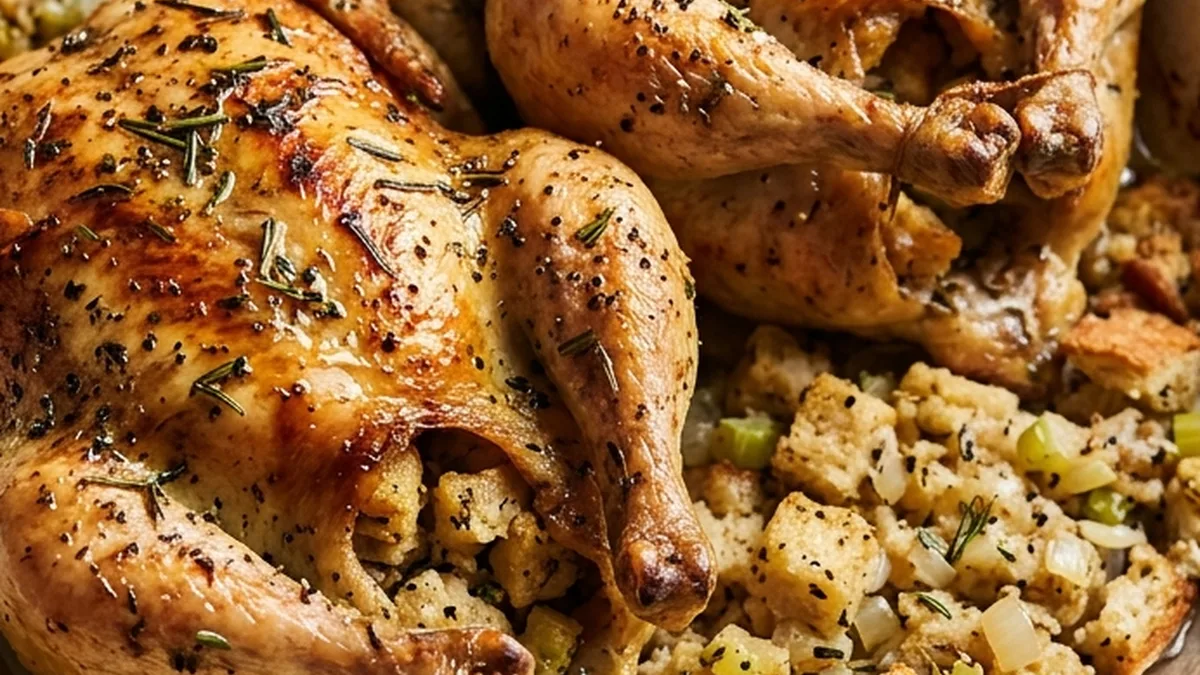
Herb Roasted Cornish Hens with Stuffing
Ingredients
Method
- Preheat your oven to 350°F (177°C). Set the 13 x 9-inch (33 x 23 cm) roasting pan nearby. Allow about 10–15 minutes for the oven to preheat fully. The oven should reach the set temperature before the hens go in.
- Remove the fully thawed Cornish hens from their packaging and check that the cavities are empty. Pat the skin and cavities dry with paper towels. Place the hens breast-side up in the roasting pan, leaving some space between them. The skin should feel dry rather than slippery, which helps it brown during roasting.
- Melt 1 tablespoon (14 g) unsalted butter in the 10-inch (25 cm) skillet over medium heat. Add 1/4 cup (40 g) diced yellow onion and 1/4 cup (25 g) diced celery. Cook for 6–8 minutes, stirring occasionally, until the vegetables soften and the onion looks translucent without turning dark brown.
- Place 1 1/2 cups (45 g) dried bread cubes in the large mixing bowl. Add the cooked onion, celery, and melted butter. Pour in 1/3 cup (80 ml) low-sodium chicken broth gradually while stirring. Mix for 1–2 minutes until the cubes are evenly moistened but not falling apart. The stuffing should hold together lightly when pressed with a spoon.
- Combine 1 teaspoon (1 g) chopped fresh rosemary, 1 teaspoon (1 g) chopped fresh thyme, 1 teaspoon (6 g) kosher salt, and 1/2 teaspoon (1 g) black pepper in the small mixing bowl. Stir for about 30 seconds until evenly blended. Brush the hens with 1 tablespoon (15 ml) olive oil, dividing it between both birds. Sprinkle the seasoning evenly over their skin.
- Divide the prepared stuffing between the two hen cavities, filling each loosely without pressing the bread tightly together. Keep the filling inside the cavities rather than packing it against the openings. The stuffing should look lightly arranged, with room for heat to circulate. Put the filled hens into the oven immediately after stuffing.
- Roast the stuffed hens, breast-side up, at 350°F (177°C) for approximately 65–80 minutes. Begin checking the internal temperature around the 65-minute mark. Insert the thermometer into the thickest part of the breast and the innermost thigh and wing areas, avoiding bone, then check the center of the stuffing in each hen. Continue roasting until every checked location reaches at least 165°F (74°C). The skin should look golden brown, but the thermometer determines when the hens are done. If the skin browns too quickly, loosely cover the hens with aluminum foil.
- Transfer the hens to the serving platter and let them rest for 10 minutes under a loose sheet of aluminum foil. The skin should remain golden, and the meat should be fully cooked and firm but tender. Remove the stuffing from each cavity after resting and serve it alongside the hens. Each plate gets one stuffed Cornish hen.