Preheat your oven to 350°F (177°C). Set the 13 x 9-inch (33 x 23 cm) roasting pan nearby. Allow about 10–15 minutes for the oven to preheat fully. The oven should reach the set temperature before the hens go in.
Remove the fully thawed Cornish hens from their packaging and check that the cavities are empty. Pat the skin and cavities dry with paper towels. Place the hens breast-side up in the roasting pan, leaving some space between them. The skin should feel dry rather than slippery, which helps it brown during roasting.
Melt 1 tablespoon (14 g) unsalted butter in the 10-inch (25 cm) skillet over medium heat. Add 1/4 cup (40 g) diced yellow onion and 1/4 cup (25 g) diced celery. Cook for 6–8 minutes, stirring occasionally, until the vegetables soften and the onion looks translucent without turning dark brown.
Place 1 1/2 cups (45 g) dried bread cubes in the large mixing bowl. Add the cooked onion, celery, and melted butter. Pour in 1/3 cup (80 ml) low-sodium chicken broth gradually while stirring. Mix for 1–2 minutes until the cubes are evenly moistened but not falling apart. The stuffing should hold together lightly when pressed with a spoon.
Combine 1 teaspoon (1 g) chopped fresh rosemary, 1 teaspoon (1 g) chopped fresh thyme, 1 teaspoon (6 g) kosher salt, and 1/2 teaspoon (1 g) black pepper in the small mixing bowl. Stir for about 30 seconds until evenly blended. Brush the hens with 1 tablespoon (15 ml) olive oil, dividing it between both birds. Sprinkle the seasoning evenly over their skin.
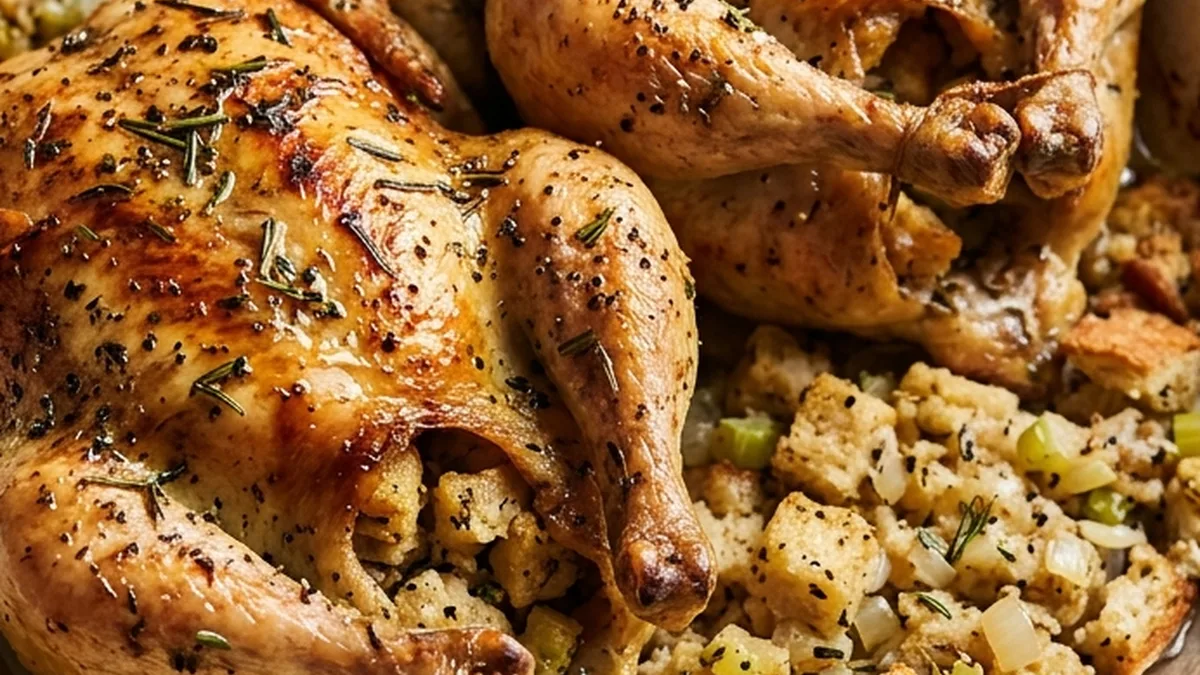
Divide the prepared stuffing between the two hen cavities, filling each loosely without pressing the bread tightly together. Keep the filling inside the cavities rather than packing it against the openings. The stuffing should look lightly arranged, with room for heat to circulate. Put the filled hens into the oven immediately after stuffing.
Roast the stuffed hens, breast-side up, at 350°F (177°C) for approximately 65–80 minutes. Begin checking the internal temperature around the 65-minute mark. Insert the thermometer into the thickest part of the breast and the innermost thigh and wing areas, avoiding bone, then check the center of the stuffing in each hen. Continue roasting until every checked location reaches at least 165°F (74°C). The skin should look golden brown, but the thermometer determines when the hens are done. If the skin browns too quickly, loosely cover the hens with aluminum foil.
Transfer the hens to the serving platter and let them rest for 10 minutes under a loose sheet of aluminum foil. The skin should remain golden, and the meat should be fully cooked and firm but tender. Remove the stuffing from each cavity after resting and serve it alongside the hens. Each plate gets one stuffed Cornish hen.