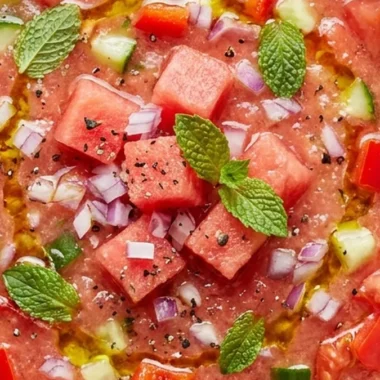
Tomato Cucumber Gazpacho is a chilled Spanish-style soup made with ripe tomatoes, crisp cucumber, red bell pepper, olive oil, sherry vinegar, and garlic. It has a smooth, refreshing texture with bright acidity, gentle sweetness, and a clean vegetable flavor.
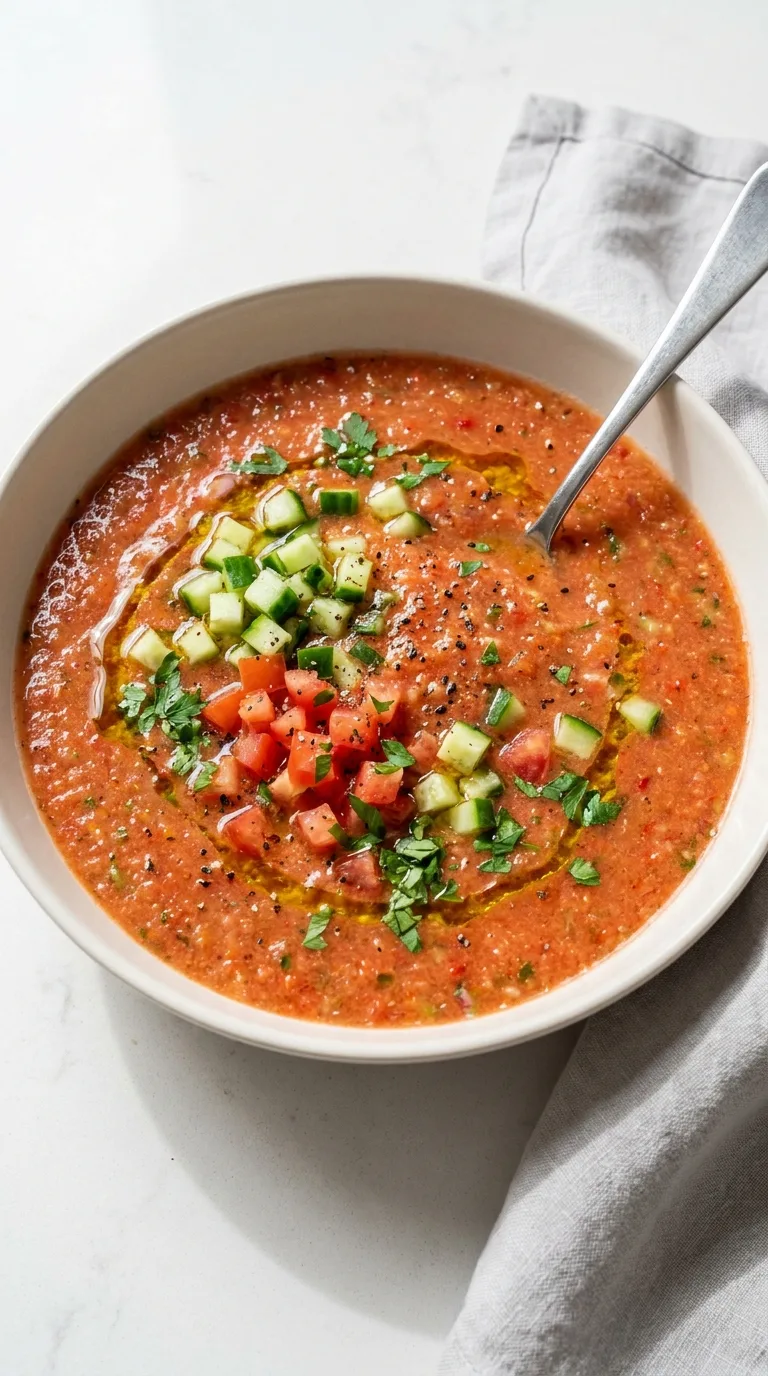
This no-cook soup is blended until creamy, then chilled for at least 2 hours so the flavors can develop. A small amount of bread gives the gazpacho body without making it heavy, while diced cucumber and tomato can be added at serving time for contrast.
Why This Recipe Works
- Very ripe tomatoes provide enough juice and natural sweetness to create a flavorful soup without cooking.
- Cucumber lightens the tomato base and gives the gazpacho a clean, refreshing finish.
- Bread absorbs vegetable juices and olive oil, creating a smoother and more cohesive texture.
- Sherry vinegar balances the sweetness of the tomatoes and strengthens the soup’s savory flavor.
- Chilling the blended soup allows the garlic, vinegar, vegetables, and olive oil to blend into a more unified flavor.
Equipment Needed
- High-speed blender with at least a 64-ounce (1.9 L) capacity
- Large mixing bowl
- Fine-mesh strainer, optional, for an extra-smooth texture
- Chef’s knife and cutting board
- Vegetable peeler
- Airtight container with at least an 8-cup (1.9 L) capacity
Ingredients List
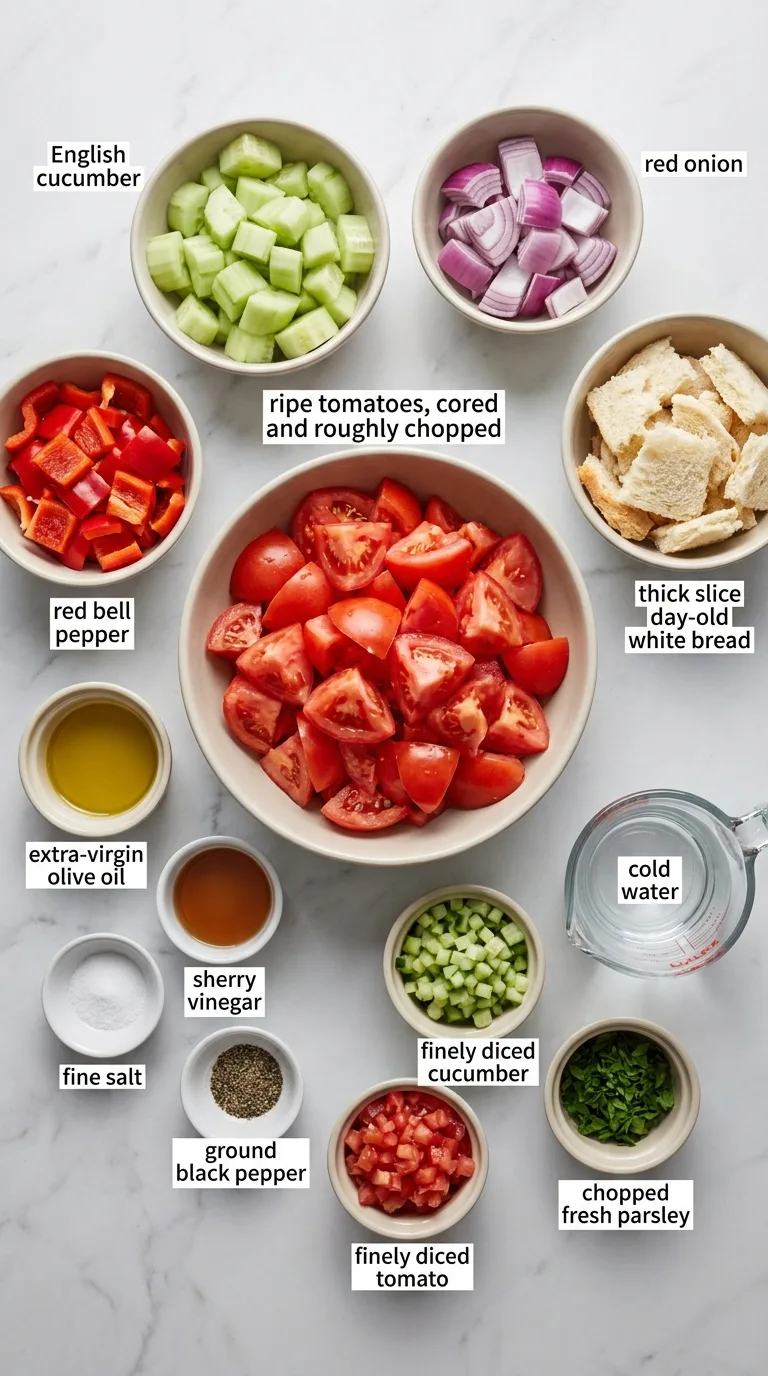
For the Gazpacho
- 2 pounds (900 g) ripe tomatoes, cored and roughly chopped
- 1 large English cucumber, about 12 ounces (340 g), peeled and roughly chopped
- 1 medium red bell pepper, about 5 ounces (140 g), seeded and roughly chopped
- 1/2 small red onion, about 3 ounces (85 g), roughly chopped
- 2 garlic cloves, peeled
- 1 thick slice day-old white bread, about 1 1/2 ounces (45 g), crust removed and torn into pieces
- 1/4 cup (60 ml) extra-virgin olive oil
- 2 tablespoons (30 ml) sherry vinegar
- 1 1/4 teaspoons fine salt
- 1/4 teaspoon ground black pepper
- 1/2 cup (120 ml) cold water, plus more as needed
Optional Garnishes
- 1/2 cup (75 g) finely diced cucumber, optional
- 1/2 cup (90 g) finely diced tomato, optional
- 2 tablespoons (30 ml) extra-virgin olive oil, optional, for drizzling
- 2 tablespoons (8 g) chopped fresh parsley, optional
Ingredient Notes and Substitutions
- Tomatoes: Use fully ripe tomatoes that feel heavy and smell fragrant near the stem. Roma, vine-ripened, or heirloom tomatoes all work. If the tomatoes are pale or firm, the gazpacho may taste watery and require more salt or vinegar.
- English cucumber: English cucumber has thin skin and small seeds, producing a smooth soup with minimal bitterness. Persian cucumbers can replace it in the same weight. Standard slicing cucumbers should be peeled and seeded because their skins and mature seeds can create a coarser texture.
- Day-old bread: Bread thickens the soup and helps the olive oil emulsify with the vegetable juices. A plain baguette or country-style white bread works well. The bread can be omitted for a thinner, lighter gazpacho, but the soup may separate more during storage.
- Sherry vinegar: Sherry vinegar gives the soup a mellow, complex acidity commonly associated with Spanish gazpacho. Red wine vinegar can replace it in the same quantity, although the flavor will be sharper and less rounded.
- Extra-virgin olive oil: Olive oil gives the soup richness and a smooth mouthfeel. Choose a fruity oil without harsh bitterness. A neutral oil is not recommended because it will not provide the same flavor, although using less olive oil will create a lighter soup.
Step-by-Step Instructions
Step 1: Prepare the vegetables
Core and roughly chop the tomatoes. Peel and chop the cucumber, then seed and chop the red bell pepper. Roughly chop the red onion and peel the garlic.
Step 2: Soften the bread
Place the torn bread in a large bowl. Add several spoonfuls of juice from the chopped tomatoes and let it stand for 5 minutes. The bread should soften completely without becoming soupy.
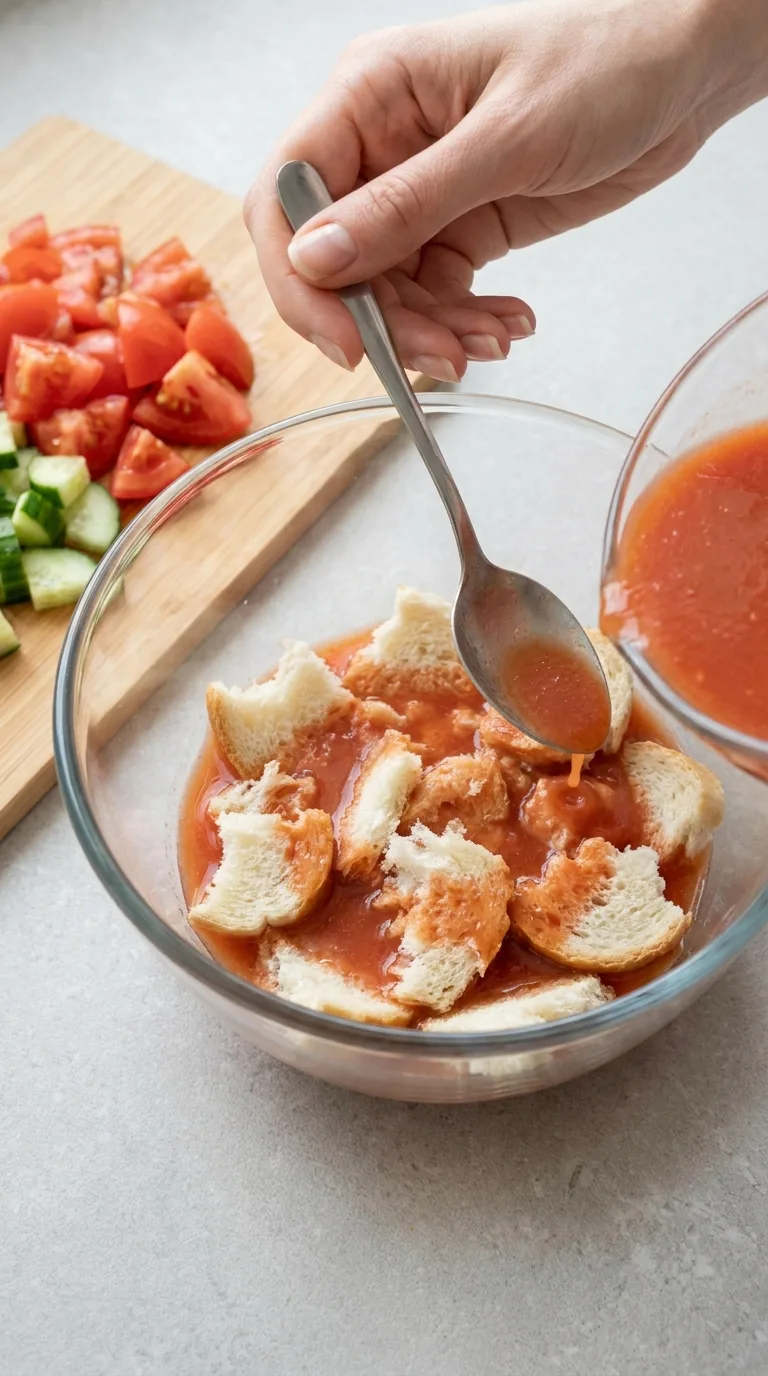
Step 3: Load the blender
Add the tomatoes, cucumber, bell pepper, red onion, garlic, and softened bread to a 64-ounce (1.9 L) blender. If the ingredients do not fit comfortably, blend the vegetables in two batches and combine them afterward.

Step 4: Begin blending
Blend on low speed for 20 to 30 seconds, then increase to high. Blend for 1 to 2 minutes, until the vegetables are fully broken down and the mixture looks smooth and evenly colored.
Step 5: Add the oil and seasonings
With the blender running on medium speed, slowly pour in the olive oil. Add the sherry vinegar, salt, black pepper, and cold water.
Step 6: Blend until creamy
Continue blending on high for another 30 to 60 seconds. The gazpacho should look smooth, slightly creamy, and pourable. It should coat a spoon lightly without resembling a thick puree.
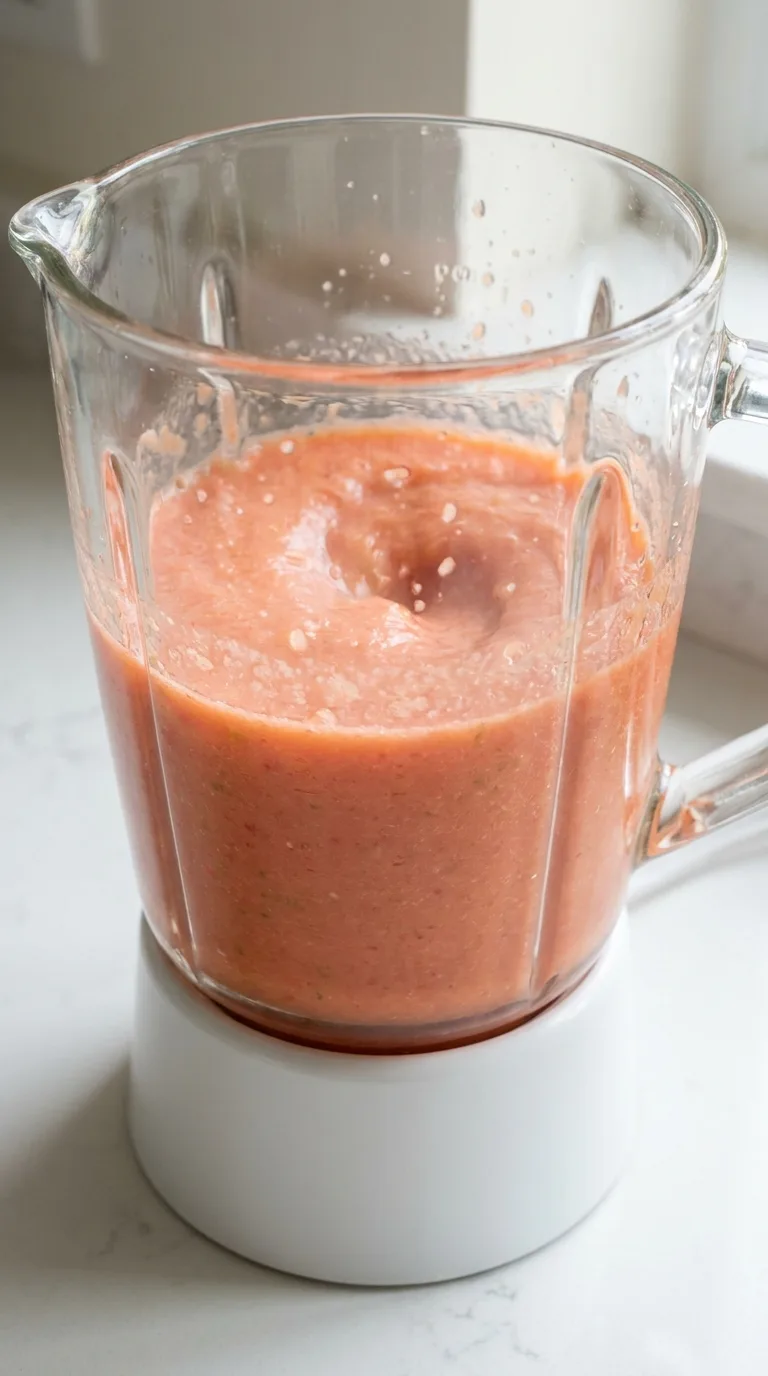
Step 7: Adjust the consistency
If the soup is thicker than desired, add additional cold water 1 tablespoon (15 ml) at a time. Blend briefly after each addition. Avoid adding too much water, which can dilute the tomato flavor.
Step 8: Strain if desired
For an especially smooth gazpacho, pour the soup through a fine-mesh strainer into a large bowl, pressing gently with a spatula. Discard the remaining skins and seeds. Skip this step for a more rustic texture.

Step 9: Taste and adjust
Taste the soup before chilling. It should taste slightly more acidic and seasoned than you want the finished soup because cold temperatures soften flavor. Add a small amount of extra vinegar or salt only if needed.
Step 10: Chill thoroughly
Transfer the gazpacho to an airtight container. Refrigerate for at least 2 hours, until completely cold. Stir well before serving because slight separation is normal.
Step 11: Prepare the garnishes
Shortly before serving, finely dice the optional cucumber and tomato. Keep the pieces small so they are easy to eat with a spoon.
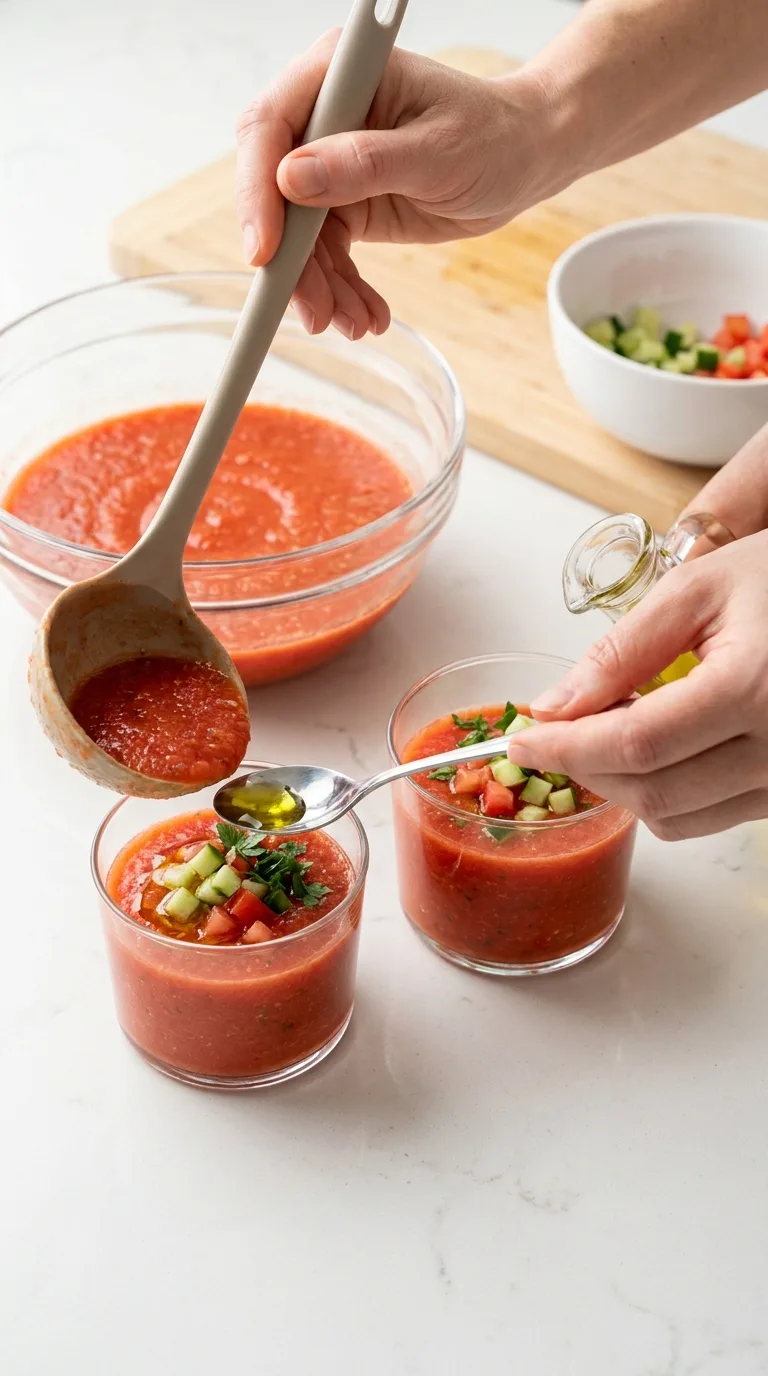
Step 12: Serve
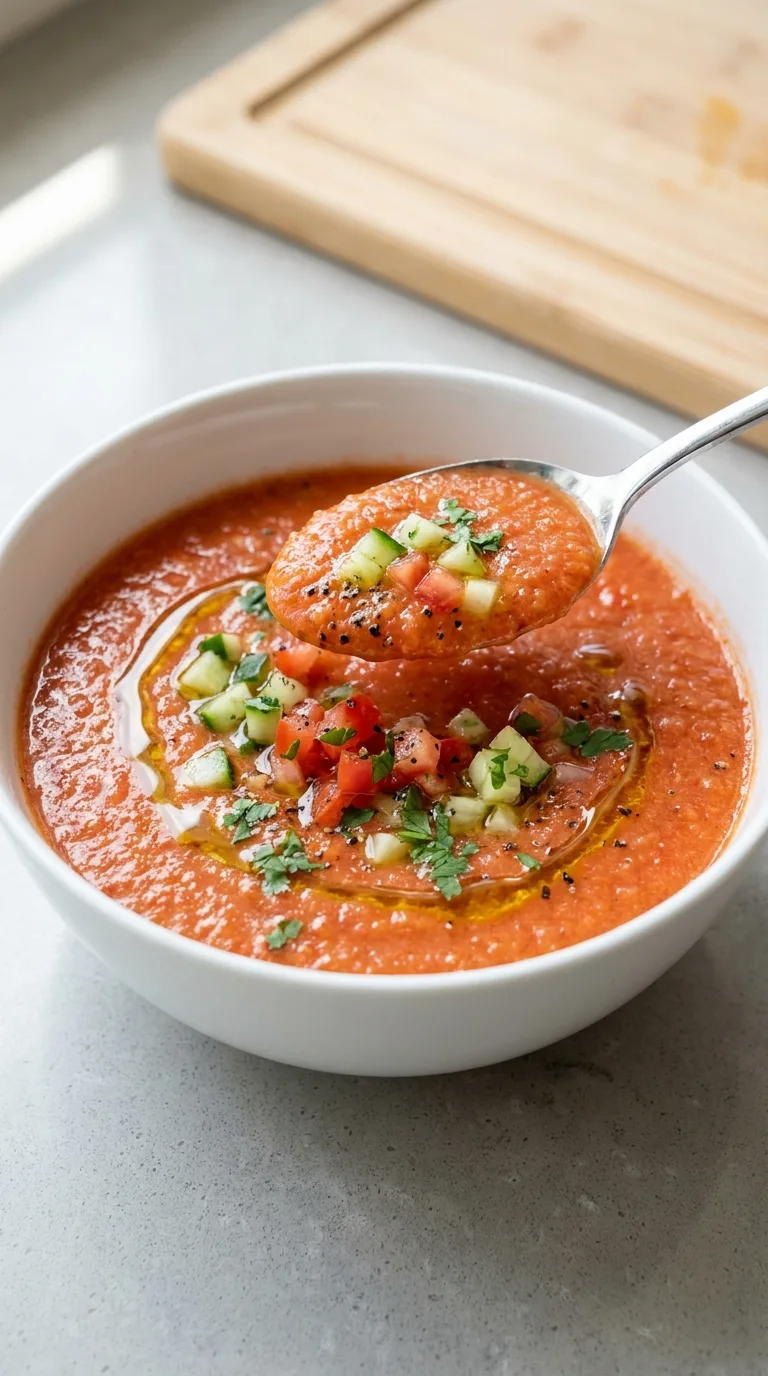
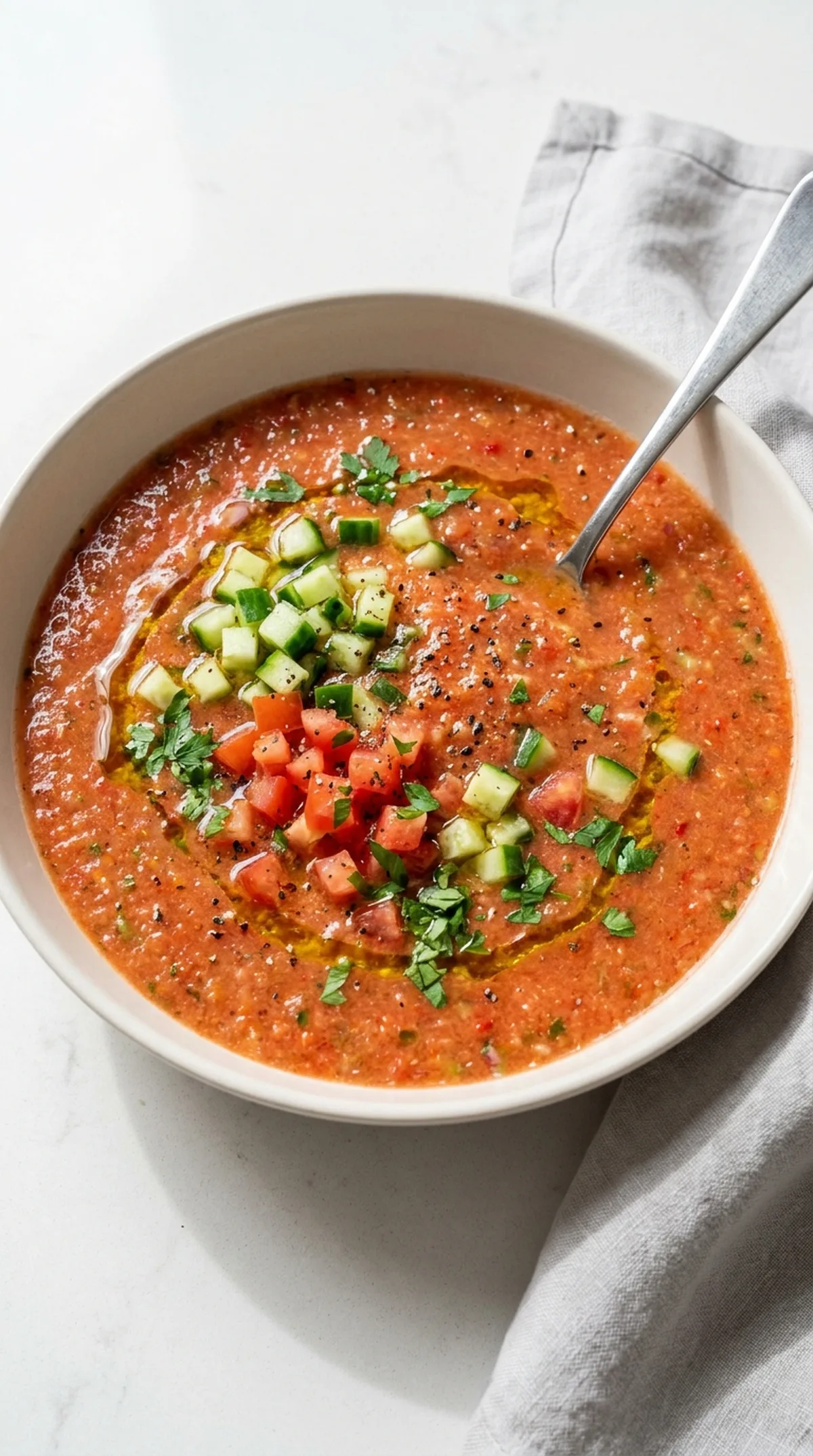
Ladle the cold gazpacho into bowls or glasses. Top with diced cucumber, diced tomato, parsley, and a light drizzle of olive oil as desired.
Storage, Freezing, and Make-Ahead Instructions
- Store Tomato Cucumber Gazpacho in an airtight container in the refrigerator for up to 3 days. Stir or shake the container before serving because the vegetable juices and olive oil may separate slightly.
- Keep the optional diced garnishes in separate airtight containers and add them only when serving. This prevents the garnish from becoming soft and releasing extra water into the soup.
- The gazpacho can be prepared 1 day ahead, and its flavor will become more blended as it chills. Taste it again before serving and adjust the salt or vinegar if necessary.
- Freezing is not recommended because thawed cucumber and tomato can develop a watery, grainy texture and the olive oil emulsion may separate.
FAQ
Can I make Tomato Cucumber Gazpacho ahead of time?
Yes. Prepare the soup up to 1 day before serving and refrigerate it in an airtight container. Stir well and adjust the seasoning after it is fully chilled.
Can I make gazpacho without bread?
Yes. Omit the bread for a lighter, thinner soup. Begin with only 1/4 cup (60 ml) of cold water and add more only if needed.
Why does my gazpacho taste watery?
The tomatoes may not have been fully ripe, or too much water may have been added. Blend in another ripe tomato, add a small pinch of salt, and adjust the vinegar to strengthen the flavor.
Do I need to peel the tomatoes?
No. A high-speed blender will break down most tomato skins, and the soup can be strained afterward for a smoother texture. Peeling is optional.
Can I use canned tomatoes?
Fresh tomatoes are recommended because gazpacho depends on their uncooked flavor. Canned tomatoes can create a softer, more processed taste and are not an equal substitute in this recipe.
Tomato Cucumber Gazpacho
Ingredients
Method
- Core and roughly chop the tomatoes: Peel and chop the cucumber, then seed and chop the red bell pepper. Roughly chop the red onion and peel the garlic.
- Place the torn bread in a large bowl: Add several spoonfuls of juice from the chopped tomatoes and let it stand for 5 minutes. The bread should soften completely without becoming soupy.
- Add the tomatoes, cucumber, bell pepper, red onion, garlic, and softened bread to a 64-ounce (1.9 L) blender. If the ingredients do not fit comfortably, blend the vegetables in two batches and combine them afterward.
- Blend on low speed for 20 to 30 seconds, then increase to high. Blend for 1 to 2 minutes, until the vegetables are fully broken down and the mixture looks smooth and evenly colored.
- With the blender running on medium speed, slowly pour in the olive oil. Add the sherry vinegar, salt, black pepper, and cold water.
- Continue blending on high for another 30 to 60 seconds. The gazpacho should look smooth, slightly creamy, and pourable. It should coat a spoon lightly without resembling a thick puree.
- If the soup is thicker than desired, add additional cold water 1 tablespoon (15 ml) at a time. Blend briefly after each addition. Avoid adding too much water, which can dilute the tomato flavor.
- For an especially smooth gazpacho, pour the soup through a fine-mesh strainer into a large bowl, pressing gently with a spatula. Discard the remaining skins and seeds. Skip this step for a more rustic texture.
- Taste the soup before chilling: It should taste slightly more acidic and seasoned than you want the finished soup because cold temperatures soften flavor. Add a small amount of extra vinegar or salt only if needed.
- Transfer the gazpacho to an airtight container: Refrigerate for at least 2 hours, until completely cold. Stir well before serving because slight separation is normal.
- Shortly before serving, finely dice the optional cucumber and tomato. Keep the pieces small so they are easy to eat with a spoon.
- Ladle the cold gazpacho into bowls or glasses: Top with diced cucumber, diced tomato, parsley, and a light drizzle of olive oil as desired.