This turkey gravy without drippings is buttery, savory, and smooth enough to pour over mashed potatoes or sliced turkey. It comes together in a saucepan on the stove with turkey stock, so you don’t have to wait for the roast to come out of the oven.
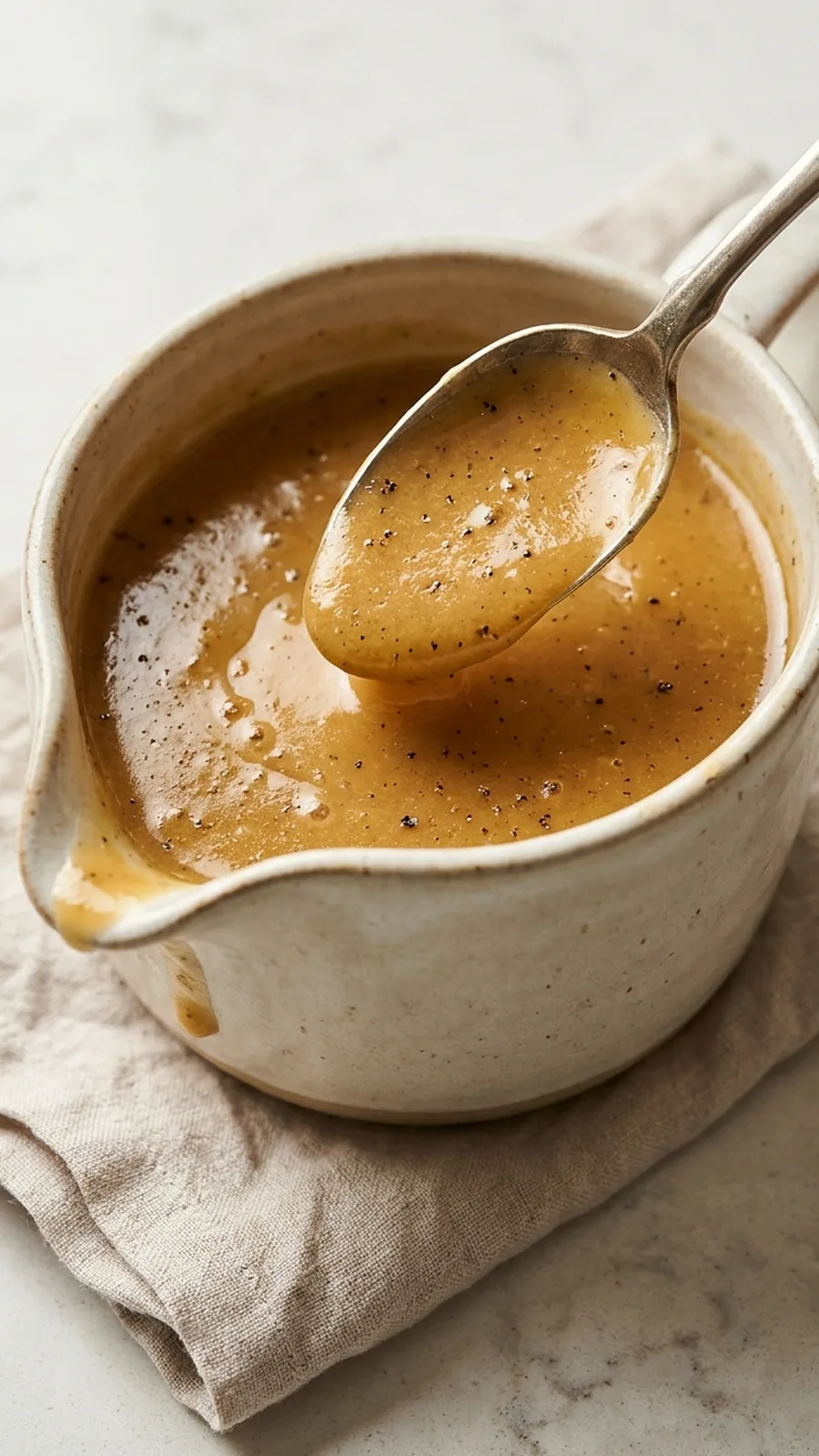
Cooking flour in melted butter makes a roux, the base that thickens the gravy. Add the stock gradually while you whisk, and you’ll have an easier time keeping the gravy smooth.
Why This Recipe Works
Unsalted butter coats the flour so it blends into a smooth paste. A little bubbling at this stage is normal.
Low-sodium turkey stock brings roasted turkey flavor without pan drippings and gives you more control over the salt.
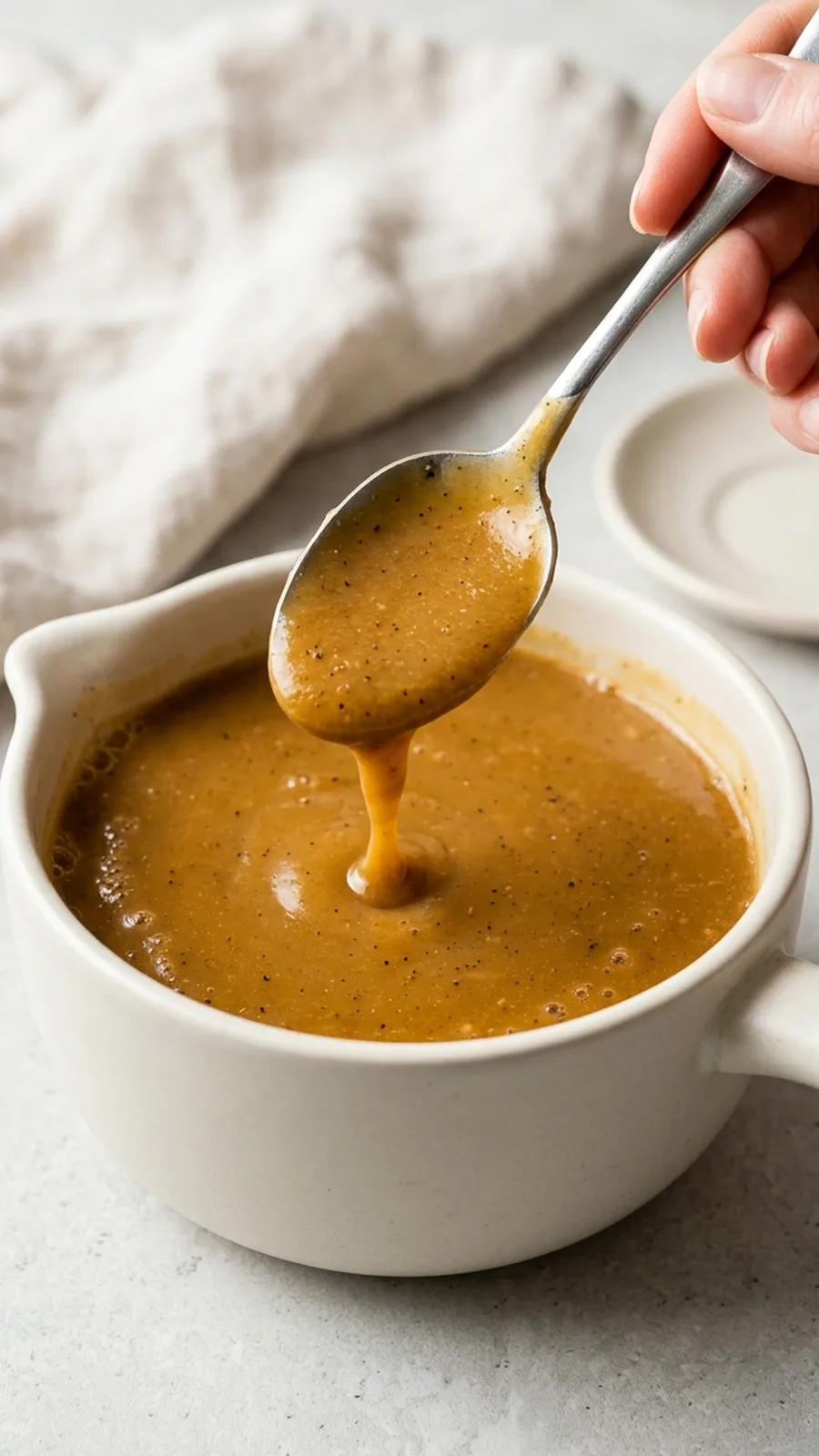
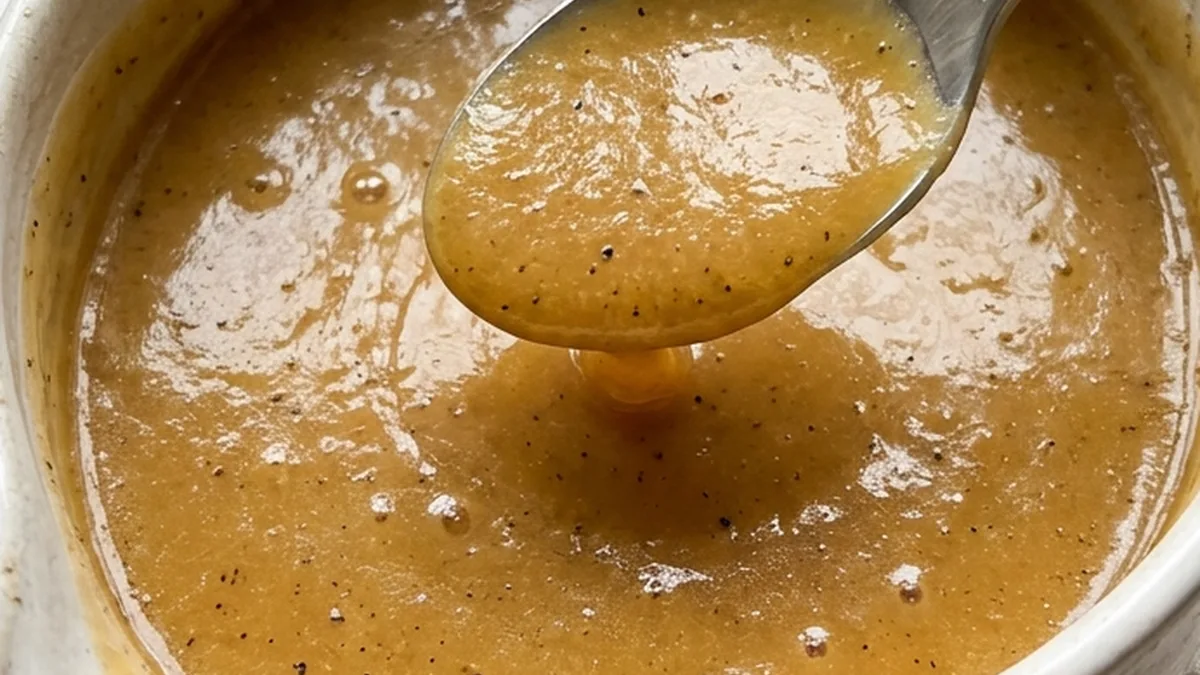
A gentle simmer gives the flour time to thicken the gravy. You’ll know it’s ready when it lightly coats the back of a spoon.
Equipment Needed
- 2-quart (1.9 L) saucepan
- Wire whisk
- Dry measuring cups and measuring spoons
- Liquid measuring cup
- Spoon
Ingredients List
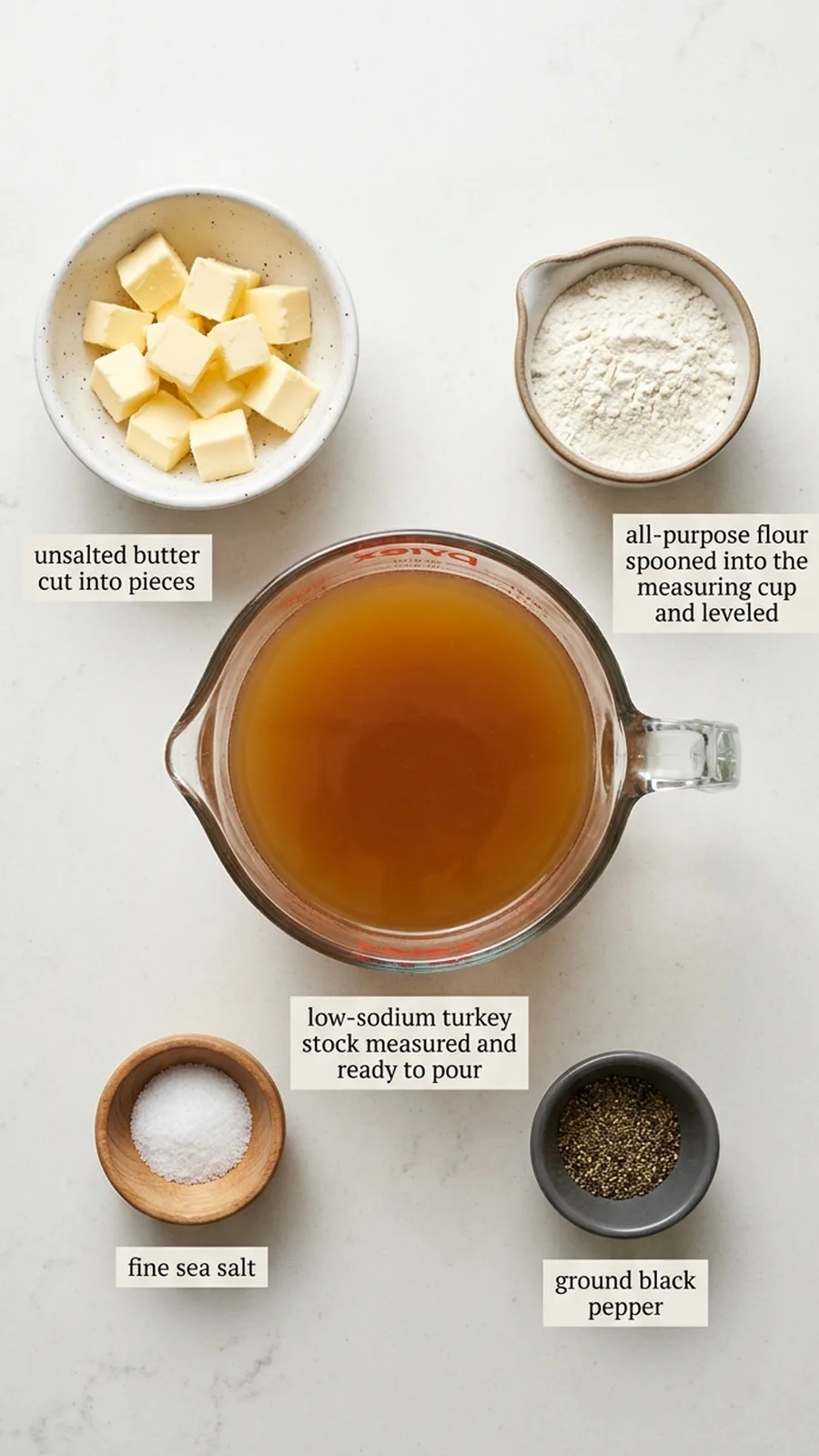
- 4 tablespoons (56 g) unsalted butter, cut into pieces
- 1/4 cup (30 g) all-purpose flour, spooned into the measuring cup and leveled
- 3 cups (710 mL) low-sodium turkey stock, measured and ready to pour
- 1/4 teaspoon (1.5 g) fine sea salt
- 1/4 teaspoon (0.6 g) ground black pepper
Ingredient Notes and Substitutions
Unsalted butter: It gives the gravy a buttery flavor and helps the flour blend into a smooth paste. Substitution: Use the same amount of unsalted stick margarine; you’ll get a milder buttery flavor.
All-purpose flour: It thickens the stock as the gravy simmers. Substitution: Use the same volume of white rice flour; the gravy may feel slightly grainier.
Low-sodium turkey stock: It supplies the turkey flavor you’d usually get from the roasting pan. Substitution: Use the same amount of low-sodium chicken stock; the gravy will still be savory, but the turkey flavor will be less pronounced.
Step-by-Step Instructions
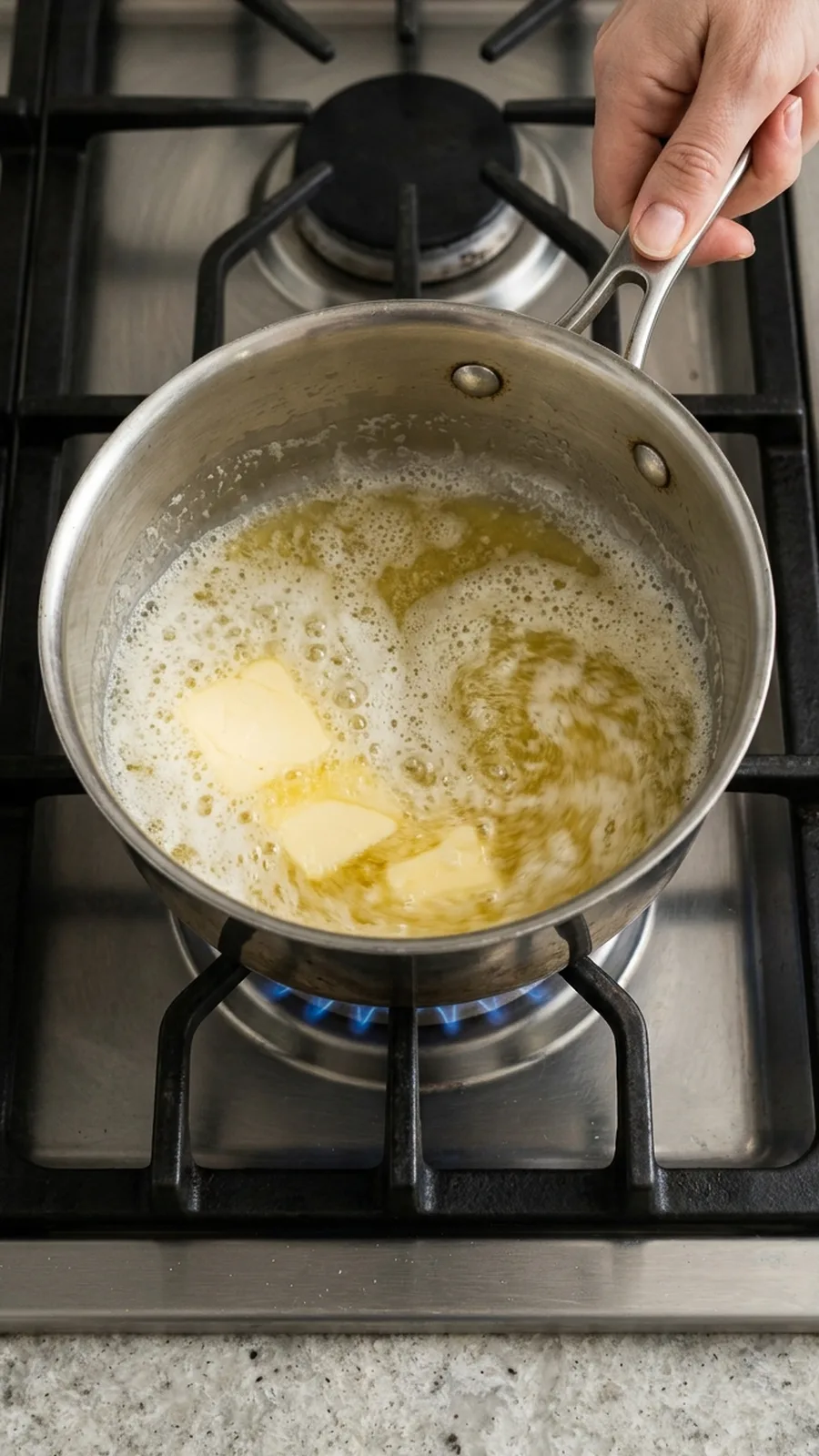
Step 1: Melt the butter.
Put the butter in the 2-quart (1.9 L) saucepan over medium heat. Cook for about 1 minute, swirling the pan until the butter is fully melted and just starting to foam.
Step 2: Whisk in the flour.
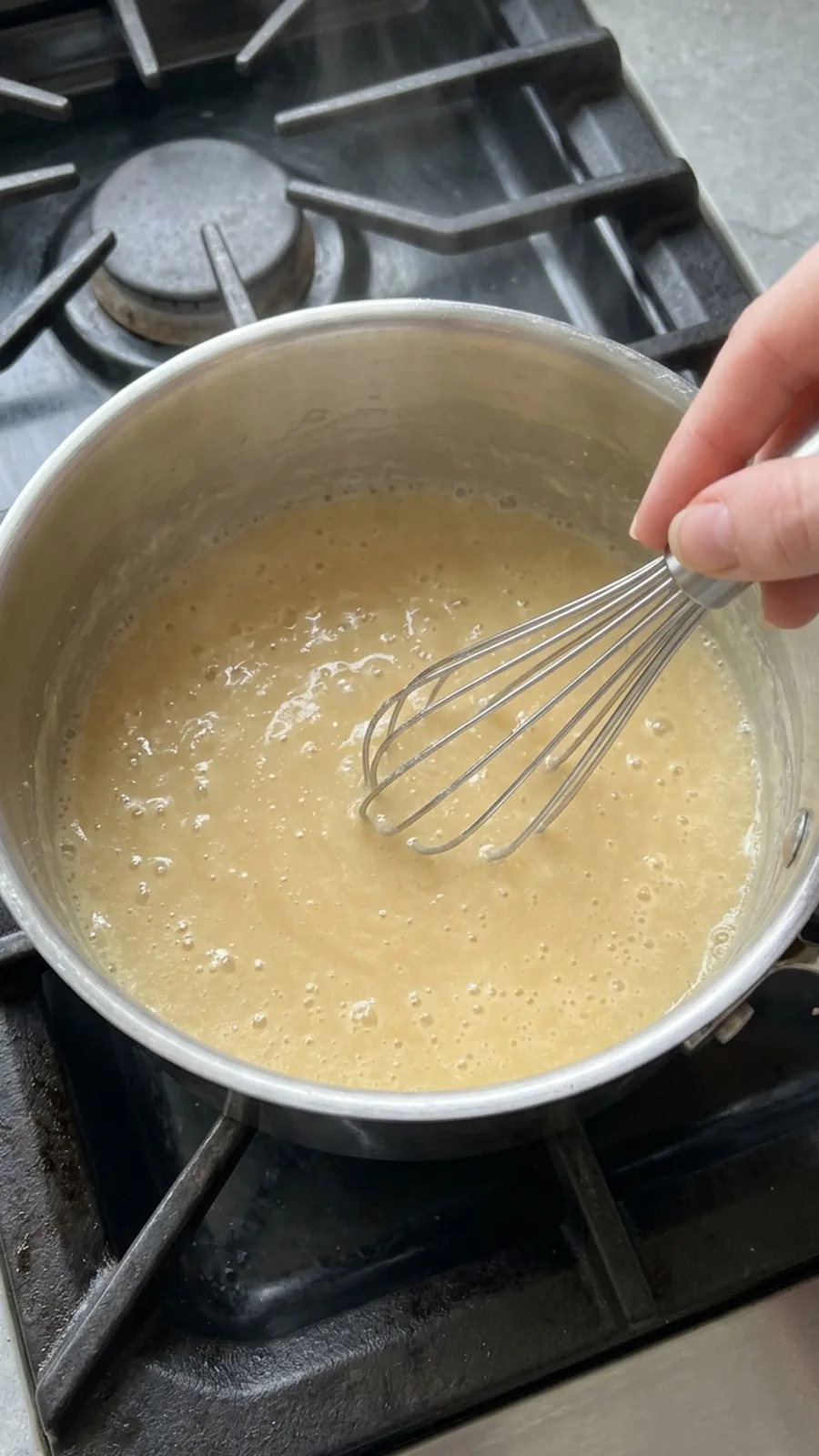
Add the flour and whisk constantly over medium heat for about 2 minutes. The paste should look smooth and pale golden, with small bubbles and no dry streaks of flour.
Step 3: Gradually add the stock.
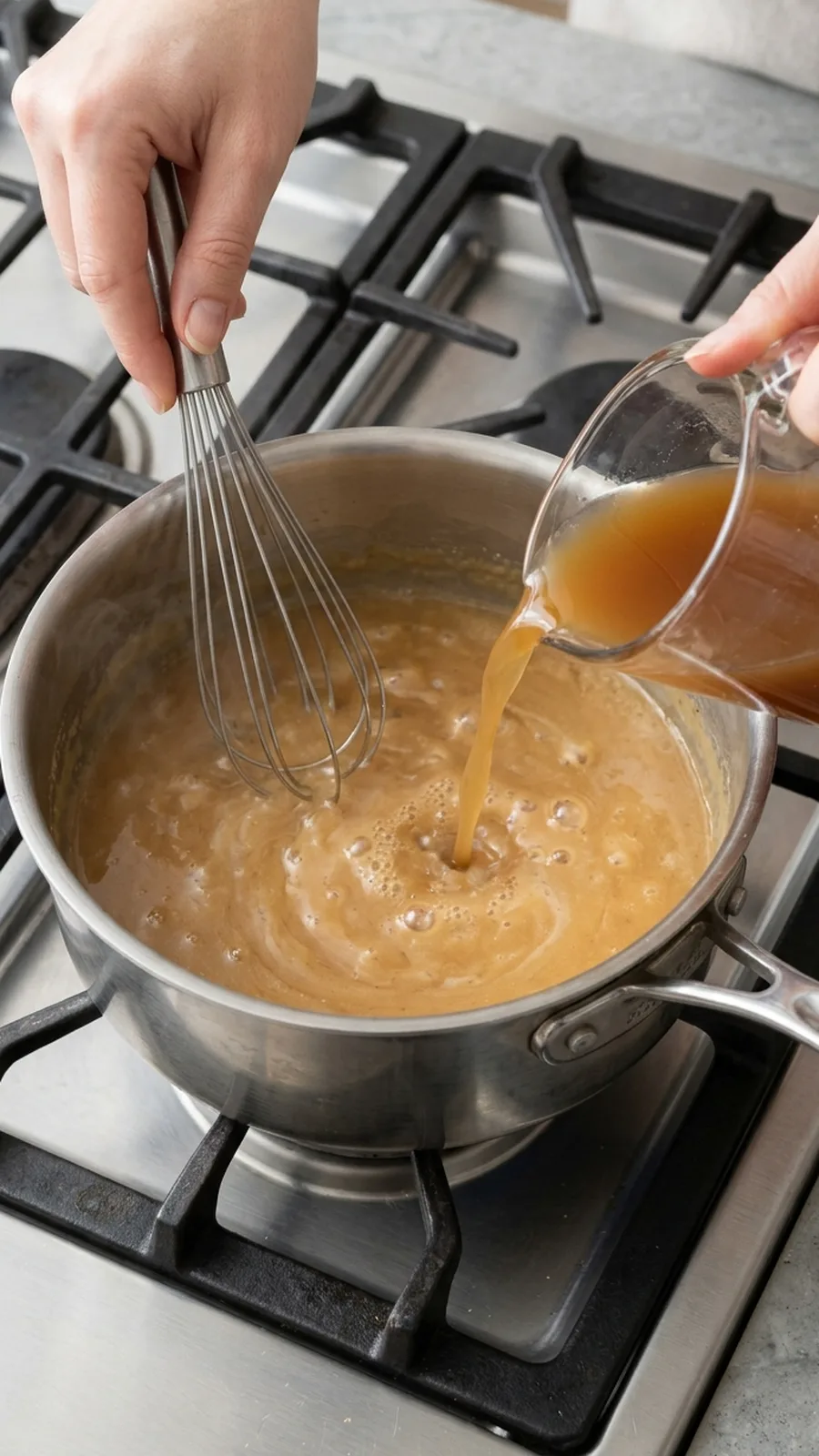
Keep the pan over medium heat. Add the turkey stock a splash at a time at first, whisking until smooth after each addition. Once the paste loosens, pour in the rest in a steady stream while whisking. This should take about 2 minutes.
Step 4: Bring the gravy to a simmer.
Continue heating over medium heat for about 4 minutes, whisking occasionally and sweeping the bottom of the pan. Look for small bubbles that rise and break steadily across the surface.
Step 5: Simmer until thickened.
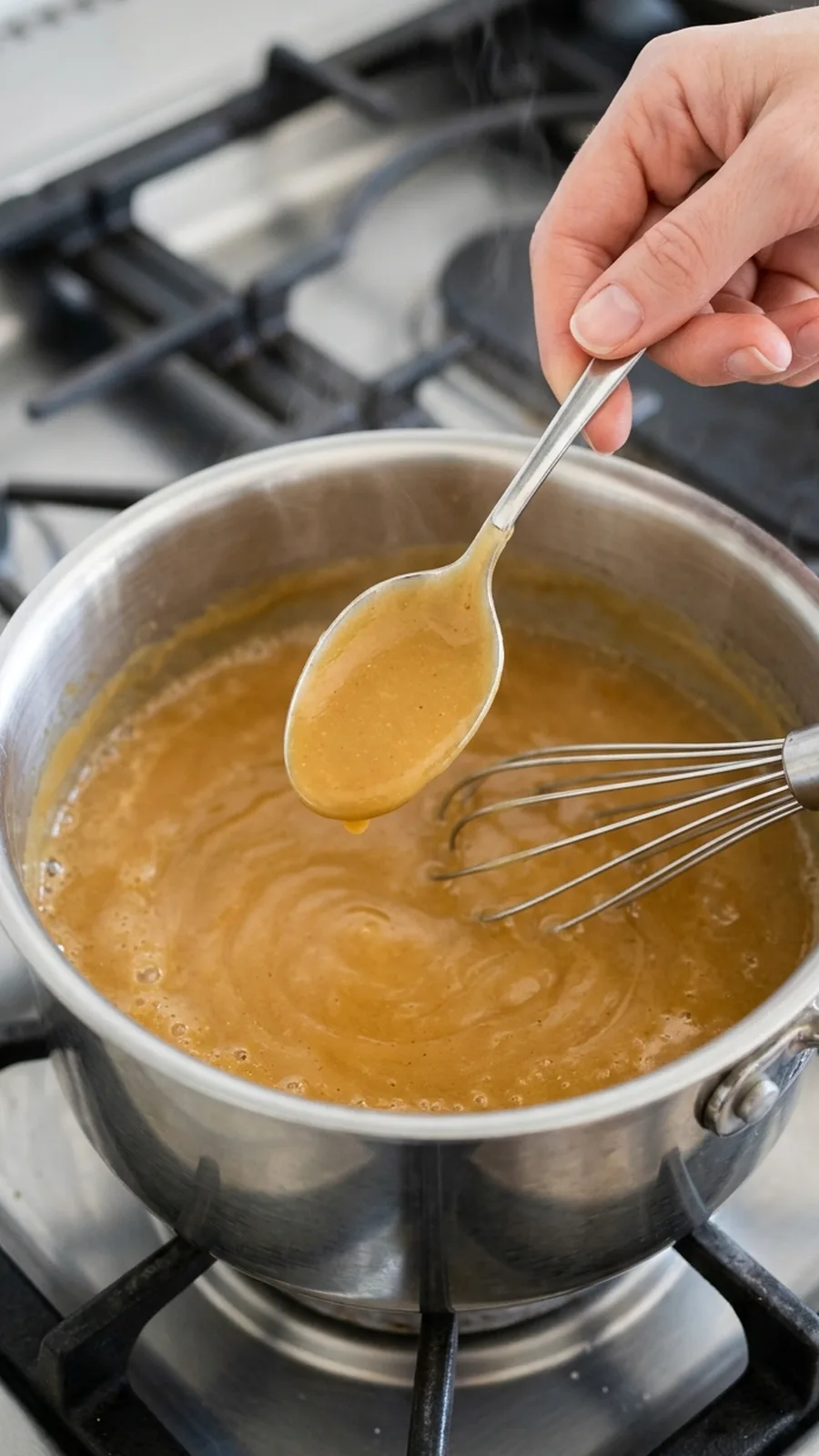
Reduce the heat to medium-low. Simmer gently for about 5 minutes, whisking occasionally, until the gravy lightly coats the back of a spoon. It should still pour easily.
Step 6: Season and serve.
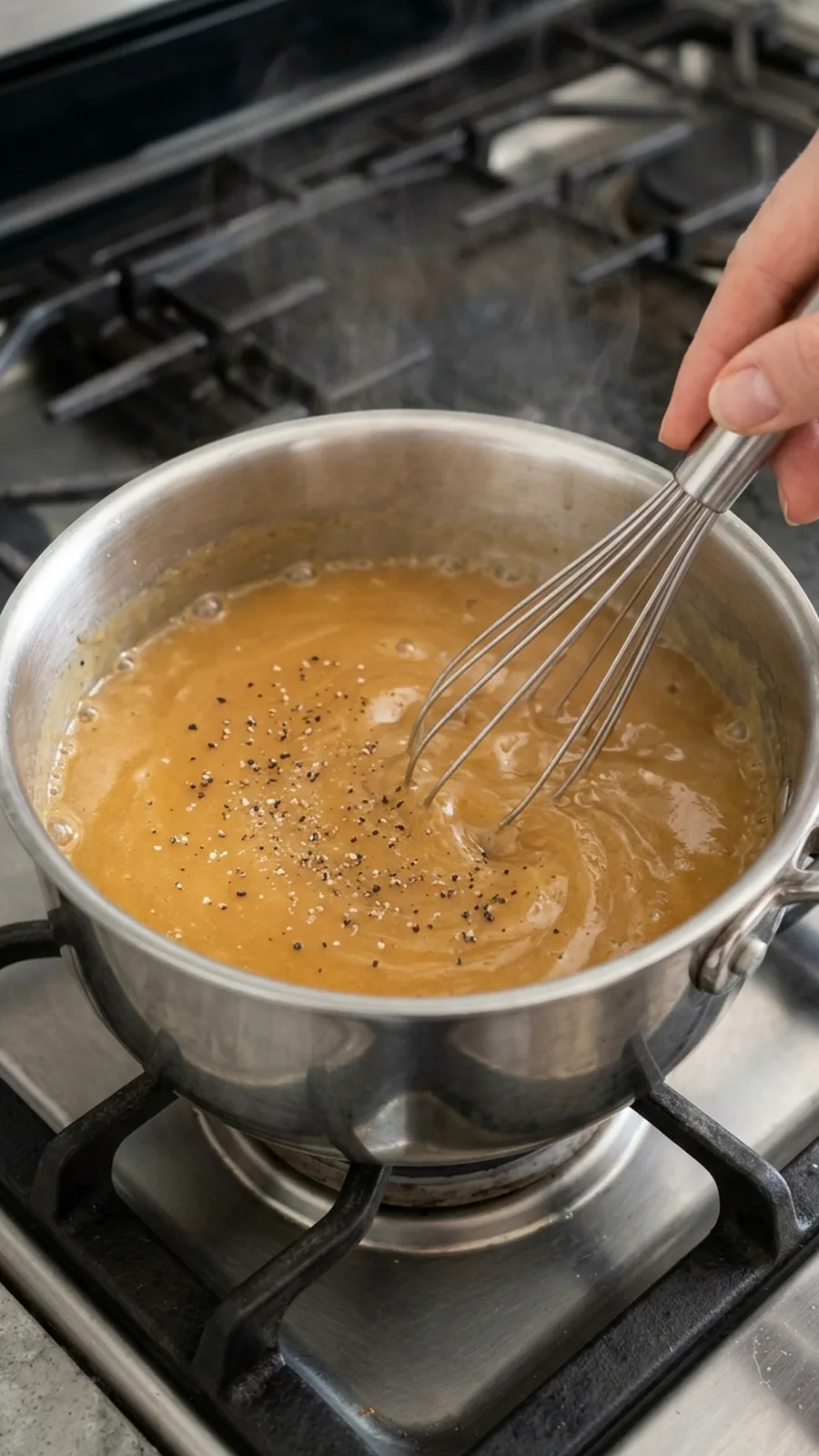
Whisk in the fine sea salt and ground black pepper over medium-low heat for about 1 minute, until the pepper is evenly distributed and the gravy is gently bubbling. Remove from the heat and serve warm.
Storage, Freezing, and Make-Ahead Instructions
Refrigerator: Transfer leftovers to a shallow, airtight container and refrigerate within 2 hours at 40°F (4°C) or below. Use within 3 to 4 days. It’s normal for the gravy to firm up in the fridge.
Freezer: Freeze the chilled gravy in a freezer-safe airtight container at 0°F (-18°C) or below for up to 3 months for best quality. Leave some room for expansion and thaw overnight in the refrigerator.
Make-ahead and reheating: Make the gravy up to 3 days ahead and refrigerate as directed above. Reheat in a saucepan over medium-low heat, whisking frequently until it reaches 165°F (74°C), then bring it briefly to a rolling boil before serving. If it looks thick when cold, give it time to warm up before judging the consistency.
FAQ
Can I make turkey gravy without drippings using chicken stock?
Yes. Use the same amount of low-sodium chicken stock; you’ll get a smooth, savory gravy with less turkey flavor.
Why is my turkey gravy lumpy?
The stock may have gone in too quickly at the start. Keep whisking as the gravy warms; small lumps often smooth out.
How do I thicken turkey gravy that’s too thin?
If it hasn’t finished simmering, give it the full cook time before deciding. If it still looks thin, simmer it uncovered until it lightly coats a spoon.
Can I make turkey gravy before the turkey is done?
Yes. Since the gravy gets its flavor from turkey stock instead of pan drippings, you can make it before the turkey goes into the oven.
Turkey Gravy Without Drippings
Ingredients
Method
- Put the butter in the 2-quart (1.9 L) saucepan over medium heat. Cook for about 1 minute, swirling the pan until the butter is fully melted and just starting to foam.
- Add the flour and whisk constantly over medium heat for about 2 minutes. The paste should look smooth and pale golden, with small bubbles and no dry streaks of flour.
- Keep the pan over medium heat: Add the turkey stock a splash at a time at first, whisking until smooth after each addition. Once the paste loosens, pour in the rest in a steady stream while whisking. This should take about 2 minutes.
- Continue heating over medium heat for about 4 minutes, whisking occasionally and sweeping the bottom of the pan. Look for small bubbles that rise and break steadily across the surface.
- Reduce the heat to medium-low: Simmer gently for about 5 minutes, whisking occasionally, until the gravy lightly coats the back of a spoon. It should still pour easily.
- Whisk in the fine sea salt and ground black pepper over medium-low heat for about 1 minute, until the pepper is evenly distributed and the gravy is gently bubbling. Remove from the heat and serve warm.