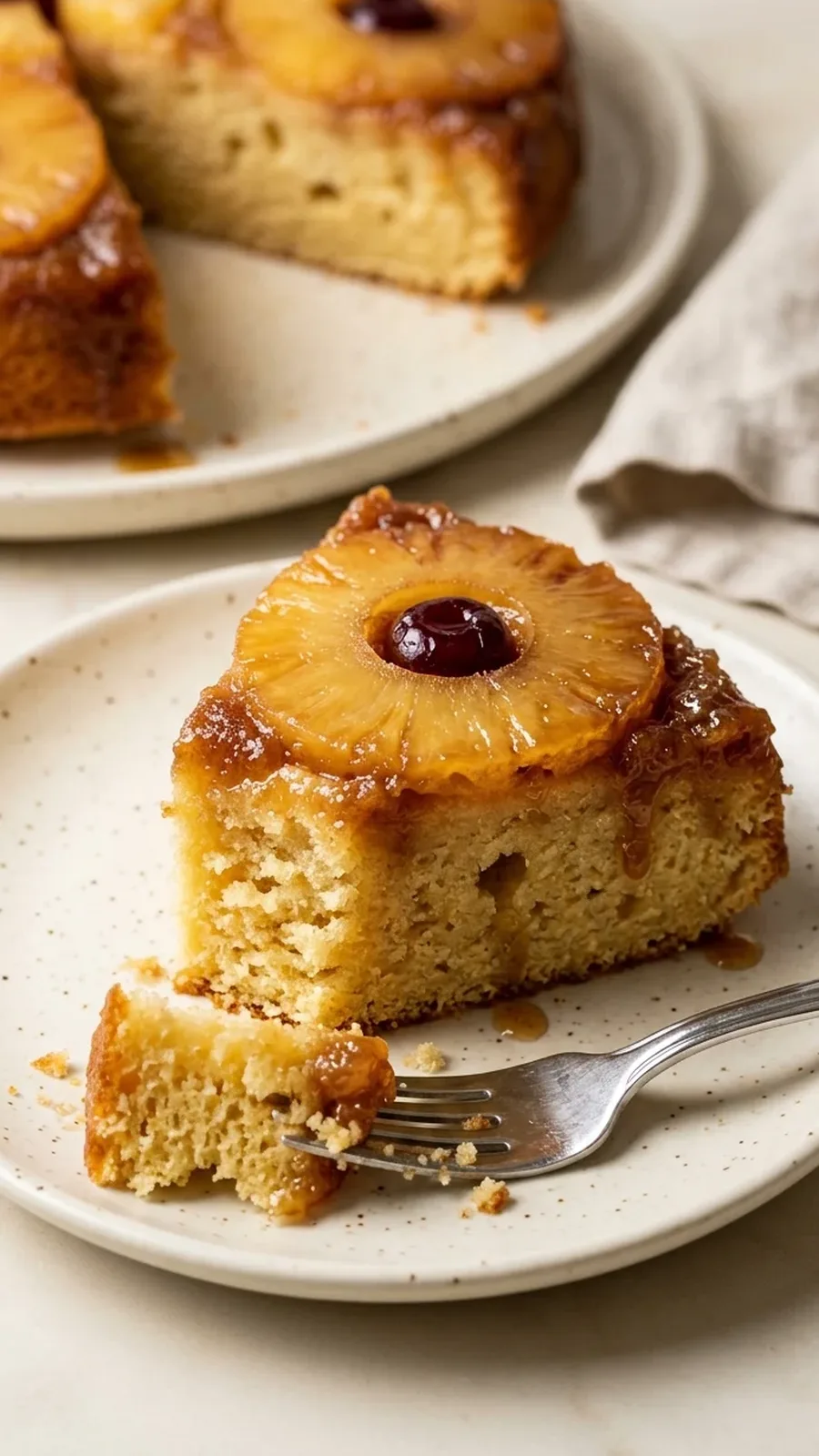
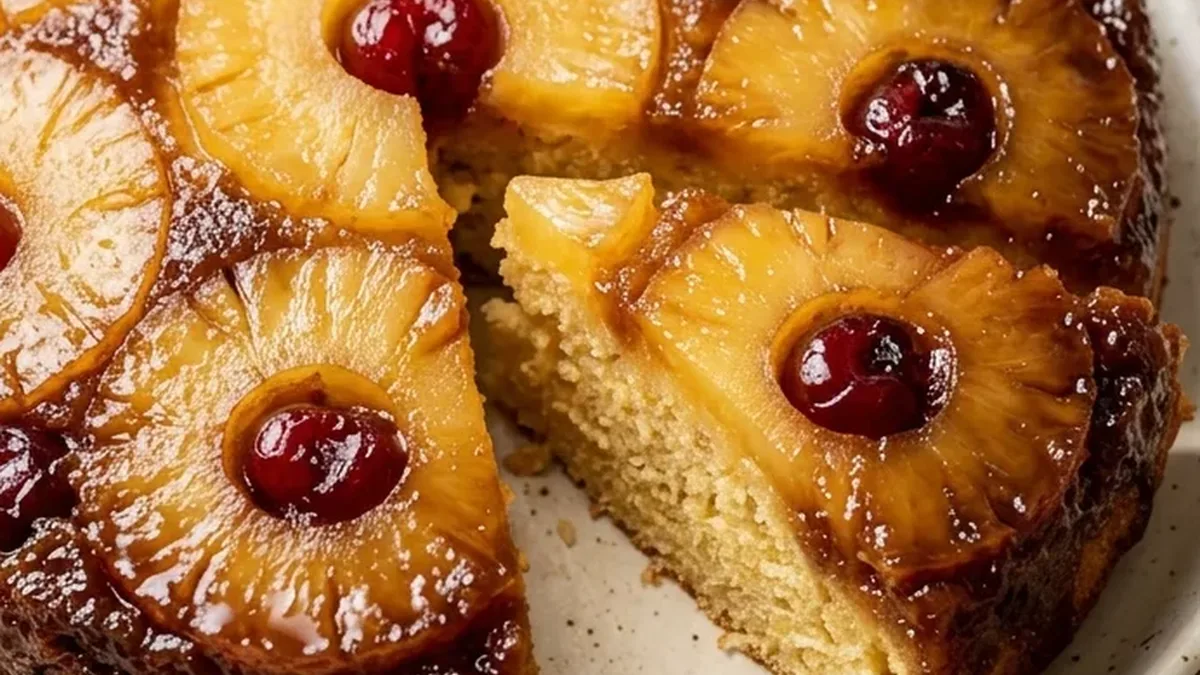
This easy pineapple upside down cake has a soft vanilla crumb beneath glossy pineapple rings and bright maraschino cherries. You build the topping right in the cake pan, spoon the batter over it, and bake everything together. When you flip the cake, the brown sugar glaze runs down the sides.
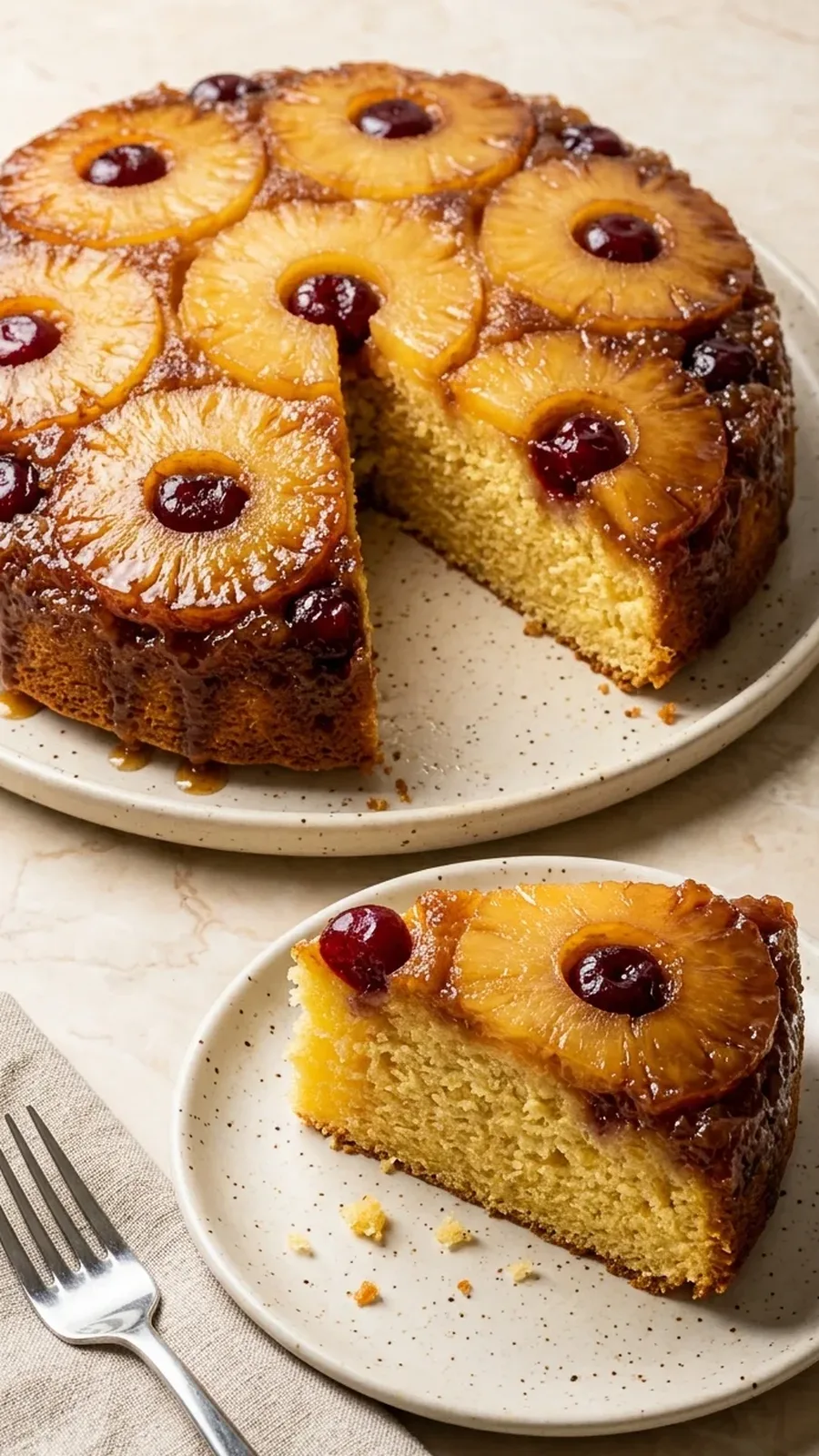
Canned pineapple keeps the prep simple and gives you the juice you need for the batter. Blot the fruit before arranging it so the glaze stays thick, then let the cake rest briefly after baking so it holds together when you turn it out.
Why This Recipe Works
- Melted butter and brown sugar form the glaze. They bubble under the fruit as the cake bakes, giving the pineapple a buttery caramel coating without a separate stovetop step.
- Pineapple juice carries the flavor into the cake. A splash from the can gives the vanilla batter a mild pineapple flavor, while sour cream keeps the crumb tender.
- A short rest makes the flip easier. The cake firms up enough to turn out in one piece while the topping is still warm and easy to release.
Equipment Needed
- 9-inch (23 cm) round metal cake pan, 2 inches (5 cm) deep
- Fine-mesh strainer and paper towels
- Small microwave-safe bowl
- Medium and large mixing bowls
- Liquid and dry measuring cups and measuring spoons
- Whisk, electric hand mixer, and silicone spatula
- Toothpick and wire cooling rack
- Thin offset spatula, oven mitts, and a rimmed serving plate wider than the cake pan
Ingredients List
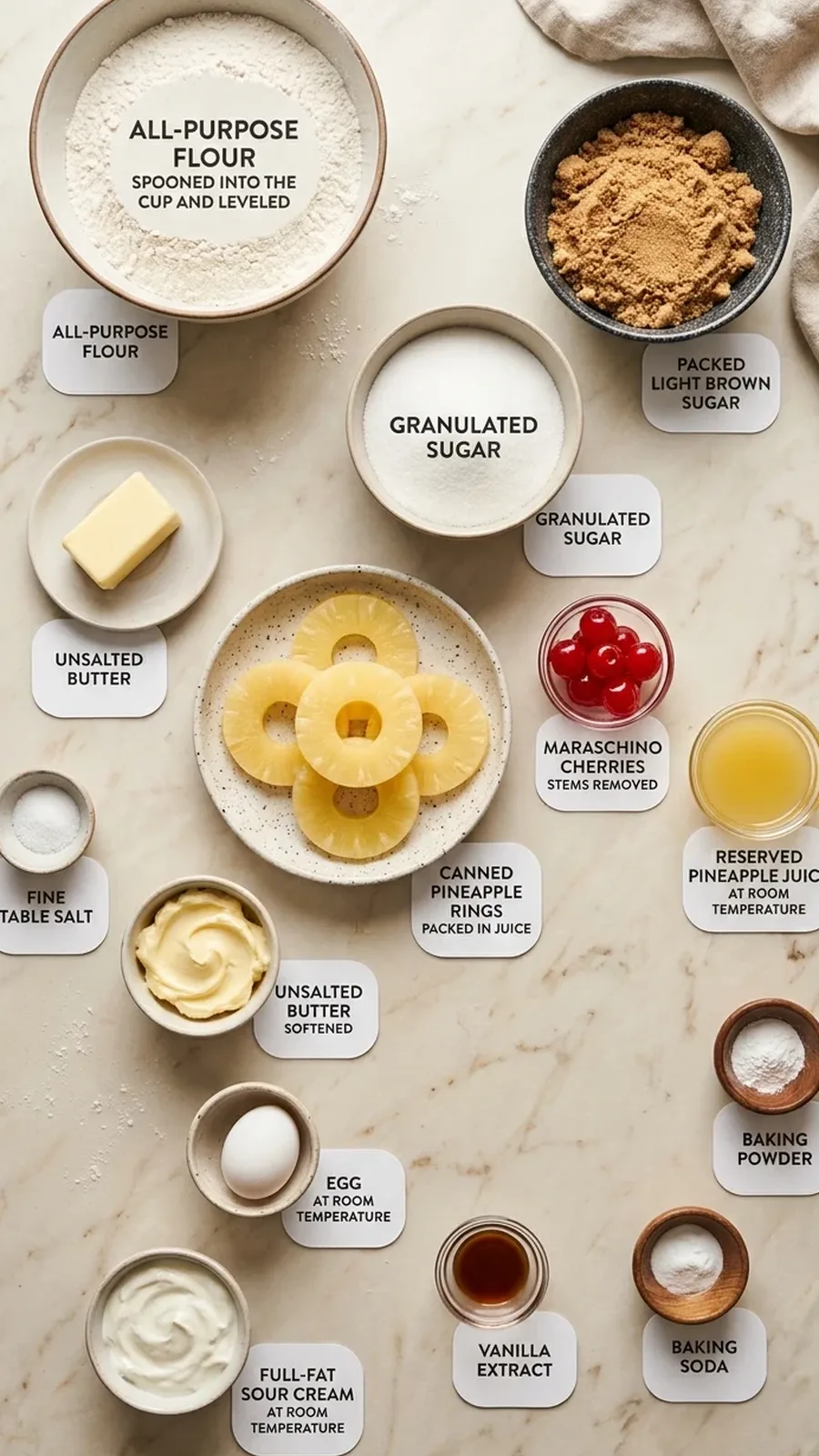
For the Topping
- 1/4 cup (57 g) unsalted butter
- 1/2 cup (100 g) packed light brown sugar
- 7 canned pineapple rings (about 8 oz or 225 g drained), packed in juice, with juice reserved for the batter
- 7 maraschino cherries (about 1 oz or 28 g drained), stems removed
For the Cake Batter
- 1 1/2 cups (180 g) all-purpose flour, spooned into the cup and leveled
- 1 teaspoon (4 g) baking powder
- 1/4 teaspoon (1 g) baking soda
- 1/2 teaspoon (3 g) fine table salt
- 6 tablespoons (85 g) unsalted butter, softened
- 3/4 cup (150 g) granulated sugar
- 1 large egg (50 g without shell), at room temperature
- 1 teaspoon (5 mL) vanilla extract
- 1/2 cup (120 g) full-fat sour cream, at room temperature
- 1/4 cup (60 mL) reserved pineapple juice, at room temperature
Ingredient Notes and Substitutions
- Canned pineapple rings: The evenly cut rings are easy to arrange and soften as the cake bakes. Substitution: Use the same number of thin fresh pineapple rings and measure the listed batter juice from bottled unsweetened pineapple juice. The fruit may stay a little firmer.
- Light brown sugar: It melts into the butter and gives the topping its caramel flavor. Substitution: Use the same amount of packed dark brown sugar for a darker glaze with a stronger molasses flavor.
- Full-fat sour cream: It adds moisture and provides the acidity the baking soda needs. Substitution: Use the same amount of plain full-fat Greek yogurt. The cake may have a slightly tangier flavor.
Step-by-Step Instructions
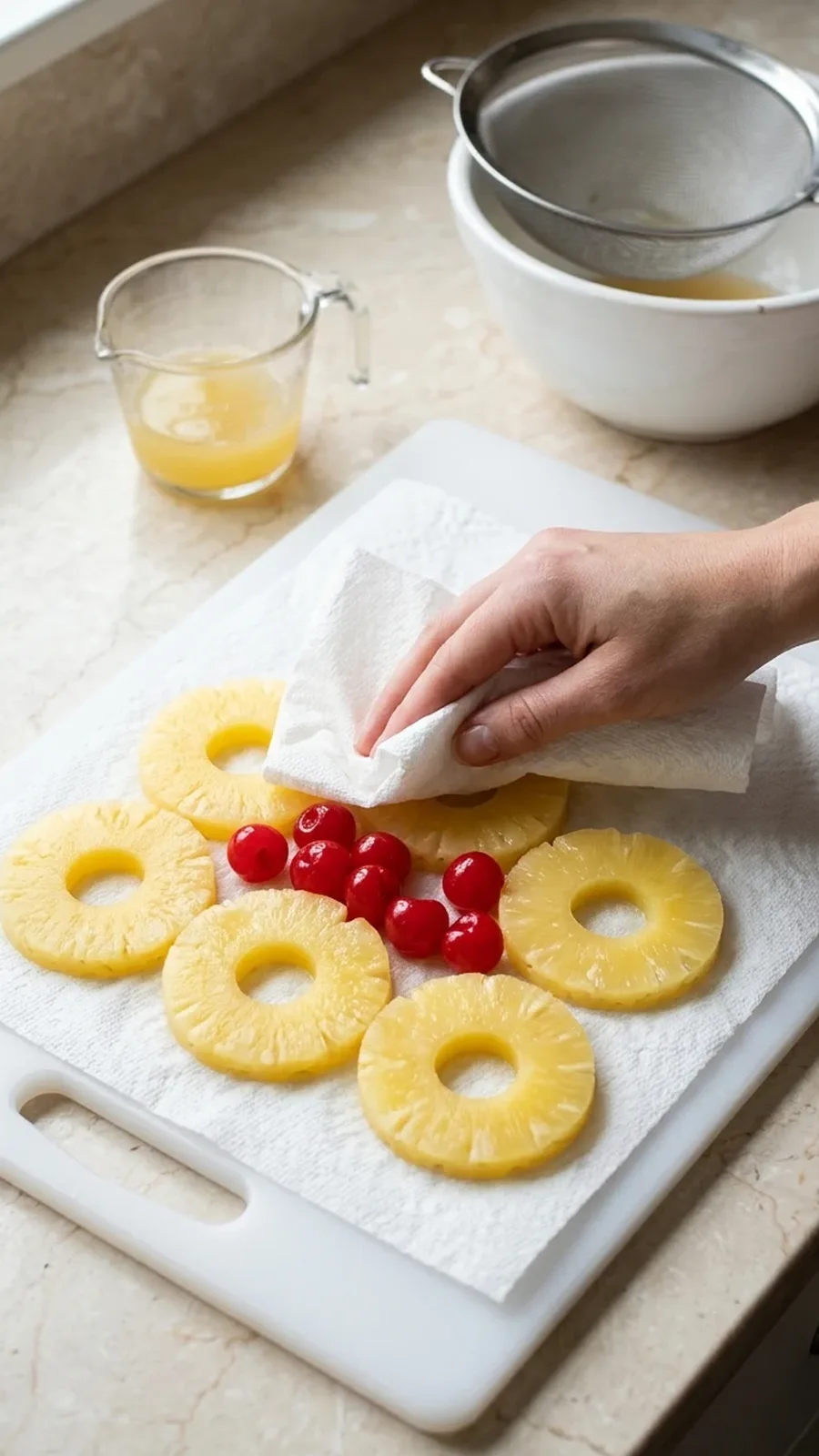
Step 1: Drain and blot the fruit. Drain the pineapple rings and reserve 1/4 cup (60 mL) of the juice for the batter.
Drain the cherries and blot both fruits with paper towels until their surfaces are barely damp. Set a rack in the center of the oven and preheat to 350°F (177°C).
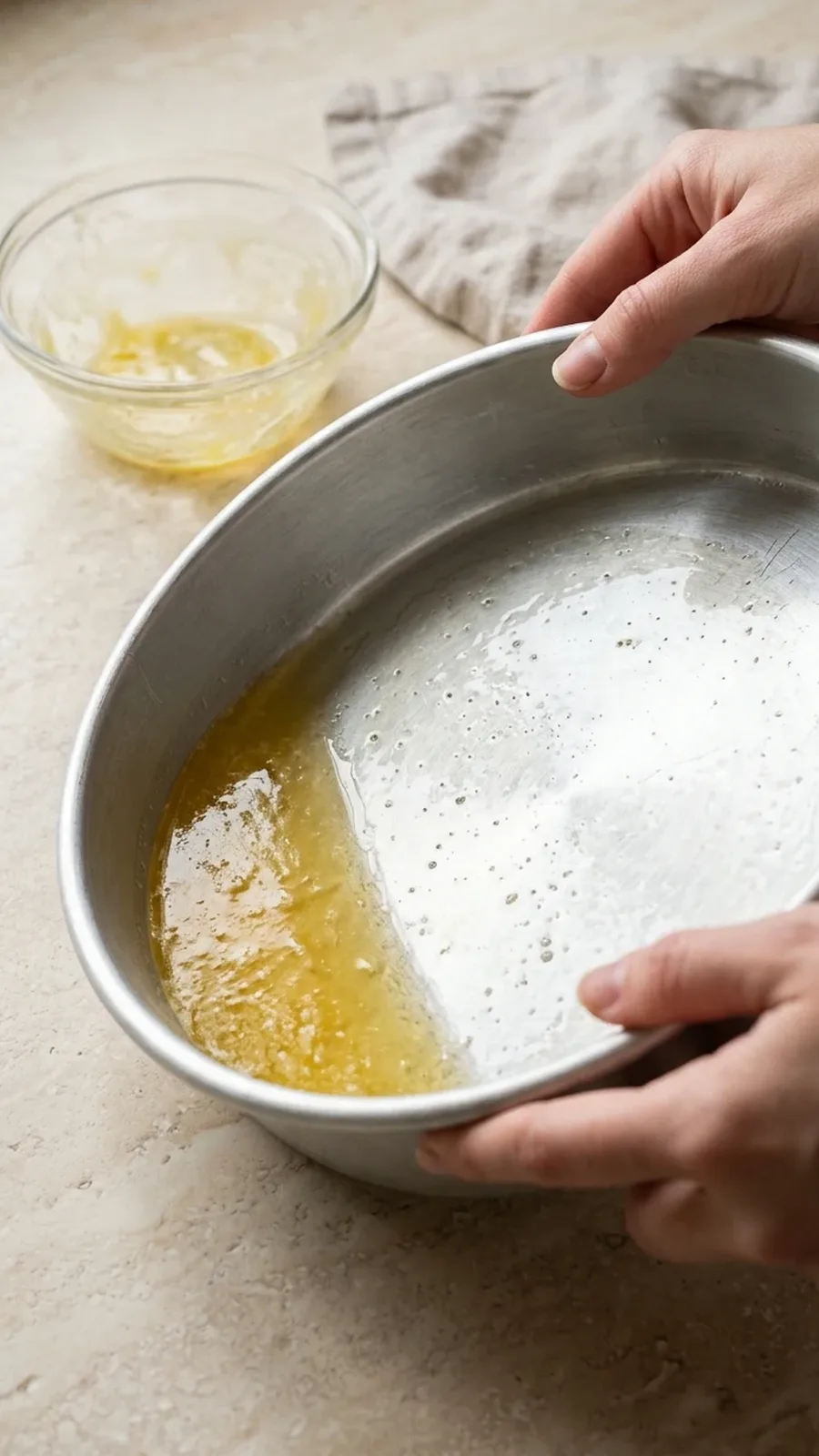
Step 2: Assemble the topping. Melt the 1/4 cup (57 g) butter in the microwave-safe bowl.
Pour it into the 9-inch (23 cm) round metal cake pan with 2-inch (5 cm) sides, tilt the pan to coat the bottom, and sprinkle the brown sugar evenly over it. Place one pineapple ring in the center and arrange the remaining rings around it, trimming pieces as needed to fit them in a single layer. Set one cherry in each ring, keeping any trimmed pieces tucked alongside the rings.
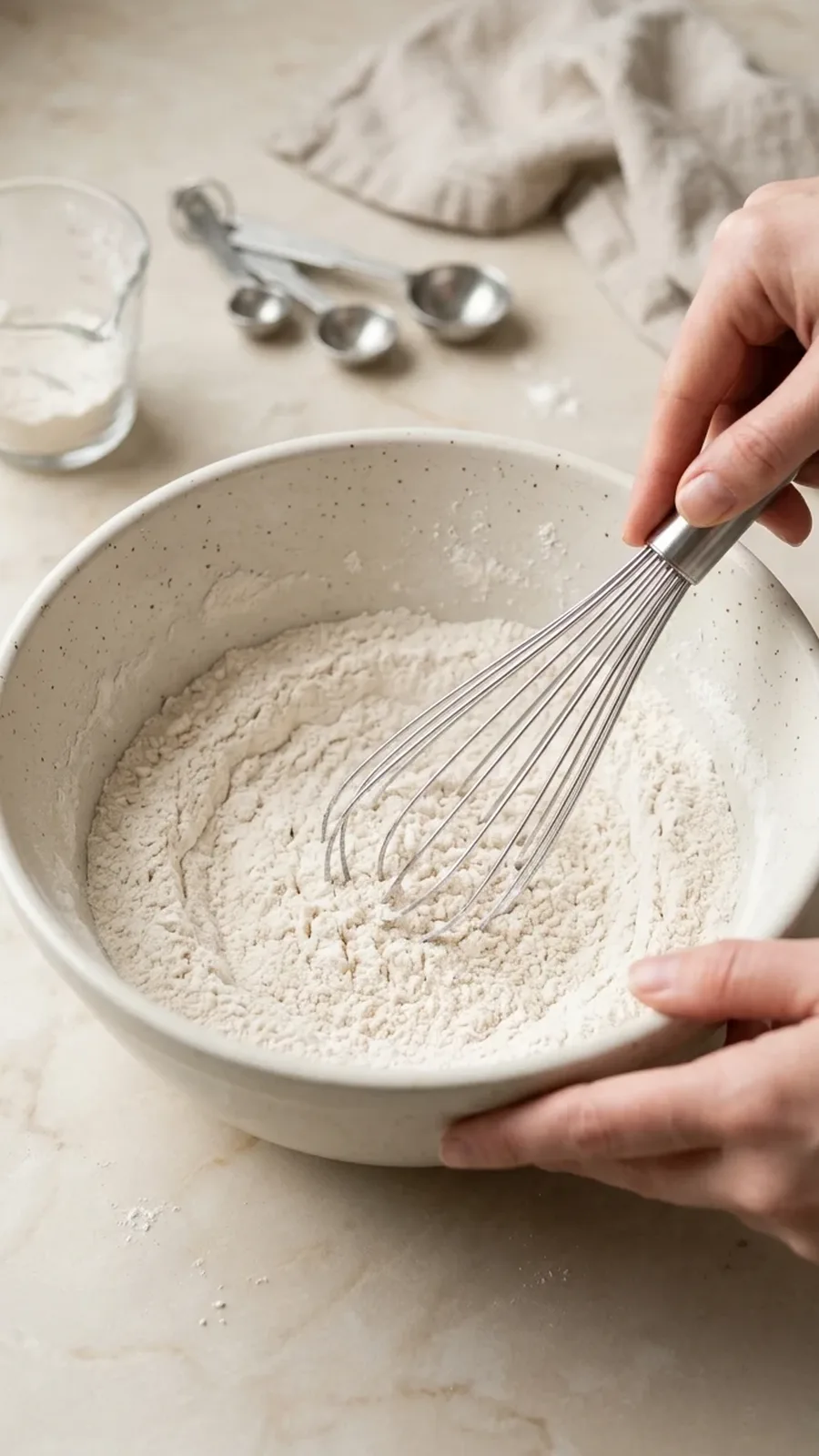
Step 3: Whisk the dry ingredients. Whisk the flour, baking powder, baking soda, and salt in the medium bowl until evenly combined.
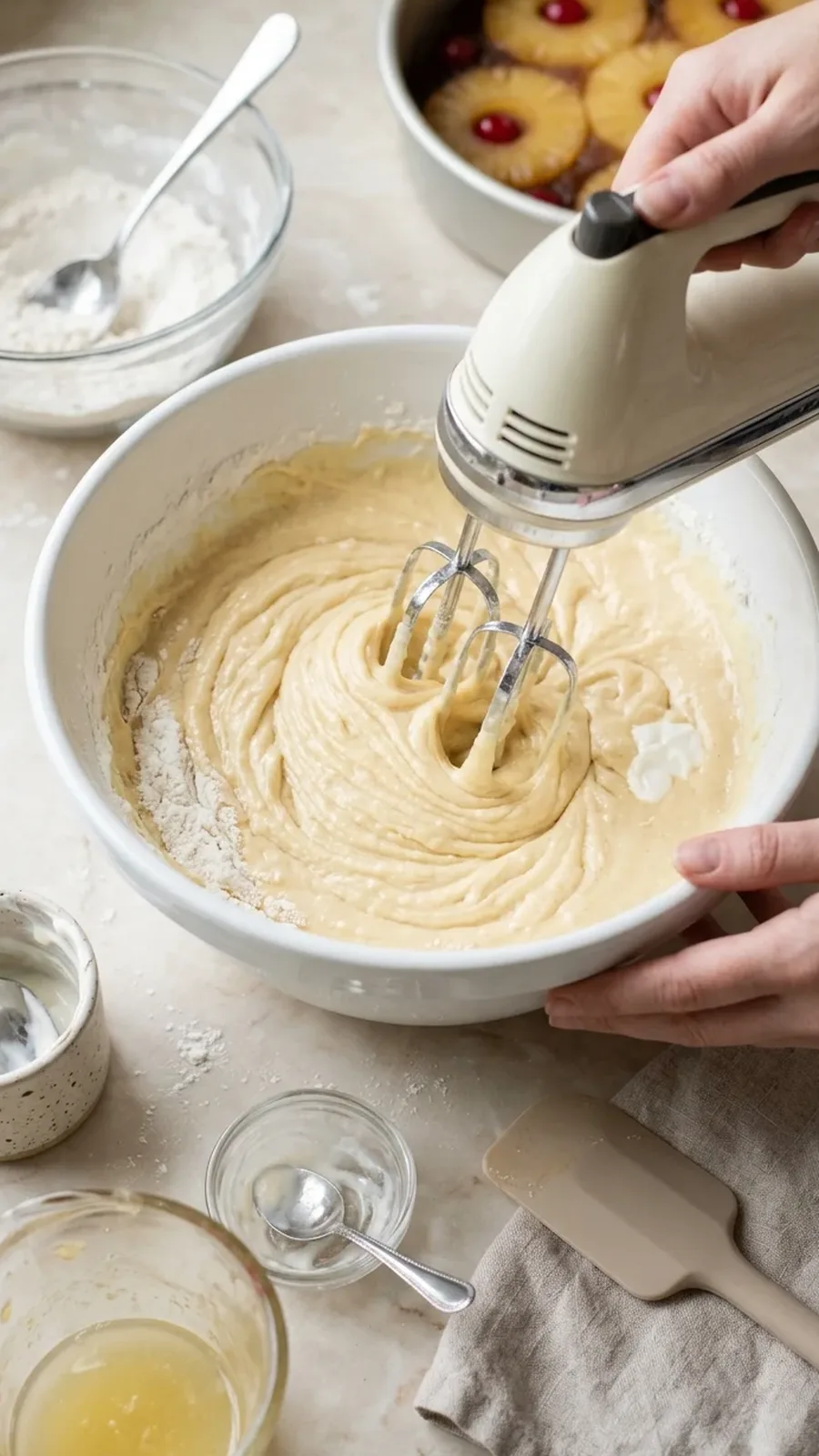
Step 4: Cream the butter and sugar. In the large bowl, beat the 6 tablespoons (85 g) softened butter and granulated sugar on medium speed for about 3 minutes, until pale and fluffy.
Beat in the egg and vanilla until blended, then scrape down the bowl.
Step 5: Finish the batter. Beat in half the flour mixture on low speed, then mix in the sour cream and reserved pineapple juice.
Add the remaining flour mixture and mix on low just until the dry streaks disappear. Spoon the batter over the fruit in small mounds, then gently smooth it into an even layer with the silicone spatula.
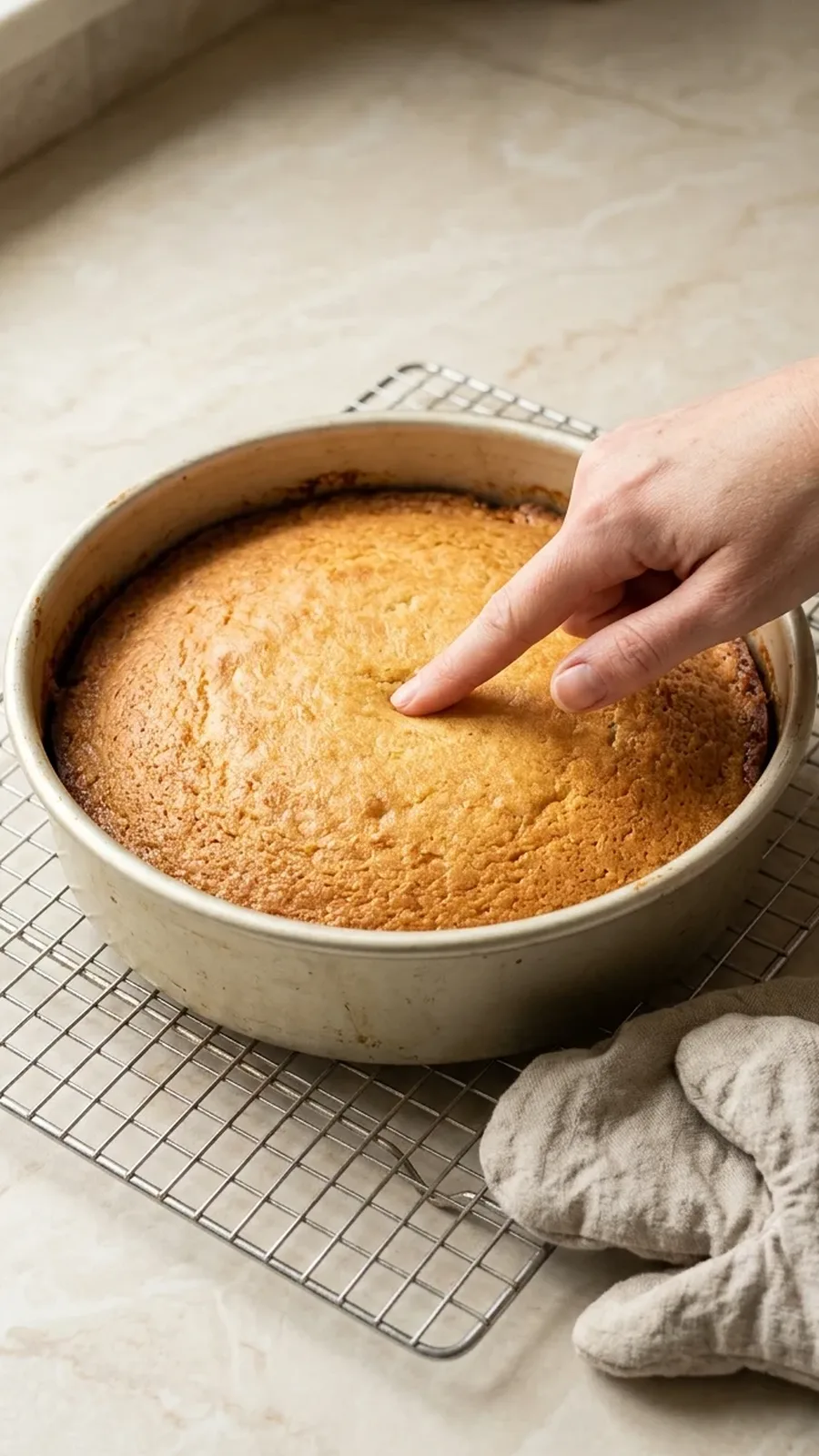
Step 6: Bake until the center sets. Bake on the center rack at 350°F (177°C) for about 45 minutes.
The exposed cake surface should be golden and spring back when lightly touched in the center. A toothpick inserted into the center should come out clean or with a few moist crumbs.
Step 7: Rest and flip the cake. Set the pan on the wire rack for 20 minutes.
Run the thin offset spatula around the edge, place the rimmed serving plate upside down over the pan, and use oven mitts to hold them together as you flip. Lift the pan slowly. If a piece of fruit sticks, lift it with the spatula and place it back on the cake.
Storage, Freezing, and Make-Ahead Instructions
- Refrigerator. Once the cake has cooled, cover it or put leftover slices in an airtight container. Refrigerate at 40°F (4°C) or below for up to 3 days.
- Freezer. Wrap cooled slices individually and seal them in a freezer bag. Freeze at 0°F (-18°C) or below for up to 2 months for best texture, then thaw overnight in the refrigerator. The pineapple may soften a little after thawing.
- Make-ahead and reheating. Bake and flip the cake a day ahead, then let it cool before covering and refrigerating it. You can serve it chilled or microwave a slice on a microwave-safe plate in 10-second bursts until slightly warm.
FAQ
How do you keep pineapple upside down cake from sticking?
Let it rest in the pan for 20 minutes, then loosen the edge and flip it while the brown sugar glaze is still warm.
Why is my pineapple upside down cake soggy?
Wet fruit can leave excess liquid in the topping, and an underbaked center can make the crumb gummy. Blot the fruit well and check the center with a toothpick before taking the cake out.
Can I use crushed pineapple instead of rings?
For this recipe, stick with rings. Crushed pineapple can trap more juice against the batter and form a loose topping that’s harder to turn out neatly.
Do I need to grease the cake pan?
The melted butter in the topping coats the bottom of the pan. Run a thin spatula around the sides after the cake rests to help it release.
Pineapple Upside Down Cake
Ingredients
Method
- Drain the cherries and blot both fruits with paper towels until their surfaces are barely damp. Set a rack in the center of the oven and preheat to 350°F (177°C).
- Pour it into the 9-inch (23 cm) round metal cake pan with 2-inch (5 cm) sides, tilt the pan to coat the bottom, and sprinkle the brown sugar evenly over it. Place one pineapple ring in the center and arrange the remaining rings around it, trimming pieces as needed to fit them in a single layer. Set one cherry in each ring, keeping any trimmed pieces tucked alongside the rings.
- Whisk the dry ingredients: Whisk the flour, baking powder, baking soda, and salt in the medium bowl until evenly combined.
- Beat in the egg and vanilla until blended, then scrape down the bowl.
- Add the remaining flour mixture and mix on low just until the dry streaks disappear. Spoon the batter over the fruit in small mounds, then gently smooth it into an even layer with the silicone spatula.
- The exposed cake surface should be golden and spring back when lightly touched in the center. A toothpick inserted into the center should come out clean or with a few moist crumbs.
- Run the thin offset spatula around the edge, place the rimmed serving plate upside down over the pan, and use oven mitts to hold them together as you flip. Lift the pan slowly. If a piece of fruit sticks, lift it with the spatula and place it back on the cake.