Ingredients
Method
Method
- Prepare the Vegetables: Peel and roughly chop the yellow onion. Peel the carrots and cut them into thick, evenly sized slices. Roughly chop the celery stalks and lightly crush the peeled garlic cloves. The vegetables do not need to be finely diced because they will be blended after cooking. However, keeping the pieces relatively uniform helps them soften at approximately the same rate.
- Soften the Aromatics: Place a large 5–6-quart soup pot or Dutch oven over medium heat. Add 1 tablespoon extra-virgin olive oil. Once the oil is warm, add the chopped onion, carrots, and celery. Cook for approximately 4–5 minutes, stirring occasionally, until the onion begins to soften and the vegetables become fragrant. Add the crushed garlic cloves and stir for another 30 seconds. The vegetables should look slightly softened but not deeply browned. Avoid letting the garlic burn, as it can give the broth a bitter flavor.
- Add the Chicken Broth and Seasonings: Pour 8 cups low-sodium chicken broth into the pot. Add ½ teaspoon fine sea salt and ¼ teaspoon freshly ground black pepper. Stir gently to combine. Increase the heat to medium-high and bring the mixture just to a gentle boil. Once small bubbles begin to rise steadily, reduce the heat to medium-low. The broth should simmer gently rather than boil rapidly.
- Simmer Until the Vegetables Are Tender: Partially cover the pot and simmer for approximately 15–18 minutes, or until the carrots, celery, and onion are completely tender. Check the carrots by pressing a piece with a fork. They should break apart easily without resistance. If the vegetables still feel firm, continue simmering for a few additional minutes. The broth should develop a savory aroma, and the carrots should give it a light golden color.
- Blend the Vegetables into the Broth: Remove the pot from the heat. Using an immersion blender, carefully blend the vegetables directly in the broth until the mixture is smooth. Keep the blender head fully submerged to avoid splashing hot liquid. The soup base should become slightly thicker, with a silky consistency and an even golden color. If using a countertop blender, allow the mixture to cool slightly and blend it in small batches using a vented lid designed for hot liquids. Never seal hot liquid tightly in a blender. Return the blended broth to the pot. If you prefer a more rustic soup, blend only part of the vegetables and leave some small pieces intact.
- Add the Pastina: Return the pot to the stovetop over medium heat and bring the blended broth to a gentle simmer. Add 1 cup dry pastina and stir immediately to prevent the small pasta pieces from sticking together. Reduce the heat slightly if the soup begins to boil too vigorously. The pasta should move freely through the broth rather than collect at the bottom of the pot. Stir frequently during cooking, especially during the first few minutes.
- Cook the Pastina Until Tender: Cook the pastina according to its package directions, generally about 5–8 minutes for many small pasta shapes. Stir often to prevent sticking. The pasta should become tender while retaining a little structure. Avoid cooking it until it begins to fall apart. As the pastina cooks, it will absorb some of the broth and release starch, naturally thickening the soup. If the mixture becomes thicker than desired, stir in a small amount of additional hot water until it reaches a comfortable, spoonable consistency.
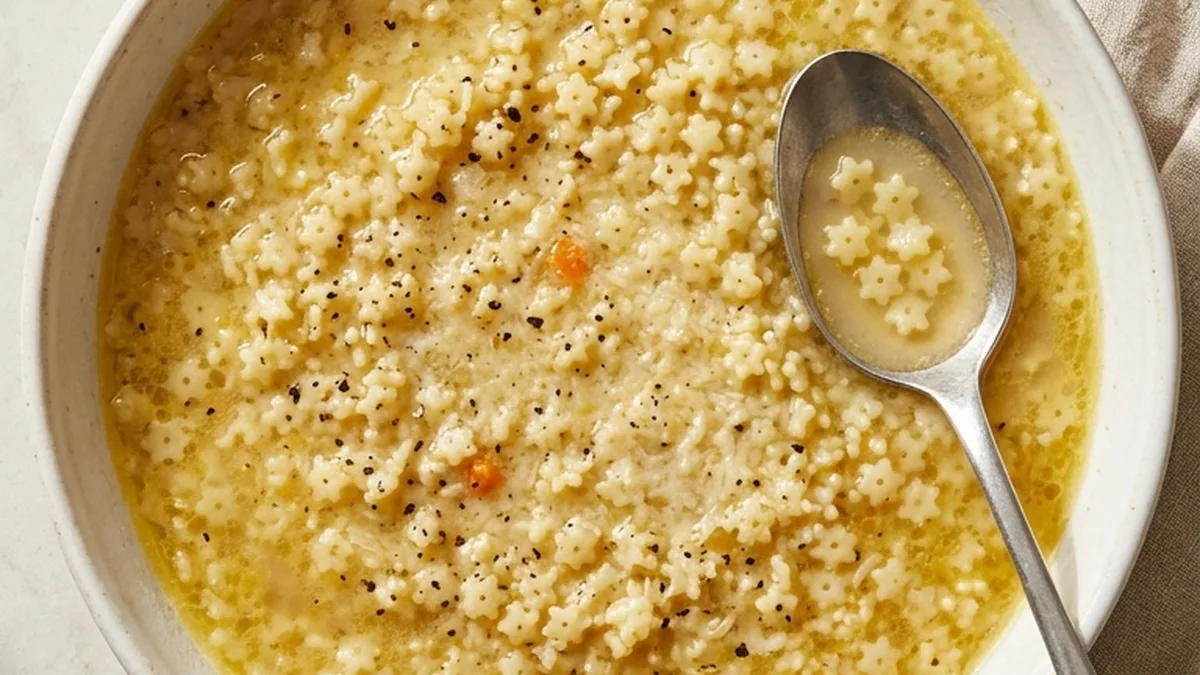
- Stir in the Parmesan Cheese: Once the pastina is tender, reduce the heat to low. Add ½ cup freshly grated Parmesan cheese gradually, stirring gently until the cheese is incorporated. The soup should look slightly creamier, with a smooth broth surrounding the tiny pasta pieces. Avoid boiling the soup vigorously after adding the Parmesan because excessive heat can cause the cheese to clump. Taste the soup before adding any extra salt, since Parmesan contributes its own saltiness.
- Finish with Fresh Lemon Juice: Remove the pot from the heat. Stir in 1 tablespoon freshly squeezed lemon juice. The lemon should brighten the flavor without overpowering the vegetables or Parmesan. Taste the soup and adjust the seasoning if needed. The finished consistency should be creamy but still loose enough to ladle easily. If it has become too thick, add a small splash of hot water and stir gently.
- Garnish and Serve: Ladle the hot Italian Penicillin – Pastina Soup into 6 serving bowls. If desired, garnish with the optional chopped fresh parsley, additional grated Parmesan, and a light drizzle of extra-virgin olive oil. Serve immediately while the pastina is tender and the broth is smooth and warm. The soup will continue thickening as it stands because the small pasta absorbs liquid, so it is best enjoyed shortly after cooking.