
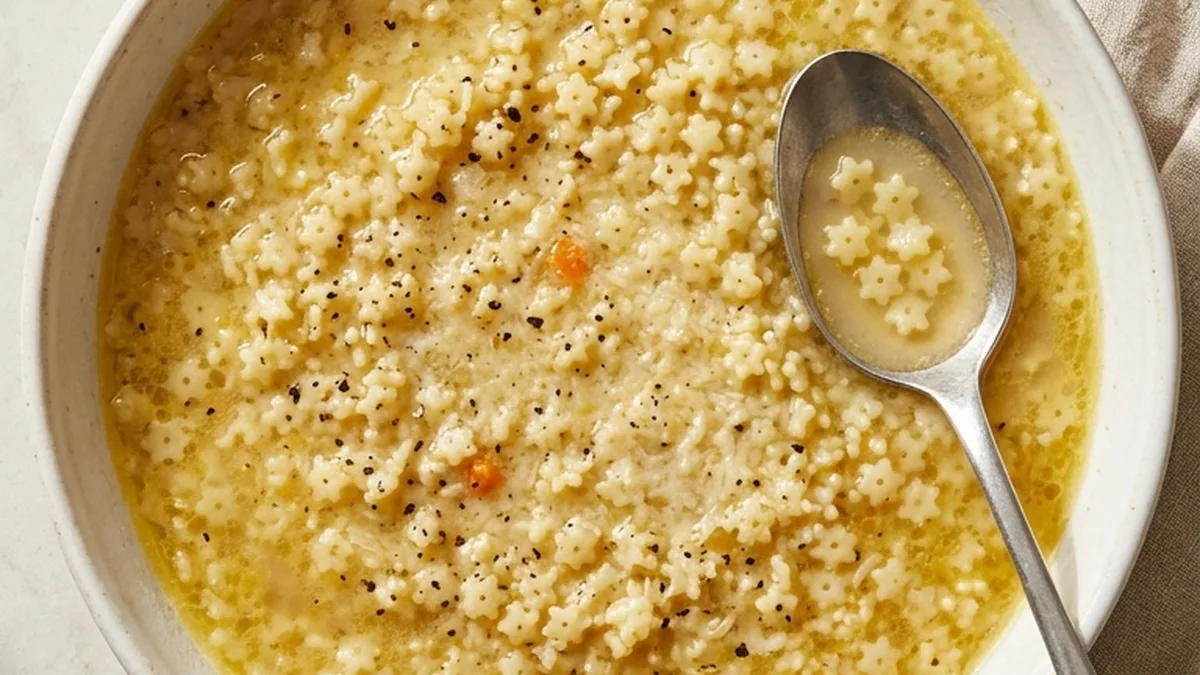
Italian Penicillin – Pastina Soup is a comforting Italian-style soup made with tiny pasta, tender vegetables, flavorful chicken broth, and freshly grated Parmesan cheese. Often nicknamed "Italian penicillin" because of its reputation as a soothing comfort food, this simple soup has a silky, savory broth and delicate pasta that makes every spoonful warm and satisfying. Slowly simmered carrots, celery, onion, and garlic create a naturally flavorful base without requiring heavy cream.
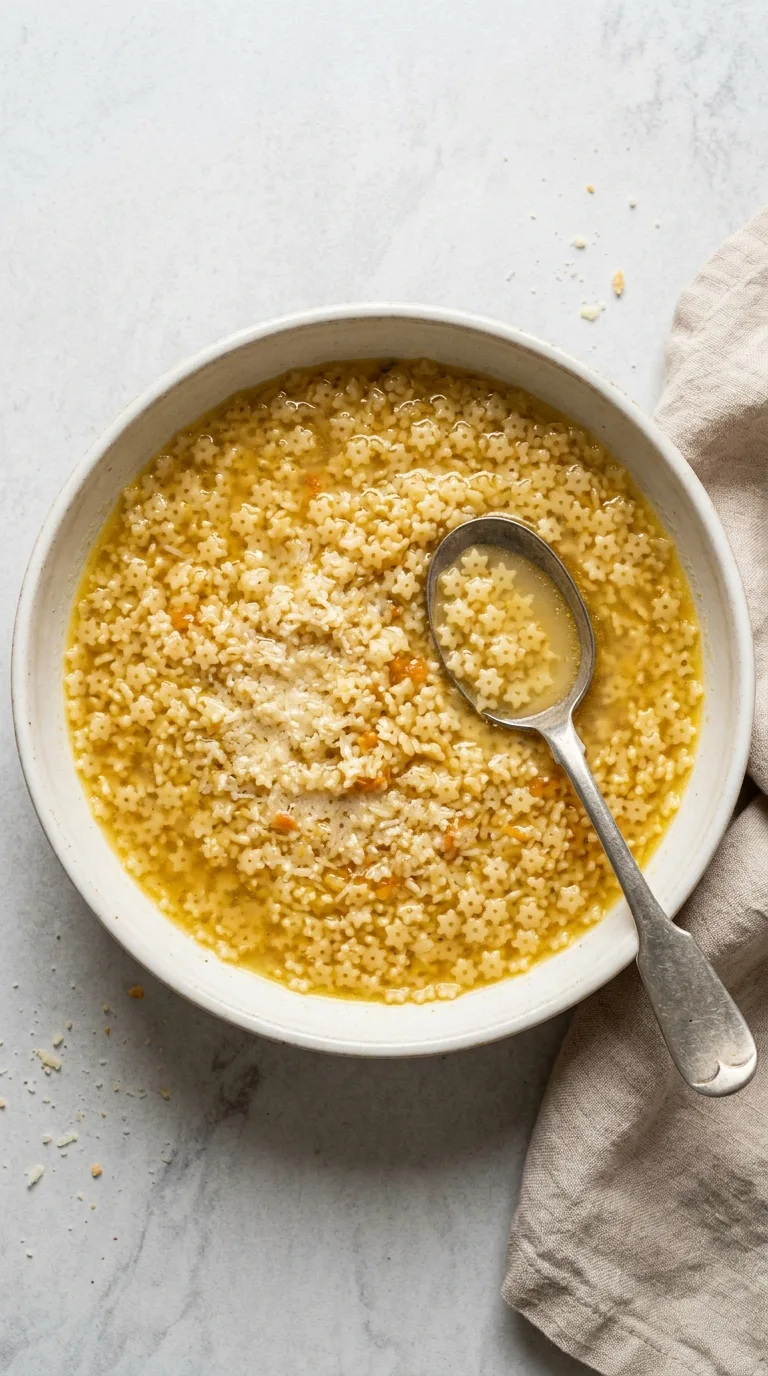
This version blends the cooked vegetables into the broth for a smooth, velvety consistency before adding the pastina. It comes together in one pot in about 45 minutes, using everyday ingredients and straightforward cooking techniques. It's a practical choice for chilly evenings, light lunches, or days when you're craving a comforting bowl of homemade soup.
Why This Recipe Works
- Simmered vegetables create a flavorful foundation. Carrots, celery, onion, and garlic soften in chicken broth, developing natural sweetness and savory depth without requiring complicated preparation.
- Blending the vegetables creates a creamy texture. Pureeing the softened vegetables thickens the broth naturally, making the soup feel smooth and comforting without adding cream.
- Tiny pastina makes the soup satisfying. Small pasta shapes cook quickly and distribute evenly throughout the broth, creating a delicate texture that's easy to eat.
- Parmesan adds savory richness. Freshly grated Parmesan contributes a nutty, salty flavor that complements the vegetables and chicken broth.
- A little lemon brightens the finished soup. Fresh lemon juice balances the rich broth and cheese without making the soup noticeably sour.
Equipment Needed
- Large soup pot or Dutch oven, approximately 5–6 quarts (4.7–5.7 L)
- Sharp chef's knife
- Cutting board
- Measuring cups and spoons
- Wooden spoon or heat-resistant spatula
- Immersion blender or countertop blender suitable for hot liquids
- Ladle
- Fine grater for Parmesan cheese
Ingredients List
For the Vegetable Broth Base
- 1 tablespoon (15 ml) extra-virgin olive oil
- 1 medium yellow onion, approximately 1 cup (150 g), peeled and roughly chopped
- 2 medium carrots, approximately 1 cup (130 g), peeled and cut into thick slices
- 2 medium celery stalks, approximately 1 cup (100 g), roughly chopped
- 2 garlic cloves (about 6 g), peeled and lightly crushed
- 8 cups (1.9 L) low-sodium chicken broth
- ½ teaspoon (3 g) fine sea salt, or to taste
- ¼ teaspoon (0.5 g) freshly ground black pepper
For the Pastina Soup
- 1 cup (approximately 180 g) dry pastina, such as stelline, acini di pepe, or another tiny pasta shape
- ½ cup (50 g) freshly grated Parmesan cheese
- 1 tablespoon (15 ml) freshly squeezed lemon juice
Optional Garnishes
- 2 tablespoons (about 8 g) finely chopped fresh flat-leaf parsley, optional, for serving
- 2 tablespoons (10 g) additional freshly grated Parmesan cheese, optional, for serving
- 1 teaspoon (5 ml) extra-virgin olive oil, optional, for drizzling
Ingredient Notes and Substitutions
- Pastina: Pastina refers to very small pasta shapes traditionally used in Italian soups. Stelline, also called little stars, is a popular choice because the tiny pieces cook quickly and create a delicate, comforting texture. Acini di pepe, tiny alphabet pasta, and other small soup pasta shapes can also be used. Cooking times vary depending on the shape and brand, so follow the package instructions and begin checking for doneness a minute before the recommended time. Avoid replacing pastina with large pasta shapes without adjusting the cooking time and broth quantity. Larger pasta absorbs liquid differently and changes the texture of the soup.
- Chicken Broth: Chicken broth provides the savory foundation of this recipe and gives the soup its familiar comforting flavor. Low-sodium broth is recommended because it allows you to control the seasoning, especially when Parmesan cheese is added. Homemade chicken stock can be used in the same quantity for a richer flavor. Vegetable broth is a suitable alternative if you prefer a meat-free version. The soup will have a slightly lighter flavor, but the vegetables and Parmesan still provide plenty of savory depth.
- Carrots, Celery, and Onion: These three vegetables form the aromatic base of the soup. Carrots contribute natural sweetness and a golden color, while celery adds a fresh, slightly earthy flavor. Onion provides savory depth and helps balance the broth. Shallots can replace the onion in an equivalent prepared amount for a milder, slightly sweeter flavor. If celery is unavailable, you can omit it, although the broth will lose some of its traditional aromatic character. For the intended flavor and consistency, keeping all three vegetables is recommended.
- Parmesan Cheese: Freshly grated Parmesan adds a savory, nutty finish and enhances the flavor of the broth. Parmigiano Reggiano is a particularly flavorful choice, but regular Parmesan also works. Pecorino Romano can be substituted in the same quantity, although it is saltier and sharper. If using Pecorino, reduce the initial salt and adjust the seasoning after adding the cheese. For a dairy-free version, omit the Parmesan or use a suitable plant-based Parmesan-style alternative. The finished soup will have a lighter savory flavor.
- Fresh Lemon Juice: Lemon juice adds a subtle acidity that balances the richness of the broth and cheese. Freshly squeezed juice is preferable because it has a cleaner, brighter flavor. If lemon juice is unavailable, the soup can be made without it. The result will taste slightly richer and less bright. Avoid using a strongly flavored vinegar as a direct substitute, since it may change the delicate flavor of the soup.
Step-by-Step Instructions
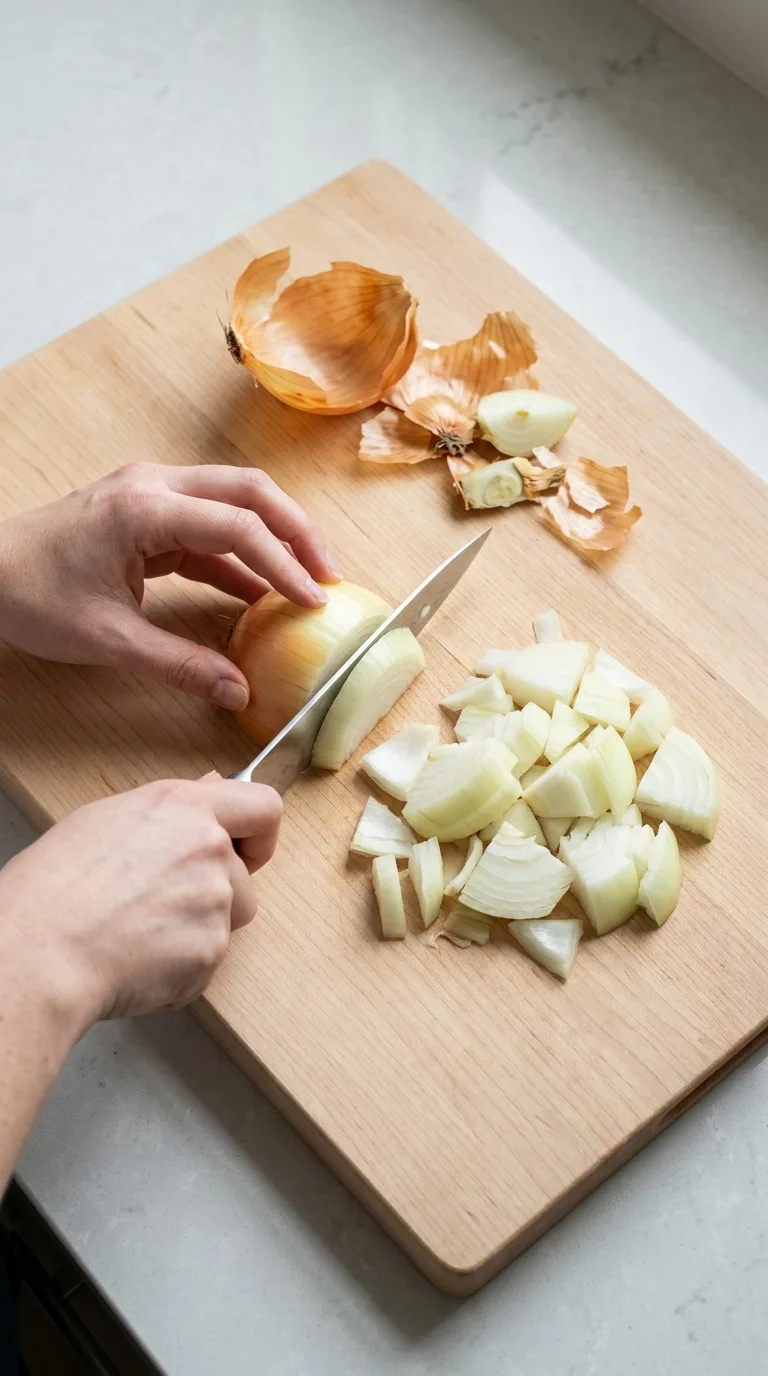
1. Prepare the Vegetables
Peel and roughly chop the yellow onion.
Peel the carrots and cut them into thick, evenly sized slices. Roughly chop the celery stalks and lightly crush the peeled garlic cloves.
The vegetables do not need to be finely diced because they will be blended after cooking.
However, keeping the pieces relatively uniform helps them soften at approximately the same rate.
2. Soften the Aromatics
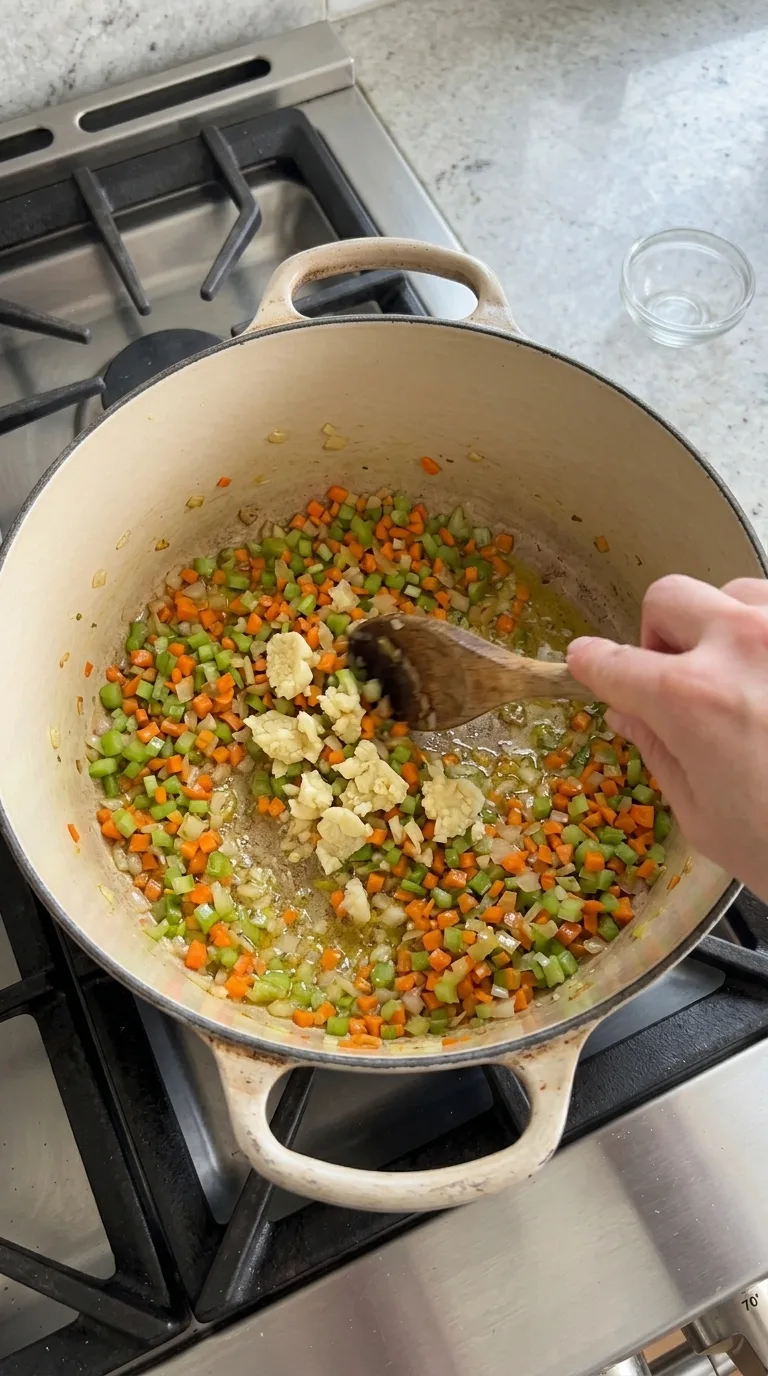
Place a large 5–6-quart soup pot or Dutch oven over medium heat.
Add 1 tablespoon extra-virgin olive oil.
Once the oil is warm, add the chopped onion, carrots, and celery.
Cook for approximately 4–5 minutes, stirring occasionally, until the onion begins to soften and the vegetables become fragrant.
Add the crushed garlic cloves and stir for another 30 seconds.
The vegetables should look slightly softened but not deeply browned.
Avoid letting the garlic burn, as it can give the broth a bitter flavor.
3. Add the Chicken Broth and Seasonings
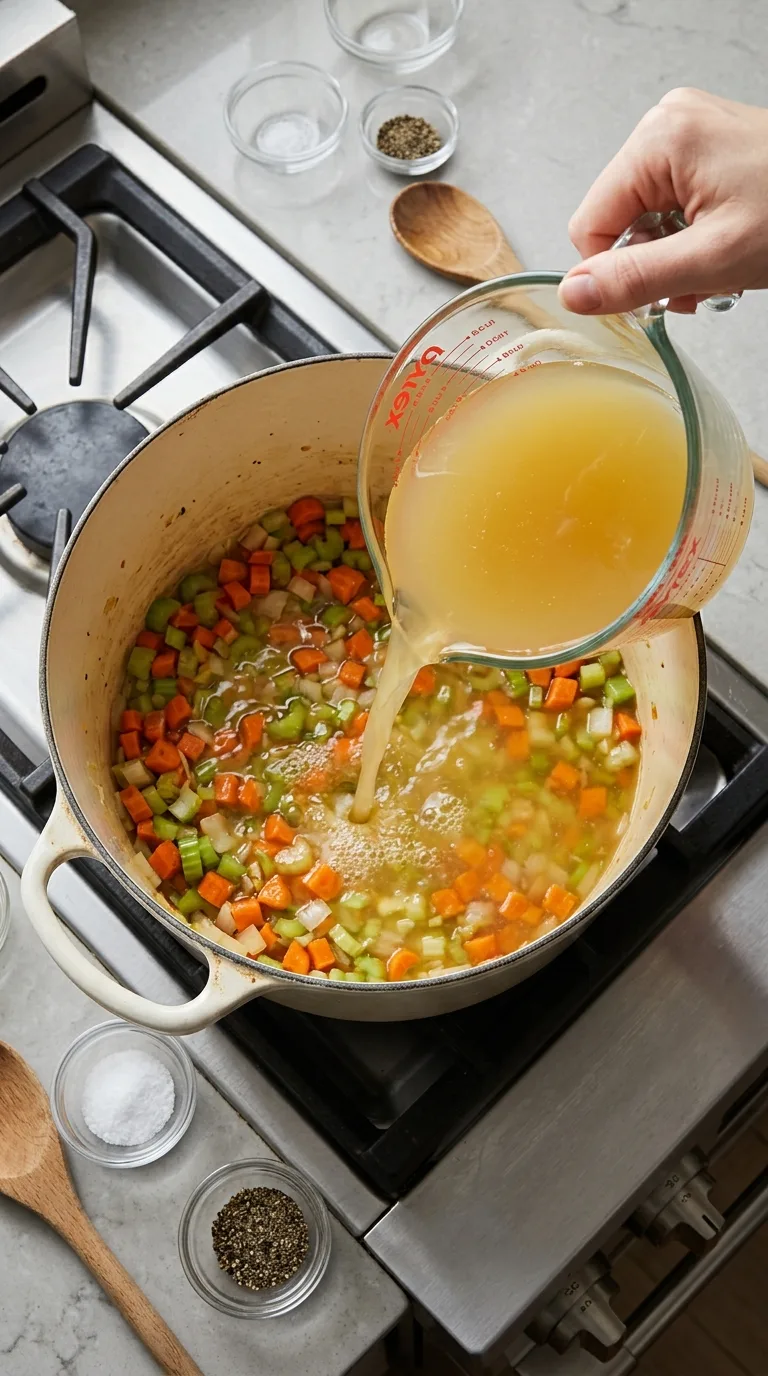
Pour 8 cups low-sodium chicken broth into the pot.
Add ½ teaspoon fine sea salt and ¼ teaspoon freshly ground black pepper.
Stir gently to combine.
Increase the heat to medium-high and bring the mixture just to a gentle boil.
Once small bubbles begin to rise steadily, reduce the heat to medium-low.
The broth should simmer gently rather than boil rapidly.
4. Simmer Until the Vegetables Are Tender
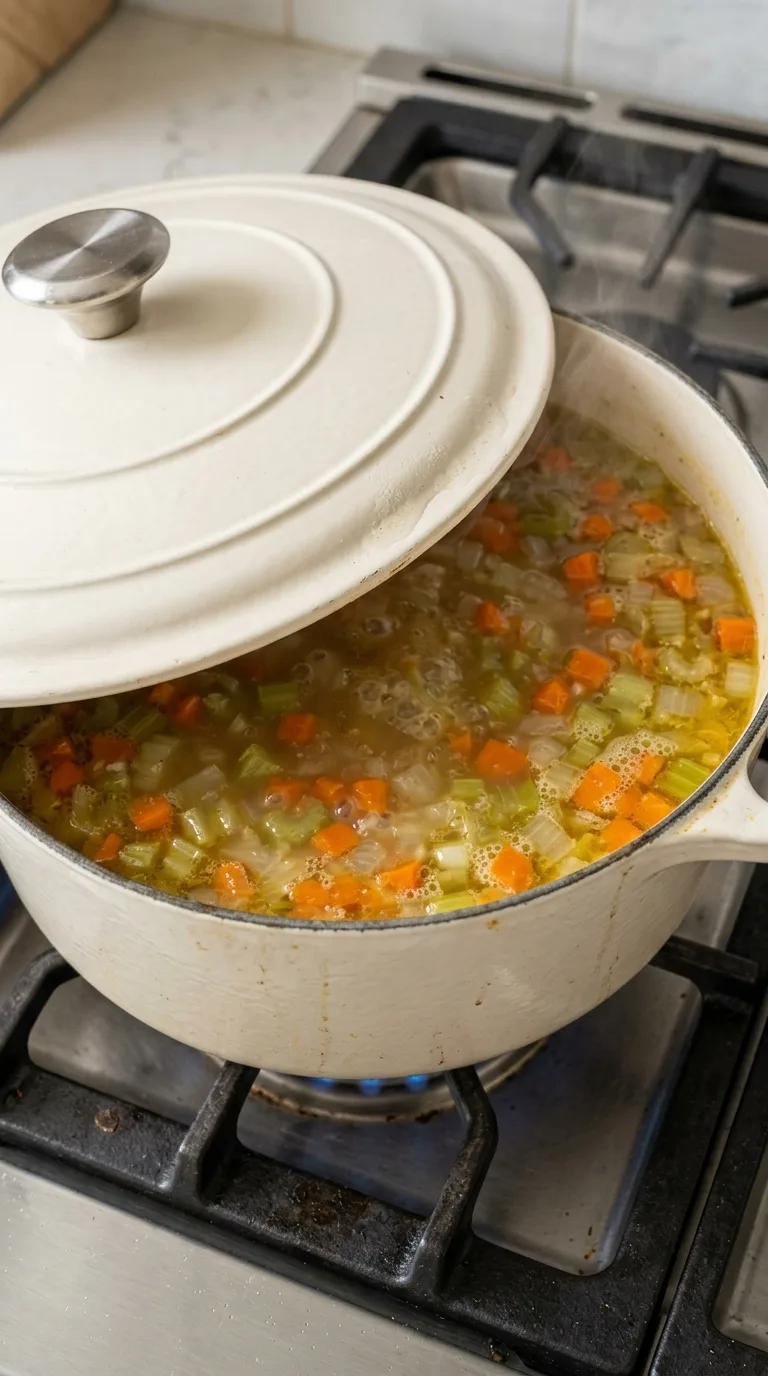
Partially cover the pot and simmer for approximately 15–18 minutes, or until the carrots, celery, and onion are completely tender.
Check the carrots by pressing a piece with a fork.
They should break apart easily without resistance.
If the vegetables still feel firm, continue simmering for a few additional minutes.
The broth should develop a savory aroma, and the carrots should give it a light golden color.
5. Blend the Vegetables into the Broth
Remove the pot from the heat.
Using an immersion blender, carefully blend the vegetables directly in the broth until the mixture is smooth.
Keep the blender head fully submerged to avoid splashing hot liquid.
The soup base should become slightly thicker, with a silky consistency and an even golden color.
If using a countertop blender, allow the mixture to cool slightly and blend it in small batches using a vented lid designed for hot liquids. Never seal hot liquid tightly in a blender.
Return the blended broth to the pot.
If you prefer a more rustic soup, blend only part of the vegetables and leave some small pieces intact.
6. Add the Pastina
Return the pot to the stovetop over medium heat and bring the blended broth to a gentle simmer.
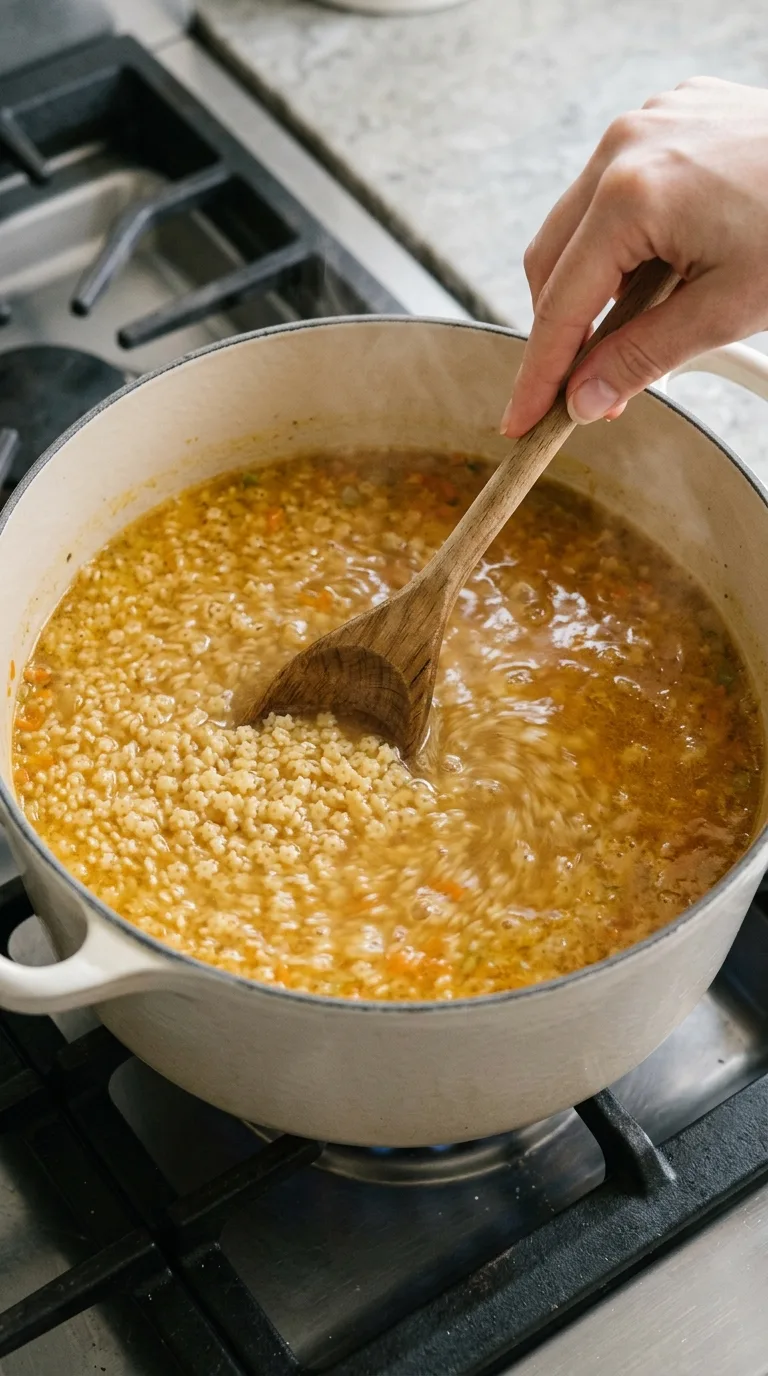
Add 1 cup dry pastina and stir immediately to prevent the small pasta pieces from sticking together.
Reduce the heat slightly if the soup begins to boil too vigorously.
The pasta should move freely through the broth rather than collect at the bottom of the pot.
Stir frequently during cooking, especially during the first few minutes.
7. Cook the Pastina Until Tender
Cook the pastina according to its package directions, generally about 5–8 minutes for many small pasta shapes.
Stir often to prevent sticking.
The pasta should become tender while retaining a little structure.
Avoid cooking it until it begins to fall apart.
As the pastina cooks, it will absorb some of the broth and release starch, naturally thickening the soup.
If the mixture becomes thicker than desired, stir in a small amount of additional hot water until it reaches a comfortable, spoonable consistency.
8. Stir in the Parmesan Cheese
Once the pastina is tender, reduce the heat to low.
Add ½ cup freshly grated Parmesan cheese gradually, stirring gently until the cheese is incorporated.
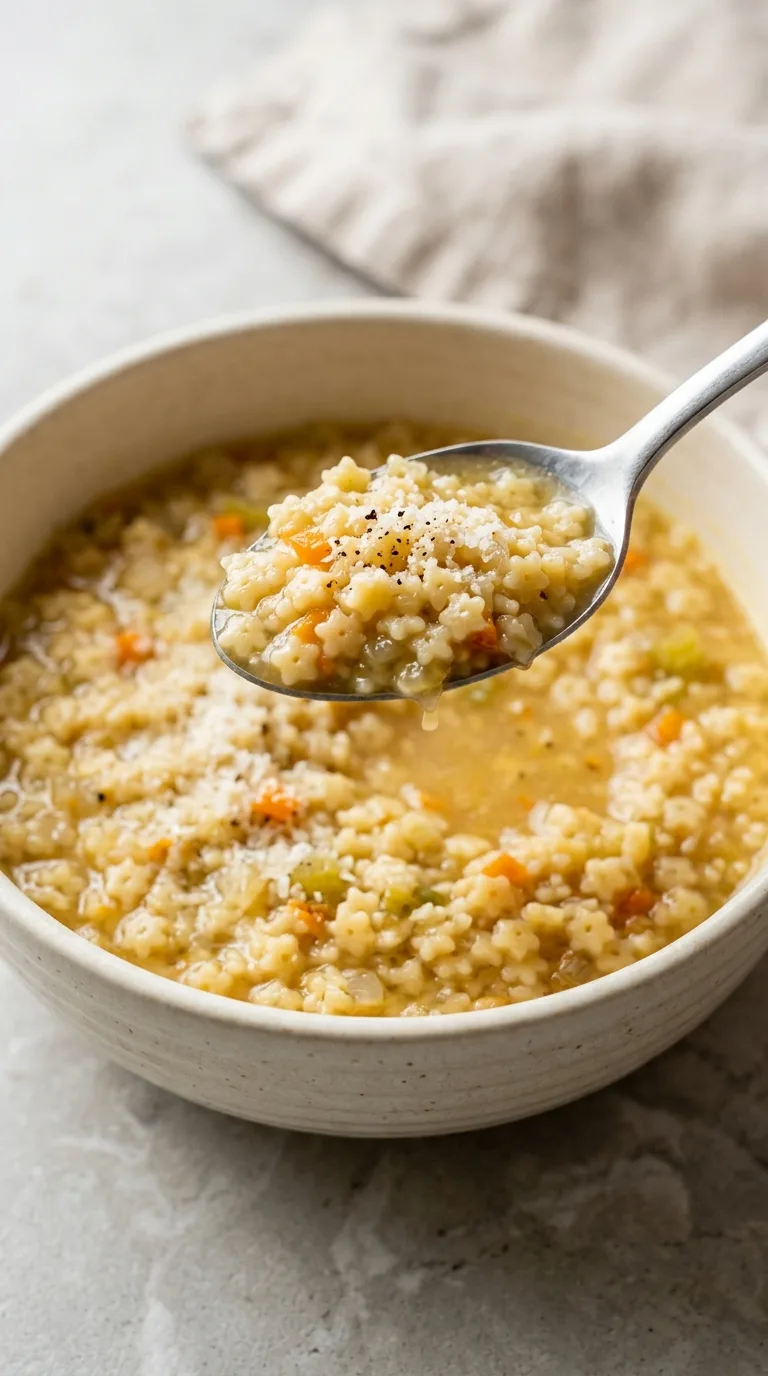
The soup should look slightly creamier, with a smooth broth surrounding the tiny pasta pieces.
Avoid boiling the soup vigorously after adding the Parmesan because excessive heat can cause the cheese to clump.
Taste the soup before adding any extra salt, since Parmesan contributes its own saltiness.
9. Finish with Fresh Lemon Juice
Remove the pot from the heat.
Stir in 1 tablespoon freshly squeezed lemon juice.
The lemon should brighten the flavor without overpowering the vegetables or Parmesan.
Taste the soup and adjust the seasoning if needed.
The finished consistency should be creamy but still loose enough to ladle easily.
If it has become too thick, add a small splash of hot water and stir gently.
10. Garnish and Serve
Ladle the hot Italian Penicillin – Pastina Soup into 6 serving bowls.
If desired, garnish with the optional chopped fresh parsley, additional grated Parmesan, and a light drizzle of extra-virgin olive oil.
Serve immediately while the pastina is tender and the broth is smooth and warm.
The soup will continue thickening as it stands because the small pasta absorbs liquid, so it is best enjoyed shortly after cooking.
Storage, Freezing, and Make-Ahead Instructions
- Refrigeration: Allow the soup to cool slightly, then transfer it to shallow airtight containers and refrigerate within 2 hours of cooking. Store in the refrigerator for up to 3–4 days. The pastina will continue absorbing broth during storage, so the soup will become noticeably thicker. This is normal and does not necessarily mean the soup has spoiled. When reheating, add additional broth or water to restore the desired consistency.
- Freezing: For the best texture, freeze the blended vegetable broth before adding the pastina and Parmesan. Prepare the soup through the blending stage, then cool it promptly. Transfer the cooled broth to freezer-safe containers, leaving some space for expansion. Freeze for up to 3 months for best quality. When ready to serve, thaw the broth overnight in the refrigerator, reheat it, and cook fresh pastina directly in the soup. Add the Parmesan and lemon juice after the pasta is cooked. Freezing the fully prepared soup is possible, but the pastina may become overly soft and absorb more liquid after thawing.
- Thawing: Transfer frozen soup base to the refrigerator and allow it to thaw overnight. Avoid thawing at room temperature. Once thawed, place the broth in a saucepan and heat it gently until simmering before continuing with the pasta.
- Reheating: Place refrigerated soup in a saucepan over medium-low heat. Add a splash of chicken broth or water to loosen the consistency. Stir frequently while reheating, especially if the pastina has absorbed most of the liquid. Heat until the soup is thoroughly hot, reaching 165°F (74°C). For individual servings, microwave in a microwave-safe bowl in short intervals, stirring between intervals until evenly heated. Avoid prolonged boiling, which can make the pasta overly soft.
- Make-Ahead Preparation: The vegetable broth base can be prepared up to 2 days in advance. Cook and blend the vegetables with the broth, then cool and refrigerate the mixture in an airtight container. When ready to serve, bring the broth to a gentle simmer and add the dry pastina. Finish with Parmesan and lemon juice shortly before serving. This method helps maintain the best pasta texture and prevents the soup from becoming overly thick during storage.
- Preventing Mushy Pastina: If preparing the soup for meal prep, consider cooking the pastina separately in lightly salted water according to the package directions. Drain it and store it in a separate airtight container in the refrigerator. When ready to serve, add a portion of cooked pastina to the hot vegetable broth and heat until thoroughly warmed. This approach keeps the pasta from continuously absorbing liquid and helps preserve its shape.
FAQ
Why is Pastina Soup called Italian penicillin?
The nickname "Italian penicillin" refers to the soup's traditional reputation as a comforting food served when someone feels under the weather. Warm broth and tender pasta make it soothing and easy to eat. However, the name is affectionate rather than medical, and the soup is not a substitute for treatment or actual antibiotics.
Can I make Italian Penicillin – Pastina Soup with vegetable broth?
Yes. Replace the chicken broth with an equal amount of low-sodium vegetable broth. The soup will have a lighter, more vegetable-forward flavor while retaining its creamy consistency from the blended carrots, celery, and onion. For a vegetarian version, use vegetarian-friendly Parmesan-style cheese made without animal rennet.
What can I use instead of pastina?
Stelline, acini di pepe, alphabet pasta, and other tiny soup pasta shapes are suitable alternatives. Small orzo can also work, but its larger size changes the texture and may require a longer cooking time. Follow the package directions and adjust the cooking time as needed.
Why does my pastina soup get thick after sitting?
Pastina absorbs broth as it cooks and continues absorbing moisture after the soup is removed from the heat. This causes the soup to thicken, especially during refrigeration. Add a small amount of warm broth or water while reheating to restore a smoother consistency. For make-ahead meals, storing the pasta separately helps prevent excessive thickening.
Can I add shredded chicken to Pastina Soup?
Yes. For a heartier soup, stir in approximately 1–2 cups of fully cooked, shredded chicken during the final few minutes of cooking. Allow it to heat thoroughly to 165°F (74°C) before serving. Rotisserie chicken is a convenient option, although you may need to reduce the added salt because it is often already seasoned.
Italian Penicillin – Pastina Soup
Ingredients
Method
- Prepare the Vegetables: Peel and roughly chop the yellow onion. Peel the carrots and cut them into thick, evenly sized slices. Roughly chop the celery stalks and lightly crush the peeled garlic cloves. The vegetables do not need to be finely diced because they will be blended after cooking. However, keeping the pieces relatively uniform helps them soften at approximately the same rate.
- Soften the Aromatics: Place a large 5–6-quart soup pot or Dutch oven over medium heat. Add 1 tablespoon extra-virgin olive oil. Once the oil is warm, add the chopped onion, carrots, and celery. Cook for approximately 4–5 minutes, stirring occasionally, until the onion begins to soften and the vegetables become fragrant. Add the crushed garlic cloves and stir for another 30 seconds. The vegetables should look slightly softened but not deeply browned. Avoid letting the garlic burn, as it can give the broth a bitter flavor.
- Add the Chicken Broth and Seasonings: Pour 8 cups low-sodium chicken broth into the pot. Add ½ teaspoon fine sea salt and ¼ teaspoon freshly ground black pepper. Stir gently to combine. Increase the heat to medium-high and bring the mixture just to a gentle boil. Once small bubbles begin to rise steadily, reduce the heat to medium-low. The broth should simmer gently rather than boil rapidly.
- Simmer Until the Vegetables Are Tender: Partially cover the pot and simmer for approximately 15–18 minutes, or until the carrots, celery, and onion are completely tender. Check the carrots by pressing a piece with a fork. They should break apart easily without resistance. If the vegetables still feel firm, continue simmering for a few additional minutes. The broth should develop a savory aroma, and the carrots should give it a light golden color.
- Blend the Vegetables into the Broth: Remove the pot from the heat. Using an immersion blender, carefully blend the vegetables directly in the broth until the mixture is smooth. Keep the blender head fully submerged to avoid splashing hot liquid. The soup base should become slightly thicker, with a silky consistency and an even golden color. If using a countertop blender, allow the mixture to cool slightly and blend it in small batches using a vented lid designed for hot liquids. Never seal hot liquid tightly in a blender. Return the blended broth to the pot. If you prefer a more rustic soup, blend only part of the vegetables and leave some small pieces intact.
- Add the Pastina: Return the pot to the stovetop over medium heat and bring the blended broth to a gentle simmer. Add 1 cup dry pastina and stir immediately to prevent the small pasta pieces from sticking together. Reduce the heat slightly if the soup begins to boil too vigorously. The pasta should move freely through the broth rather than collect at the bottom of the pot. Stir frequently during cooking, especially during the first few minutes.
- Cook the Pastina Until Tender: Cook the pastina according to its package directions, generally about 5–8 minutes for many small pasta shapes. Stir often to prevent sticking. The pasta should become tender while retaining a little structure. Avoid cooking it until it begins to fall apart. As the pastina cooks, it will absorb some of the broth and release starch, naturally thickening the soup. If the mixture becomes thicker than desired, stir in a small amount of additional hot water until it reaches a comfortable, spoonable consistency.
- Stir in the Parmesan Cheese: Once the pastina is tender, reduce the heat to low. Add ½ cup freshly grated Parmesan cheese gradually, stirring gently until the cheese is incorporated. The soup should look slightly creamier, with a smooth broth surrounding the tiny pasta pieces. Avoid boiling the soup vigorously after adding the Parmesan because excessive heat can cause the cheese to clump. Taste the soup before adding any extra salt, since Parmesan contributes its own saltiness.
- Finish with Fresh Lemon Juice: Remove the pot from the heat. Stir in 1 tablespoon freshly squeezed lemon juice. The lemon should brighten the flavor without overpowering the vegetables or Parmesan. Taste the soup and adjust the seasoning if needed. The finished consistency should be creamy but still loose enough to ladle easily. If it has become too thick, add a small splash of hot water and stir gently.
- Garnish and Serve: Ladle the hot Italian Penicillin – Pastina Soup into 6 serving bowls. If desired, garnish with the optional chopped fresh parsley, additional grated Parmesan, and a light drizzle of extra-virgin olive oil. Serve immediately while the pastina is tender and the broth is smooth and warm. The soup will continue thickening as it stands because the small pasta absorbs liquid, so it is best enjoyed shortly after cooking.