Brown Butter Banana Bread is a moist, tender loaf made with ripe bananas, nutty browned butter, brown sugar, vanilla, and warm cinnamon. Browning the butter gives this version a deeper caramel-like flavor while still allowing the banana to remain prominent.
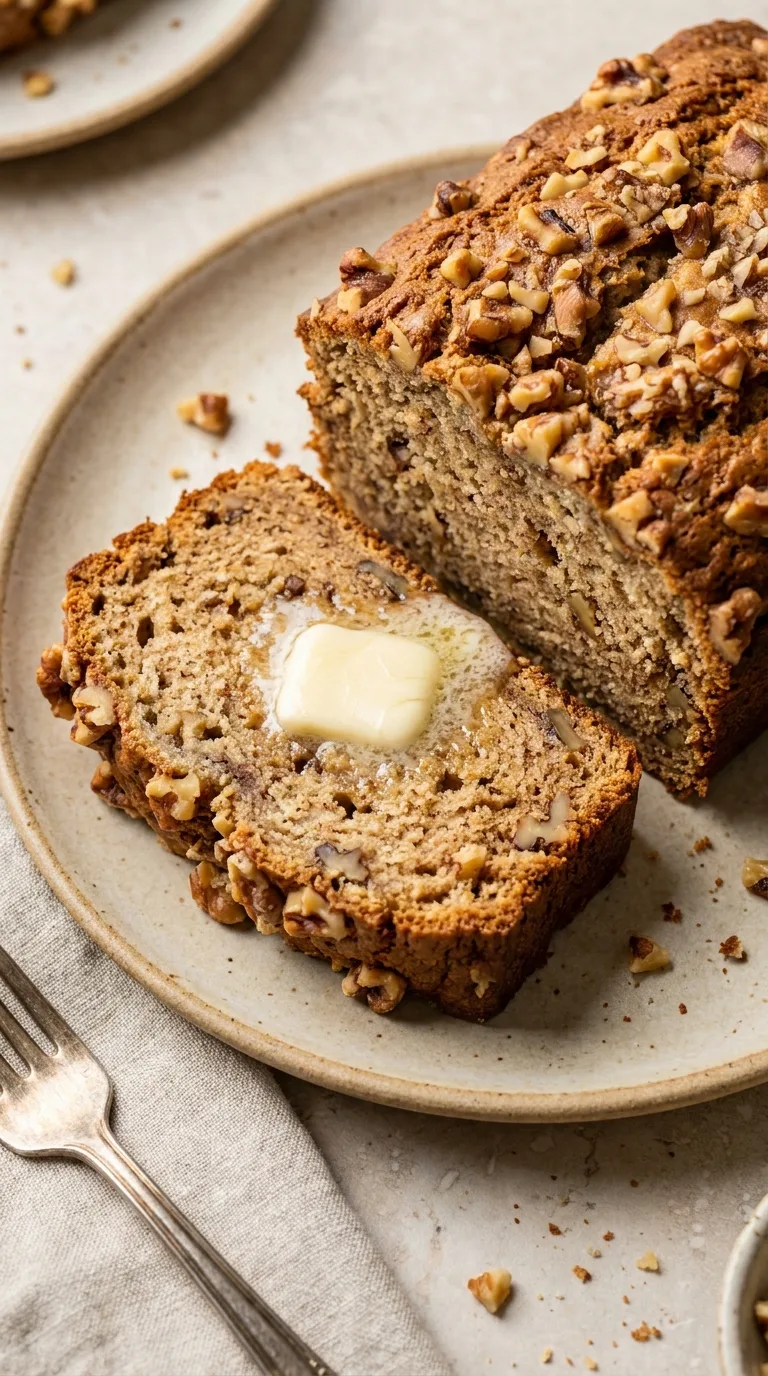
The butter needs a short cooling period before it is mixed with the eggs, and the finished loaf should cool for at least 1 hour before slicing. Toasted walnuts are included for crunch but can be omitted for a nut-free loaf.
Why This Recipe Works
- Browning the butter concentrates its milk solids, adding toasted, nutty flavor without requiring artificial flavoring.
- Very ripe bananas provide natural sweetness, moisture, and enough fruit flavor to balance the browned butter.
- Sour cream adds tenderness and moisture without making the batter excessively loose.
- Mixing the wet and dry ingredients only until combined limits gluten development and keeps the loaf soft.
- Baking in a light-colored metal pan encourages even browning and a fully cooked center.
Equipment Needed
- 9 x 5-inch (23 x 13 cm) light-colored metal loaf pan
- Parchment paper
- Light-colored 1- to 2-quart saucepan
- Large mixing bowl
- Medium mixing bowl
- Whisk
- Flexible spatula
- Wire cooling rack
- Instant-read thermometer or wooden skewer
Ingredients List

For the Banana Bread
- 10 tablespoons (142 g) unsalted butter
- 1 3/4 cups (400 g) mashed very ripe banana, from about 4 medium bananas
- 3/4 cup packed (150 g) light brown sugar
- 2 large eggs, at room temperature
- 1/3 cup (80 g) full-fat sour cream, at room temperature
- 2 teaspoons (10 ml) vanilla extract
- 2 cups (240 g) all-purpose flour
- 1 teaspoon baking soda
- 1/2 teaspoon baking powder
- 1 teaspoon ground cinnamon
- 3/4 teaspoon fine salt
- 3/4 cup (85 g) chopped walnuts, toasted and divided, optional
For the Pan
- 1 teaspoon (5 g) softened unsalted butter, for greasing
Ingredient Notes and Substitutions
- Very ripe bananas: Use bananas with heavily spotted or nearly black skins. They mash easily and provide more sweetness and moisture than firm yellow bananas. Thawed frozen bananas can be used, but include their released liquid and measure the mashed fruit by weight or volume.
- Unsalted butter: Unsalted butter allows better control over the loaf’s salt level. Browning removes some of its water and intensifies its flavor. Salted butter can be substituted, but reduce the added salt to 1/2 teaspoon.
- Sour cream: Sour cream adds moisture, acidity, and tenderness. Plain full-fat Greek yogurt can replace it in the same quantity, though the loaf may taste slightly tangier. Low-fat products can produce a somewhat drier texture.
- Brown sugar: Brown sugar contributes sweetness, moisture, and mild molasses flavor. Granulated sugar can replace it in the same quantity by weight, but the loaf will be lighter in color and slightly less moist.
- Walnuts: Toasted walnuts add crunch and complement the browned butter. Pecans can replace them in the same quantity. For a nut-free loaf, omit them without making any other changes.
Step-by-Step Instructions
Step 1: Prepare the pan and oven
Preheat the oven to 350°F (175°C). Grease a 9 x 5-inch (23 x 13 cm) metal loaf pan with the softened butter. Line the bottom and long sides with parchment paper, leaving enough overhang to lift out the baked loaf.

Step 2: Brown the butter
Place the 10 tablespoons (142 g) butter in a light-colored saucepan over medium heat. Cook for 5 to 8 minutes, swirling or stirring frequently as it melts, foams, and begins to brown.
Step 3: Watch for the toasted color
Continue cooking until the foam subsides slightly and amber-brown milk solids appear on the bottom of the pan. The butter should smell nutty rather than burned. Remove it from the heat immediately and pour it, including the browned solids, into a heatproof bowl.

Step 4: Cool the browned butter
Let the butter cool for about 15 minutes. It should remain liquid but no longer feel hot enough to cook the eggs when mixed.
Step 5: Combine the dry ingredients
In a medium bowl, whisk together the flour, baking soda, baking powder, cinnamon, and salt until evenly distributed.
Step 6: Mix the banana base
In a large bowl, whisk the mashed banana and brown sugar until the sugar is moistened and no firm banana pieces remain.
Step 7: Add the wet ingredients
Whisk the eggs, sour cream, and vanilla into the banana mixture. Slowly pour in the cooled brown butter while whisking. The mixture should look smooth and glossy, with small banana fibers still visible.

Step 8: Combine the batter
Add the dry ingredients to the wet mixture. Fold gently with a flexible spatula until only a few dry flour streaks remain.
Step 9: Add the walnuts
Fold in 1/2 cup (55 g) of the toasted walnuts, if using. Stop mixing as soon as the batter is evenly combined. It should be thick and spoonable rather than runny.
Step 10: Fill the loaf pan
Scrape the batter into the prepared pan and smooth the surface. Sprinkle the remaining 1/4 cup (30 g) toasted walnuts over the top, if using.

Step 11: Bake the loaf
Bake on the center rack for 55 to 65 minutes. Begin checking at 50 minutes. If the top becomes deeply browned before the center is done, cover it loosely with aluminum foil.
Step 12: Check for doneness
Insert a wooden skewer into the center. It should come out with a few moist crumbs but no wet batter. An instant-read thermometer inserted into the middle should register approximately 200°F to 205°F (93°C to 96°C).
Step 13: Cool briefly in the pan
Place the pan on a wire rack and let the bread cool for 15 minutes. The loaf should begin pulling slightly away from the sides but still feel delicate.
Step 14: Remove and cool completely
Use the parchment overhang to lift the loaf from the pan. Place it directly on the wire rack and cool for at least 1 hour before slicing. Cutting it while hot can compress the tender center and make it appear underbaked.

Storage, Freezing, and Make-Ahead Instructions
- Store completely cooled Brown Butter Banana Bread in an airtight container at room temperature for up to 3 days. Place a paper towel beneath the loaf to absorb excess surface moisture, but avoid refrigerating it unless necessary because refrigeration can make quick bread dry more quickly.
- For longer storage, refrigerate the wrapped loaf for up to 1 week. Bring individual slices to room temperature before serving or warm them briefly.
- To freeze, wrap the whole cooled loaf or individual slices tightly in plastic wrap, then place them in a freezer-safe bag or container. Freeze for up to 3 months. Thaw the loaf overnight at room temperature while still wrapped, or thaw individual slices for about 30 minutes.
- The loaf can be baked 1 day before serving. Keep it unsliced and tightly wrapped after it has cooled completely to preserve moisture.
FAQ
Can I make Brown Butter Banana Bread without nuts?
Yes. Omit the walnuts without changing the remaining ingredients or baking time.
Why is my banana bread dense?
The batter may have been overmixed, too much flour may have been added, or the baking soda may have been old. Weigh the flour when possible and stop folding as soon as no dry streaks remain.
Can I use frozen bananas?
Yes. Thaw them completely, then mash the fruit together with any liquid released during thawing. Measure 1 3/4 cups (400 g) before adding it to the batter.
How do I know when brown butter is ready?
The butter is ready when the milk solids at the bottom of the pan turn amber brown and smell toasted and nutty. Remove the pan immediately because the solids can progress from browned to burned quickly.
Can I bake this recipe in smaller loaf pans?
Yes. Divide the batter between two greased 8 x 4-inch (20 x 10 cm) loaf pans and begin checking for doneness after 35 minutes. Bake until each center reaches approximately 200°F to 205°F (93°C to 96°C).
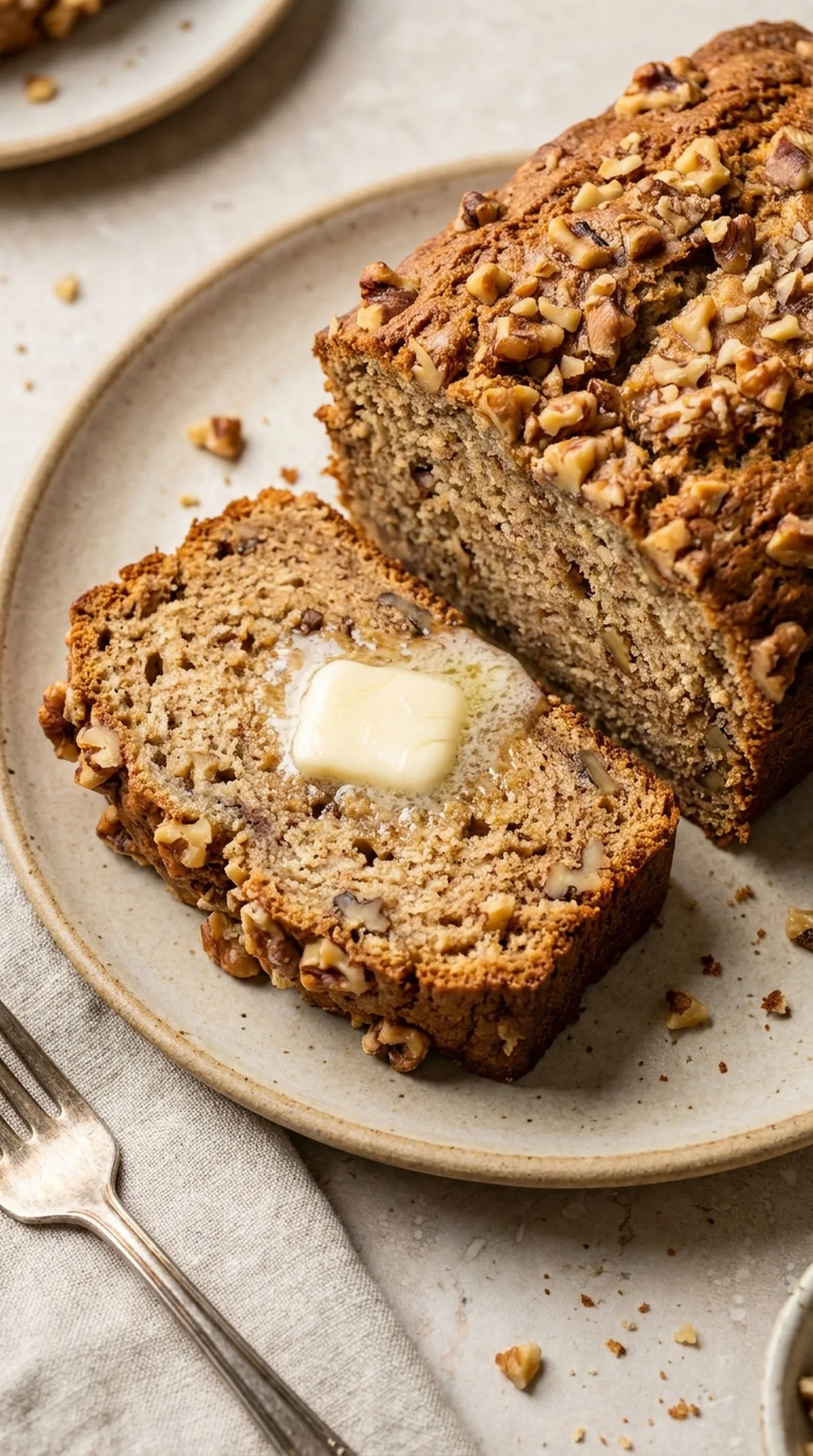
Brown Butter Banana Bread with Toasted Walnuts
Ingredients
Method
- Preheat the oven to 350°F (175°C). Grease a 9 x 5-inch (23 x 13 cm) metal loaf pan with the softened butter. Line the bottom and long sides with parchment paper, leaving enough overhang to lift out the baked loaf.
- Place the 10 tablespoons (142 g) butter in a light-colored saucepan over medium heat. Cook for 5 to 8 minutes, swirling or stirring frequently as it melts, foams, and begins to brown.
- Continue cooking until the foam subsides slightly and amber-brown milk solids appear on the bottom of the pan. The butter should smell nutty rather than burned. Remove it from the heat immediately and pour it, including the browned solids, into a heatproof bowl.
- Let the butter cool for about 15 minutes. It should remain liquid but no longer feel hot enough to cook the eggs when mixed.
- In a medium bowl, whisk together the flour, baking soda, baking powder, cinnamon, and salt until evenly distributed.
- In a large bowl, whisk the mashed banana and brown sugar until the sugar is moistened and no firm banana pieces remain.
- Whisk the eggs, sour cream, and vanilla into the banana mixture. Slowly pour in the cooled brown butter while whisking. The mixture should look smooth and glossy, with small banana fibers still visible.
- Add the dry ingredients to the wet mixture: Fold gently with a flexible spatula until only a few dry flour streaks remain.
- Fold in 1/2 cup (55 g) of the toasted walnuts, if using. Stop mixing as soon as the batter is evenly combined. It should be thick and spoonable rather than runny.
- Scrape the batter into the prepared pan and smooth the surface. Sprinkle the remaining 1/4 cup (30 g) toasted walnuts over the top, if using.
- Bake on the center rack for 55 to 65 minutes. Begin checking at 50 minutes. If the top becomes deeply browned before the center is done, cover it loosely with aluminum foil.
- Insert a wooden skewer into the center: It should come out with a few moist crumbs but no wet batter. An instant-read thermometer inserted into the middle should register approximately 200°F to 205°F (93°C to 96°C).
- Place the pan on a wire rack and let the bread cool for 15 minutes. The loaf should begin pulling slightly away from the sides but still feel delicate.
- Use the parchment overhang to lift the loaf from the pan. Place it directly on the wire rack and cool for at least 1 hour before slicing. Cutting it while hot can compress the tender center and make it appear underbaked.