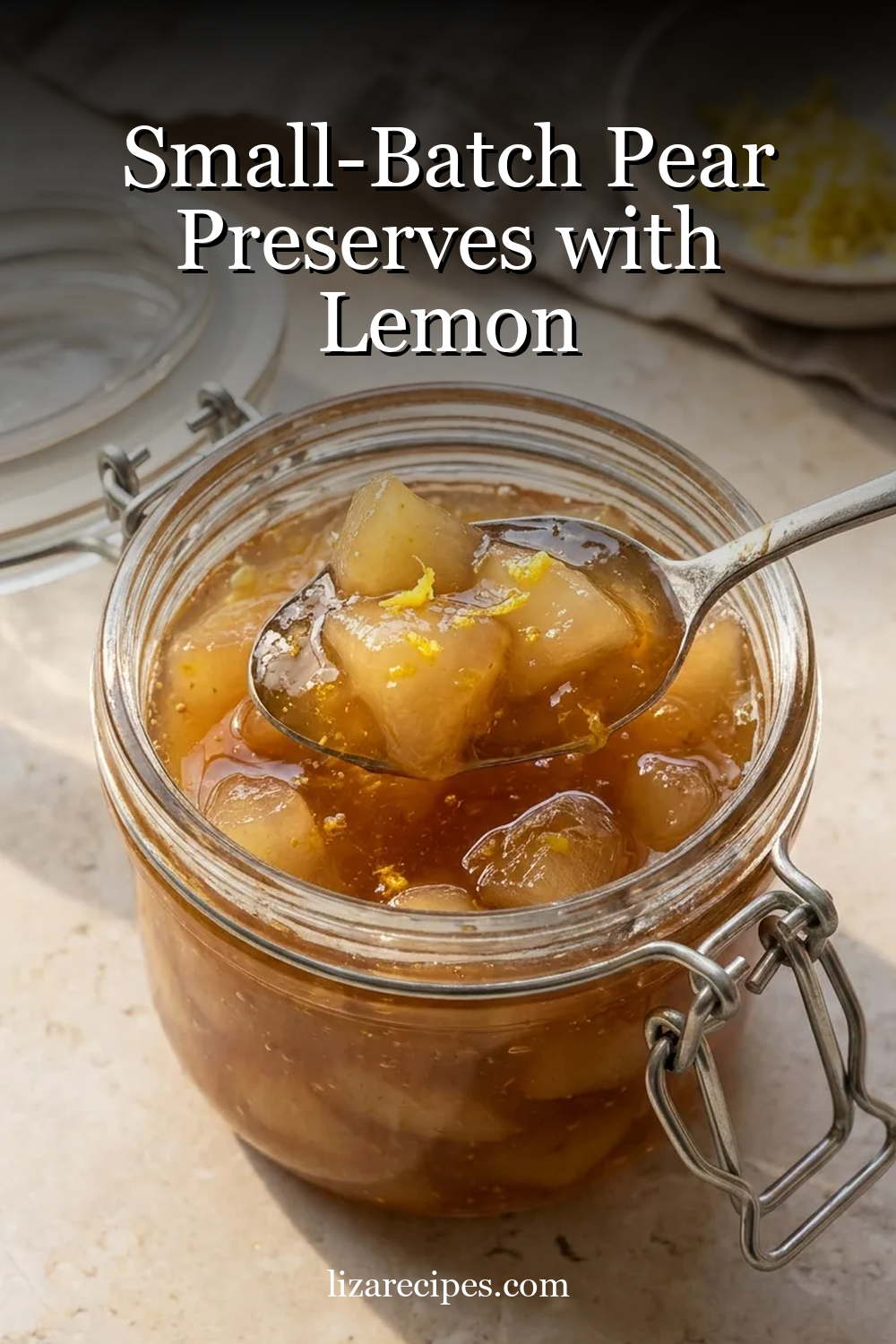
Pear Preserves are a spoonable fruit spread made with tender pieces of ripe pear suspended in a glossy lemon-scented syrup. Unlike a completely smooth jam, these preserves keep some of the fruit intact, giving each spoonful a soft, chunky texture.
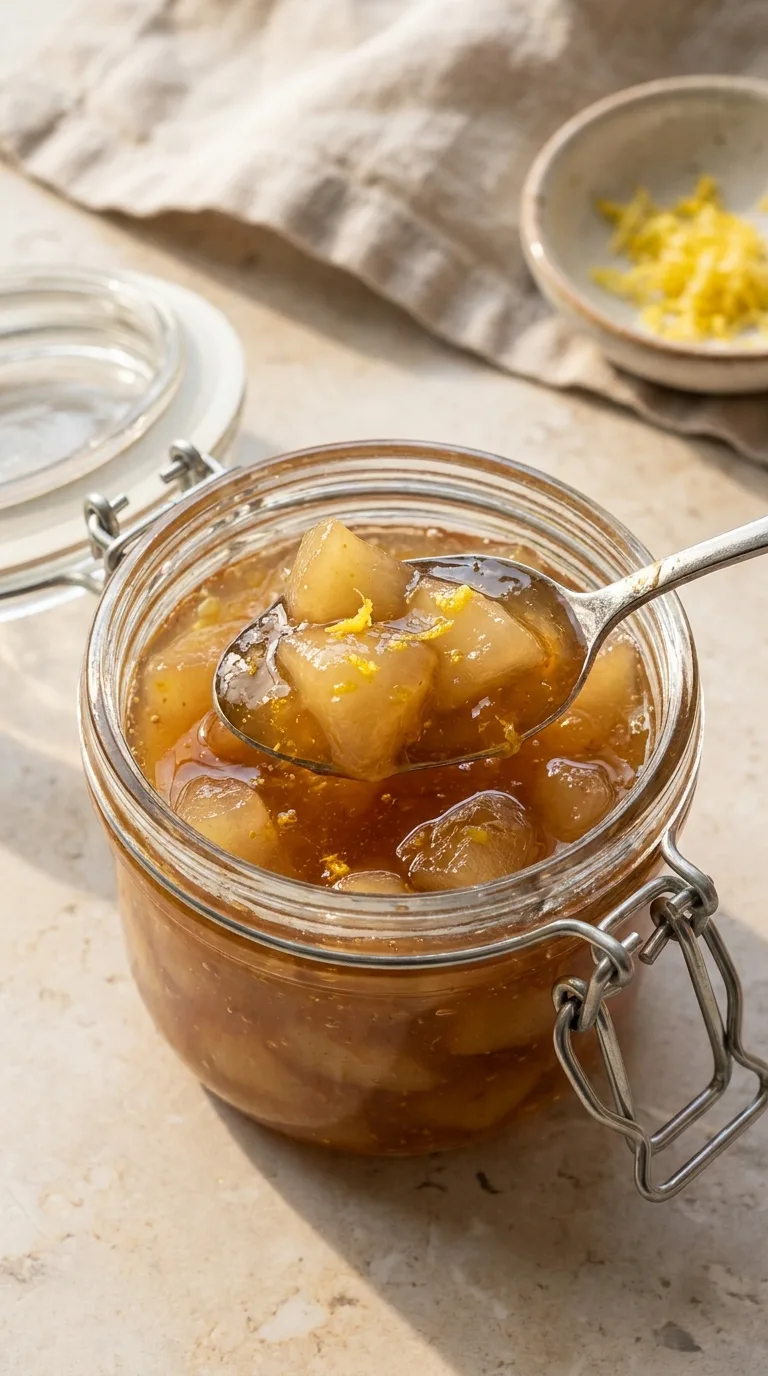
This small-batch stovetop recipe does not require commercial pectin or specialized canning equipment. The preserves are cooked until thickened, cooled, and stored in the refrigerator or freezer rather than processed for shelf-stable storage.
Recipe at a Glance
- Prep Time: 20 minutes
- Cook Time: 40 minutes
- Additional Time: 2 hours
- Total Time: 3 hours
- Yield: About 3 cups
- Servings: 24
- Difficulty: Easy
Why You'll Love This Recipe
- Firm-ripe pears soften during cooking while retaining enough shape to create a chunky preserve.
- Lemon juice balances the sweetness, brightens the pear flavor, and provides necessary acidity.
- Macerating the fruit with sugar draws out pear juice, creating syrup without added water.
- A wide saucepan encourages steady evaporation, helping the preserves thicken before the fruit becomes mushy.
- Cooling the preserves completely allows the syrup to set to its final consistency.
Equipment Needed
- 4-quart wide, heavy-bottomed saucepan
- Large mixing bowl
- Wooden spoon or heat-resistant spatula
- Potato masher, optional
- Instant-read or candy thermometer, optional
- Chilled small plate, for testing doneness
- Three clean half-pint jars or airtight containers with lids
Ingredients You'll Need
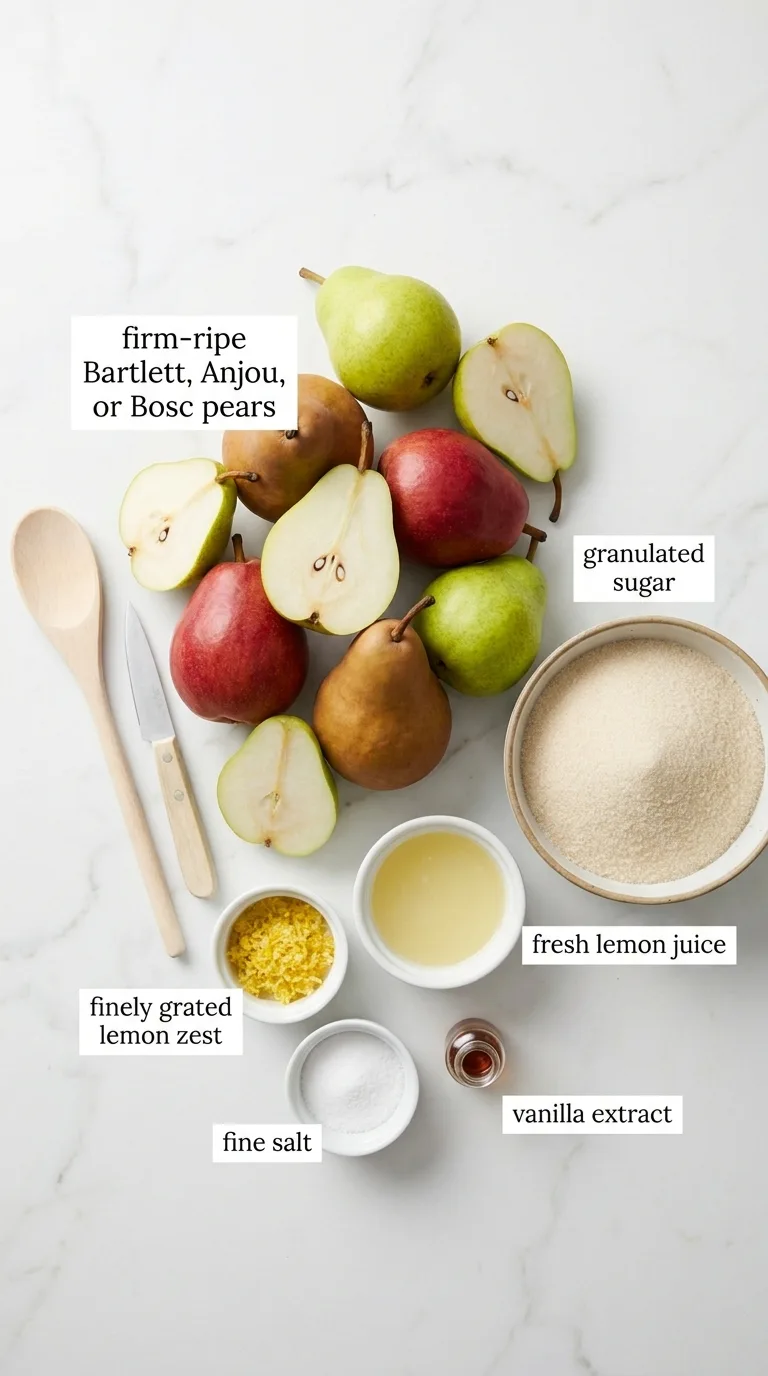
- ■ 2 pounds (900 g) firm-ripe Bartlett, Anjou, or Bosc pears
- ■ 2 cups (400 g) granulated sugar
- ■ 1/4 cup (60 ml) fresh lemon juice
- ■ 1 teaspoon (2 g) finely grated lemon zest
- ■ 1/4 teaspoon fine salt
- ■ 1/2 teaspoon (2.5 ml) vanilla extract, optional
How to Make Small-Batch Pear Preserves with Lemon
Prepare a Doneness-Testing Plate
Place a small plate in the freezer before beginning. The chilled surface will help show whether the syrup has thickened sufficiently.
Prepare the Pears
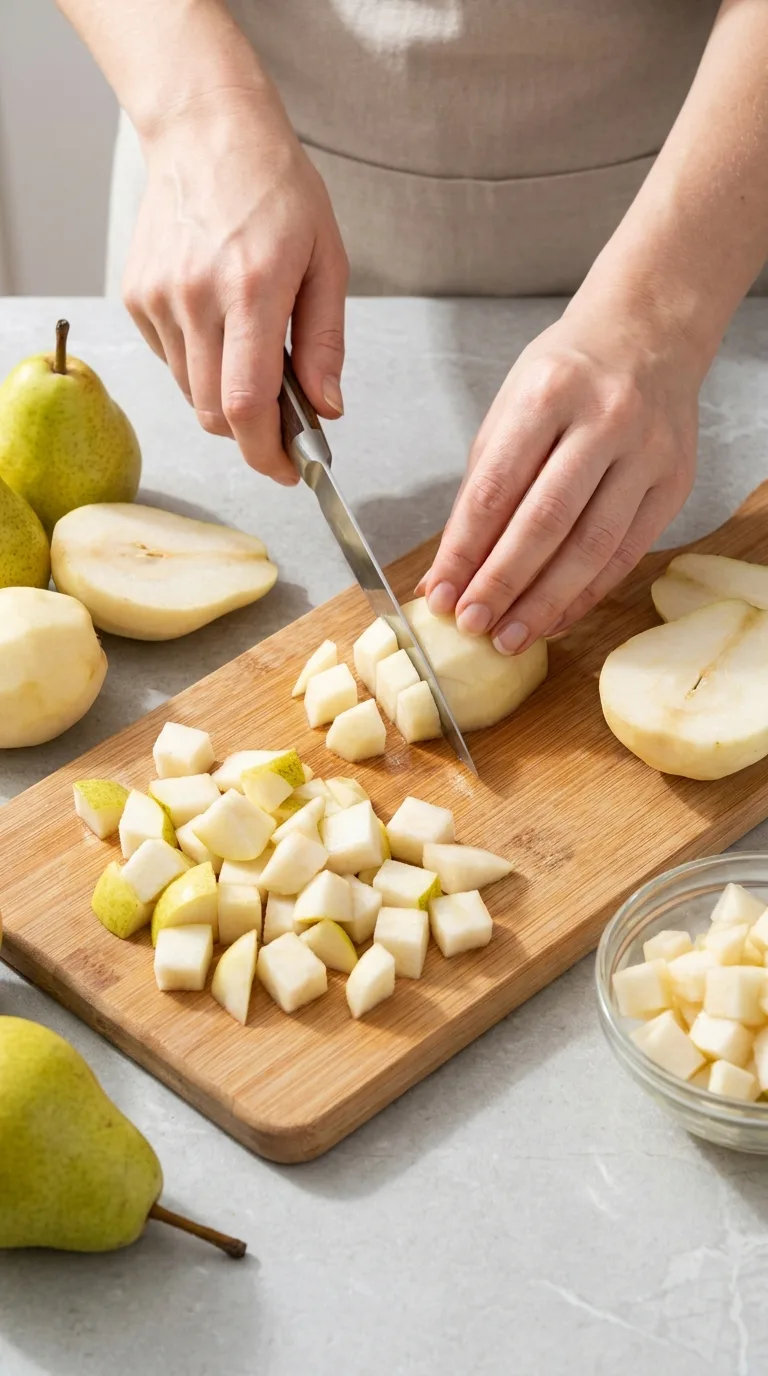
Peel, core, and cut the pears into approximately 1/2-inch (1.25 cm) pieces. Measure about 6 cups (900 g) of prepared fruit. Using firm-ripe pears ensures that the preserves maintain a good texture.
Macerate the Fruit
Combine the pears, granulated sugar, lemon juice, lemon zest, and salt in a large bowl. Stir until the fruit is evenly coated, then let the mixture stand for 30 minutes. The sugar will become wet and syrupy as it draws juice from the pears, which is essential for the syrup.
Transfer to the Saucepan
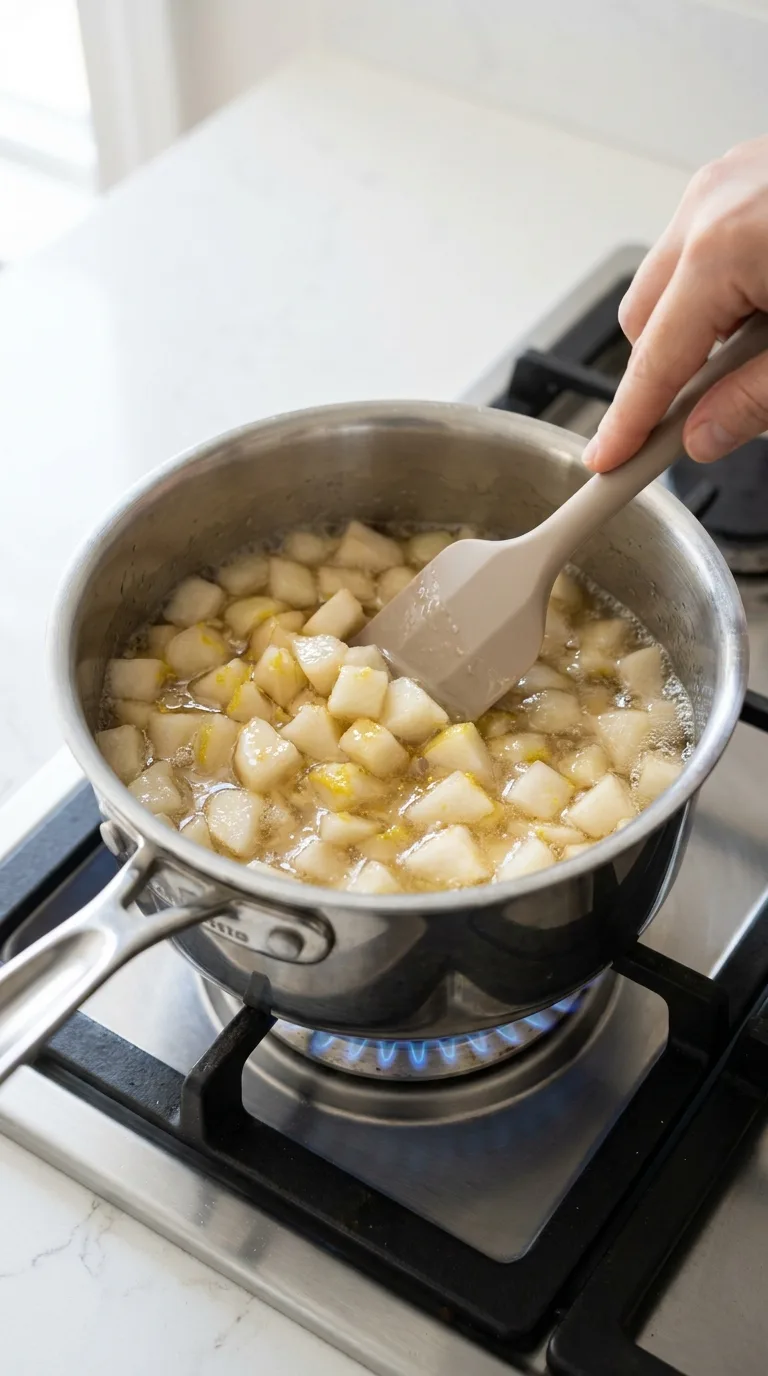
Scrape the pear mixture and all accumulated syrup into a wide 4-quart saucepan. Set the pan over medium heat. This allows for even cooking and helps in the evaporation process.
Dissolve the Sugar
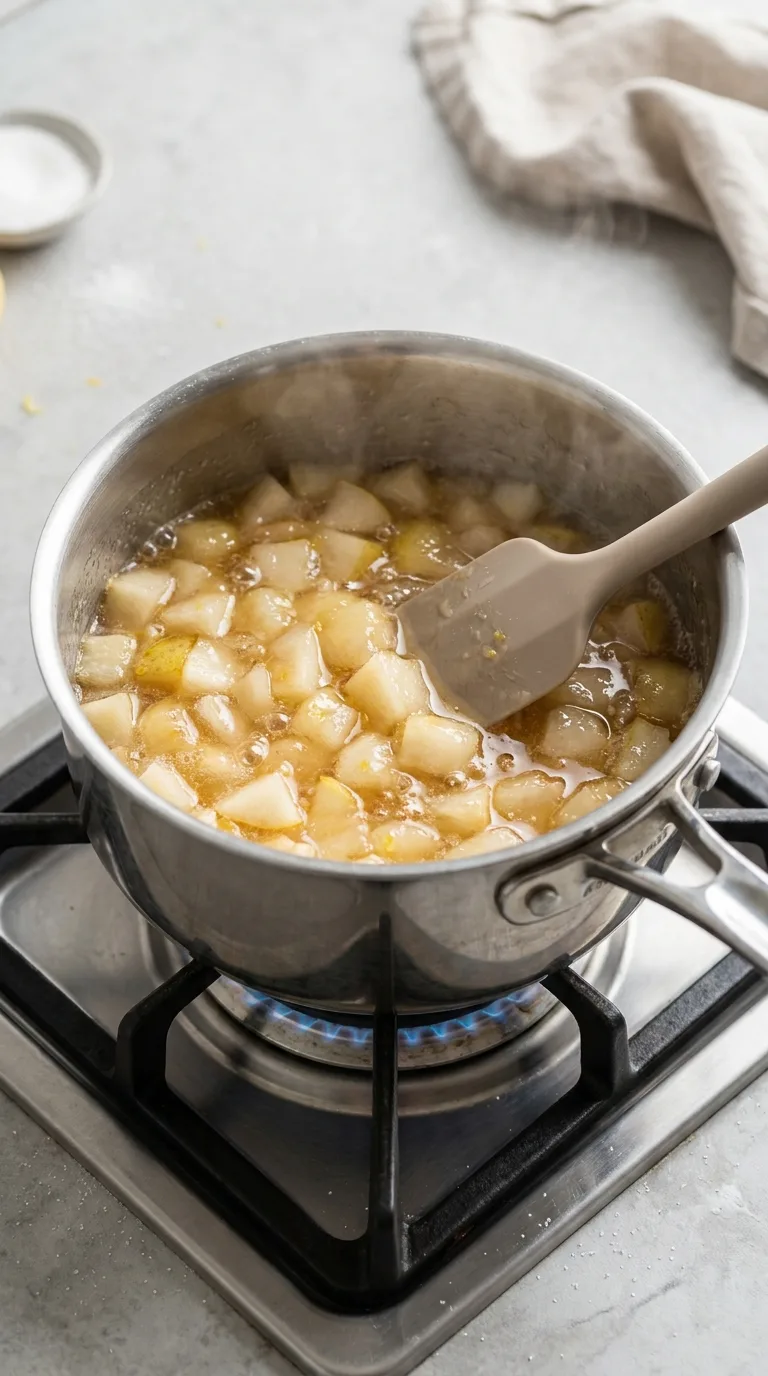
Cook for 5 to 7 minutes, stirring frequently, until the sugar dissolves and the mixture begins to simmer. Scrape along the bottom and corners of the pan so no sugar crystals remain. This step is crucial for a smooth syrup.
Cook the Preserves
Reduce the heat to medium-low and maintain a steady simmer for 25 to 35 minutes. Stir more frequently as the syrup thickens to prevent scorching. The pears should become translucent and tender while some pieces remain visible, indicating they are cooking properly.
Adjust the Fruit Texture
For smaller fruit pieces, press the mixture two or three times with a potato masher. Do not mash it completely; pear preserves should retain a chunky texture for a better mouthfeel.
Watch for Thickening
The preserves are nearly ready when the bubbles become slower and glossier and a spoon drawn across the pan leaves a path that closes gradually. If using a thermometer, the mixture should approach 218°F to 220°F (103°C to 104°C) at sea level.
Perform the Chilled-Plate Test
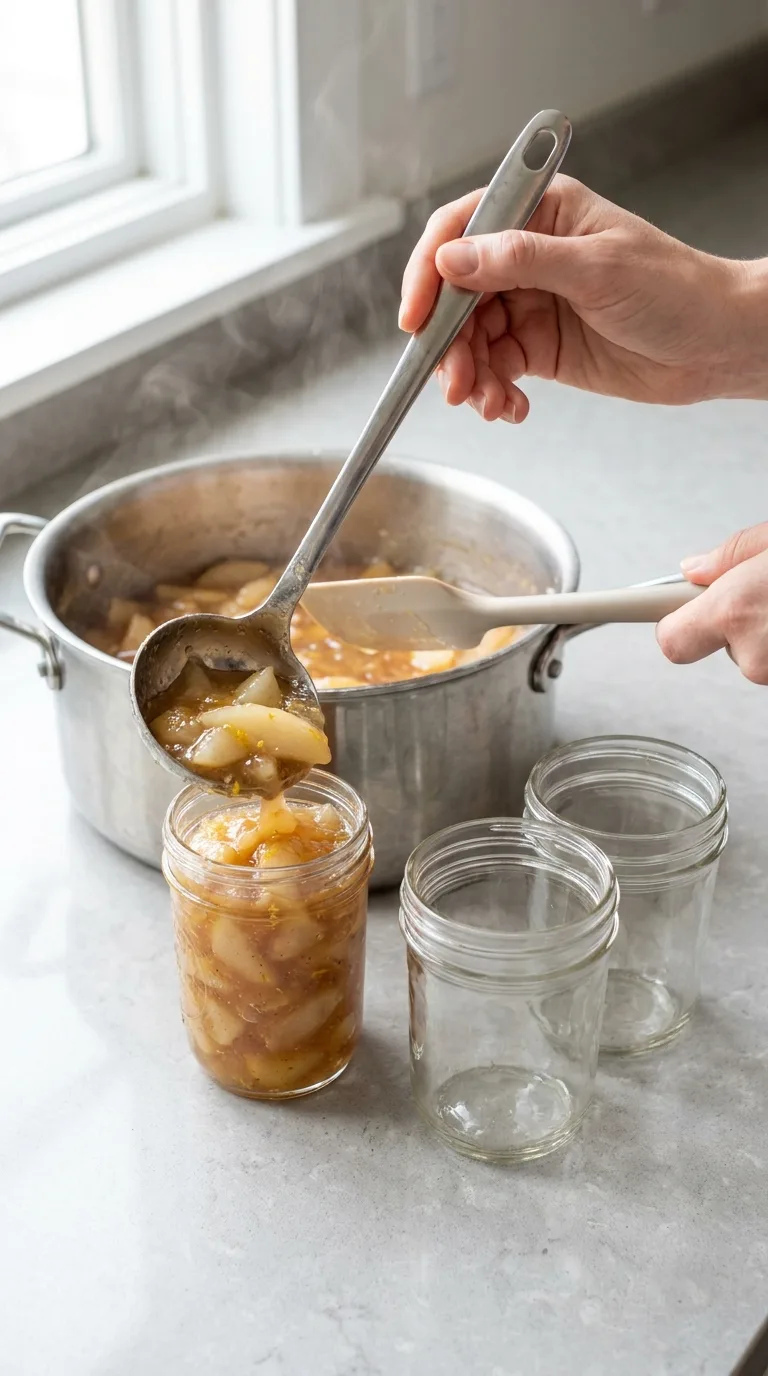
Place 1 teaspoon of the hot preserves on the chilled plate and return it to the freezer for 1 minute. Push the edge with a fingertip. The syrup should wrinkle slightly and move slowly rather than running like juice, indicating it has thickened properly.
Correct the Consistency if Needed
If the sample is runny, continue simmering for 3 to 5 minutes and test again. If the preserves become unusually thick in the pan, stir in 1 tablespoon (15 ml) of hot water to adjust the consistency.
Add the Vanilla
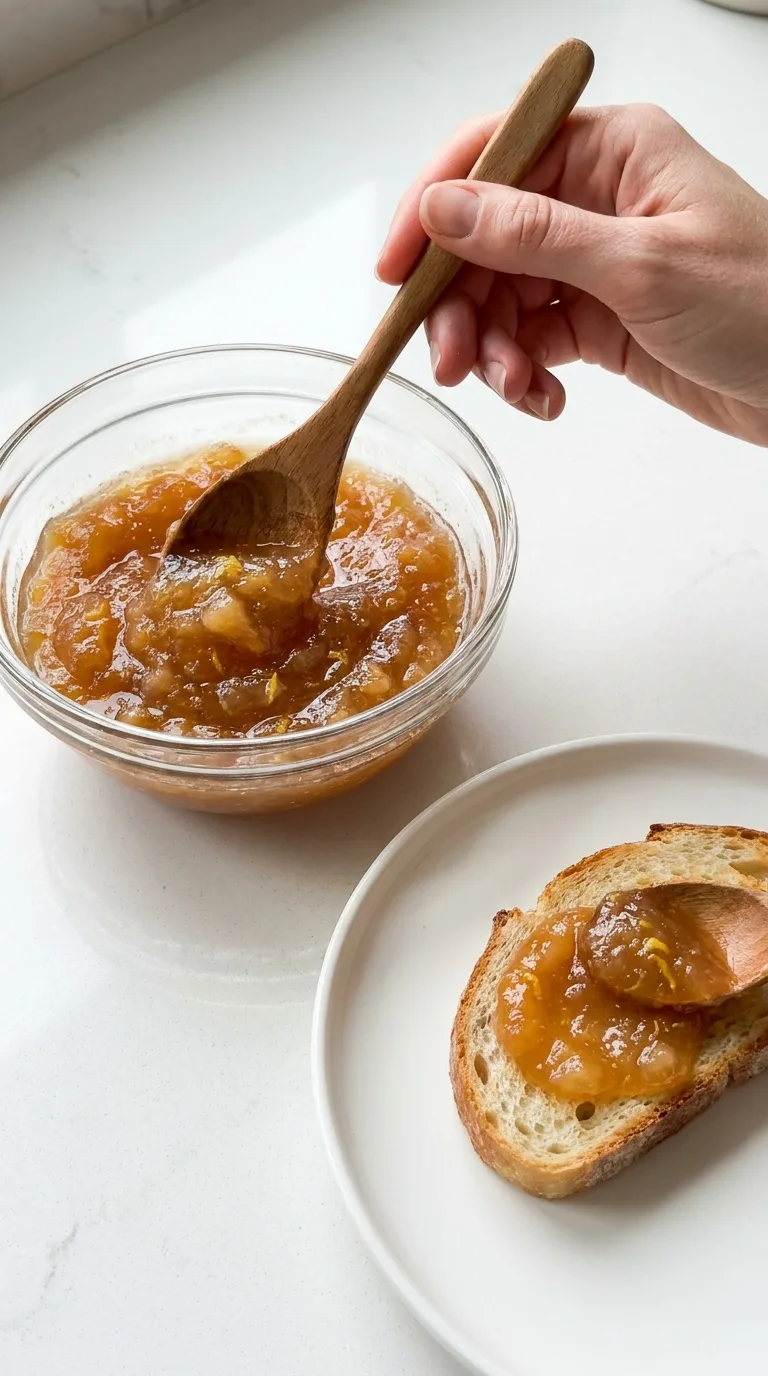
Remove the saucepan from the heat. Stir in the optional vanilla extract. The preserves should look glossy, with tender pear pieces evenly distributed through the syrup, enhancing the overall flavor.
Fill the Containers
Carefully spoon the hot preserves into three clean half-pint jars or airtight heatproof containers, leaving about 1/2 inch (1.25 cm) of space at the top. This space is important to allow for any expansion during cooling.
Cool Safely
Let the containers cool uncovered at room temperature for about 1 hour. Cover and refrigerate for at least another hour before serving. Do not leave the preserves at room temperature for more than 2 hours to ensure safety.
Stir and Serve
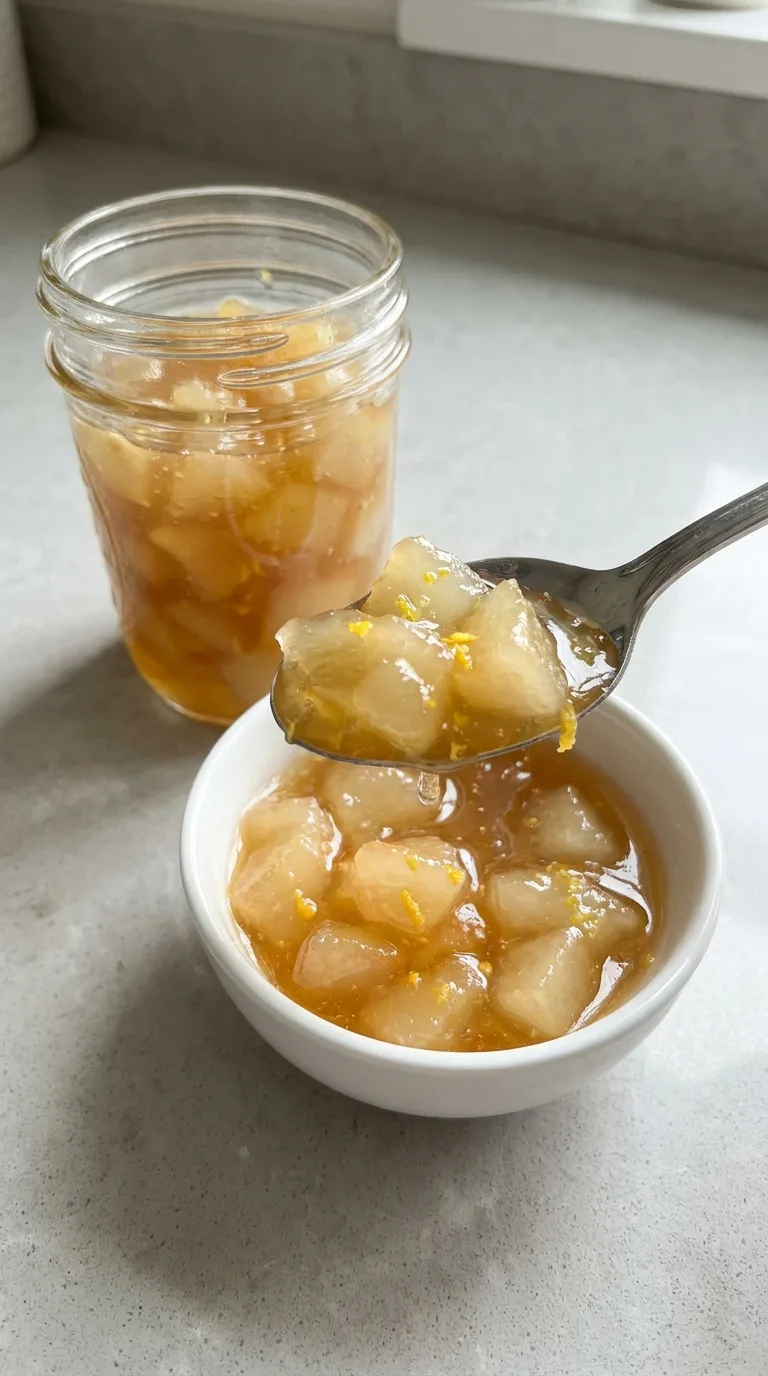
Stir the chilled preserves before serving. Spoon them over toast, biscuits, oatmeal, yogurt, pancakes, or soft cheese for a delightful treat.
Tips for Success
- Stir more often near the end of cooking because concentrated sugar can scorch quickly.
- Judge the final texture only after cooling; hot preserves always look thinner than chilled preserves.
- Avoid doubling the batch in one pan because the larger volume may take too long to thicken.
- Use clean utensils each time you serve the preserves to extend their refrigerated freshness.
Storage, Freezing, and Make-Ahead Instructions
These Pear Preserves are intended for refrigerator or freezer storage and have not been processed for shelf-stable canning. Store the cooled preserves in clean, airtight jars or containers in the refrigerator for up to 3 weeks. Discard them if you notice mold, fermentation, bubbling, an unusual odor, or a damaged container seal.
For freezing, transfer the cooled preserves to freezer-safe containers, leaving at least 1/2 inch (1.25 cm) of headspace for expansion. Freeze for up to 6 months. Thaw overnight in the refrigerator and stir before serving. The preserves can be prepared several days before serving. Their texture and flavor become more settled after a night in the refrigerator.
FAQ
Can I make Pear Preserves without peeling the pears?
Yes, but the texture will be more rustic and small pieces of peel will remain visible. Pear skins can also become slightly chewy after cooking, especially on Bosc pears.
Why are my preserves still runny?
They may need more cooking time, or the pears may have released an unusually large amount of juice. Continue simmering in short intervals and repeat the chilled-plate test. Remember that the syrup thickens considerably as it cools.
Can I reduce the sugar?
A small reduction may work, but substantially reducing the sugar will produce a thinner preserve with a shorter refrigerated life. This recipe has not been formulated for sugar substitutes or low-sugar canning.
Can I use overripe pears?
Overripe pears can be used, but they will break down more quickly and create a texture closer to pear butter or jam. Reduce mashing and begin checking for doneness early.
Are these preserves safe to store in the pantry?
No. This is a refrigerator and freezer recipe, not a tested shelf-stable canning formula. Keep all filled jars refrigerated or frozen.
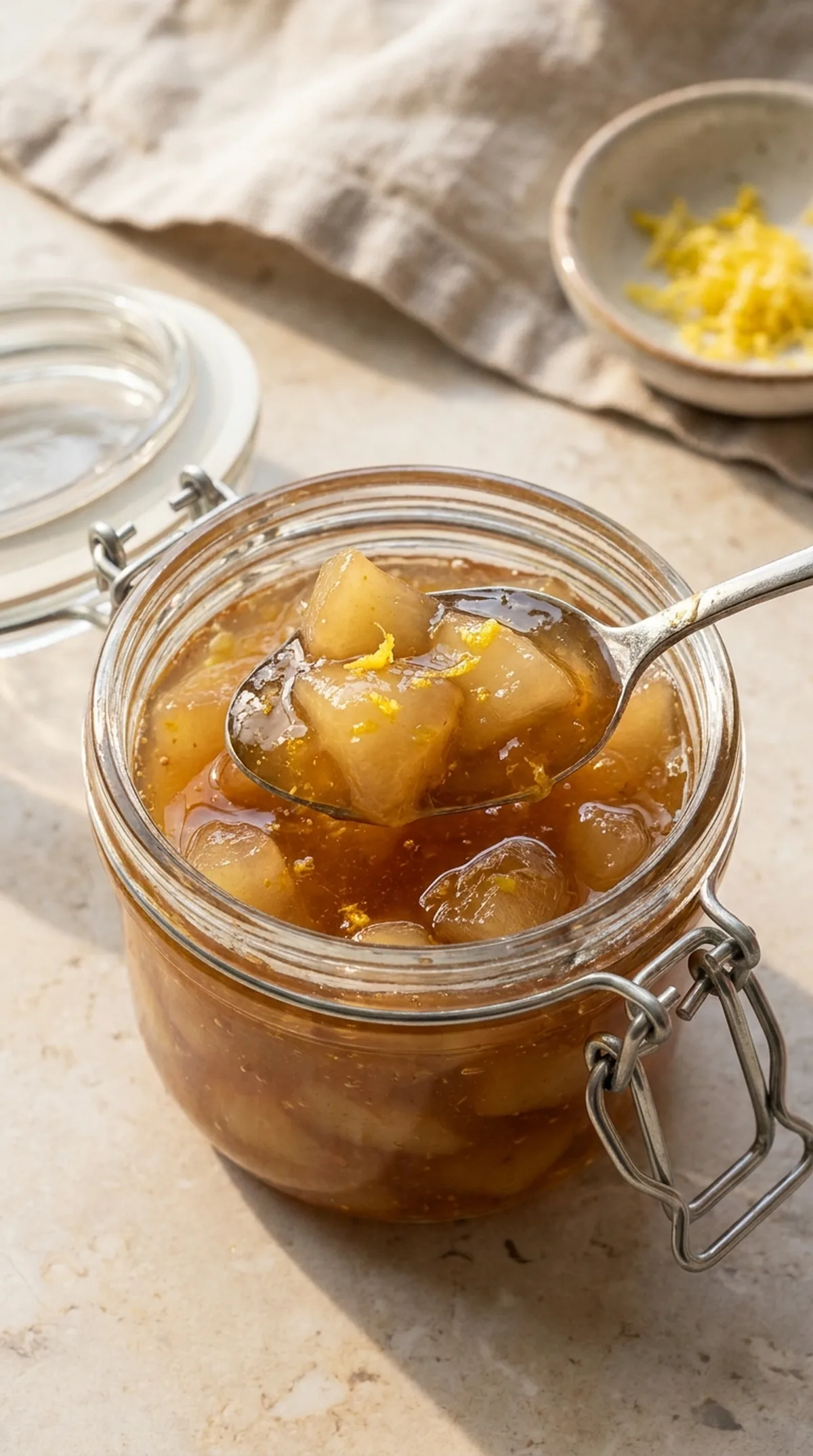
Small-Batch Pear Preserves with Lemon
Ingredients
Method
- Place a small plate in the freezer before beginning. The chilled surface will help show whether the syrup has thickened sufficiently.
- Peel, core, and cut the pears into approximately 1/2-inch (1.25 cm) pieces. Measure about 6 cups (900 g) of prepared fruit.
- Combine the pears, granulated sugar, lemon juice, lemon zest, and salt in a large bowl. Stir until the fruit is evenly coated, then let the mixture stand for 30 minutes. The sugar will become wet and syrupy as it draws juice from the pears.
- Scrape the pear mixture and all accumulated syrup into a wide 4-quart saucepan. Set the pan over medium heat.
- Cook for 5 to 7 minutes, stirring frequently, until the sugar dissolves and the mixture begins to simmer. Scrape along the bottom and corners of the pan so no sugar crystals remain.
- Reduce the heat to medium-low and maintain a steady simmer for 25 to 35 minutes. Stir more frequently as the syrup thickens to prevent scorching. The pears should become translucent and tender while some pieces remain visible.
- For smaller fruit pieces, press the mixture two or three times with a potato masher. Do not mash it completely; pear preserves should retain a chunky texture.
- The preserves are nearly ready when the bubbles become slower and glossier and a spoon drawn across the pan leaves a path that closes gradually. If using a thermometer, the mixture should approach 218°F to 220°F (103°C to 104°C) at sea level.
- Place 1 teaspoon of the hot preserves on the chilled plate and return it to the freezer for 1 minute. Push the edge with a fingertip. The syrup should wrinkle slightly and move slowly rather than running like juice.
- If the sample is runny, continue simmering for 3 to 5 minutes and test again. If the preserves become unusually thick in the pan, stir in 1 tablespoon (15 ml) of hot water.
- Remove the saucepan from the heat: Stir in the optional vanilla extract. The preserves should look glossy, with tender pear pieces evenly distributed through the syrup.
- Carefully spoon the hot preserves into three clean half-pint jars or airtight heatproof containers, leaving about 1/2 inch (1.25 cm) of space at the top.
- Let the containers cool uncovered at room temperature for about 1 hour. Cover and refrigerate for at least another hour before serving. Do not leave the preserves at room temperature for more than 2 hours.
- Stir the chilled preserves before serving: Spoon them over toast, biscuits, oatmeal, yogurt, pancakes, or soft cheese.