Brown Butter Pumpkin Snickerdoodle Cookies are soft, chewy fall cookies with warm cinnamon, pumpkin spice, and a rich, nutty flavor from browned butter. Each cookie has a lightly crisp cinnamon-sugar coating, tender edges, and a soft center. They're a lovely choice for fall baking, holiday cookie trays, or an afternoon treat with a warm drink. You'll make the dough with real pumpkin puree, chill it until firm, then bake the cookies until the edges are just set.

The secret to their texture is the combination of browned butter, pumpkin puree, and familiar baking ingredients. Browning the butter develops a toasted, caramel-like flavor, while pumpkin adds moisture and helps keep the centers soft. Cream of tartar gives the cookies their familiar snickerdoodle tang, and chilling the dough helps control spreading. Don't worry if the dough feels soft before chilling. That's normal, and it'll become easier to shape once it's cold.
Why This Recipe Works
Browned butter adds deeper flavor: Heating butter until its milk solids turn golden brown creates toasted, nutty notes that pair naturally with pumpkin and cinnamon. You'll notice the difference in the aroma before the cookies even reach the oven.
Pumpkin puree helps keep the centers tender. Its moisture softens the cookie crumb, while brown sugar helps the cookies stay pleasantly chewy. You don't need a large amount of pumpkin to get that cozy pumpkin-spice flavor.
Cream of tartar and chilled dough improve the texture. Cream of tartar provides the slight tang associated with traditional snickerdoodles, while chilling firms the butter and reduces excessive spreading. Don't skip the chilling step; it's especially helpful when working with browned butter.
Equipment Needed
- 1 medium, light-colored saucepan, approximately 2-quart (1.9 L) capacity, for browning butter
- 1 large heatproof mixing bowl, approximately 3-quart (2.8 L) capacity
- 1 medium mixing bowl, approximately 2-quart (1.9 L) capacity
- 1 small bowl for the cinnamon-sugar coating
- 2 rimmed baking sheets, approximately 13 x 18 inches (33 x 46 cm)
- Parchment paper
- Wire whisk
- Silicone spatula or wooden spoon
- Electric hand mixer, optional
- Measuring cups and measuring spoons
- Kitchen scale, recommended for accurate flour measurement
- 1 1/2-tablespoon (22 mL) cookie scoop
- Wire cooling rack
- Heat-resistant spatula
Ingredients List
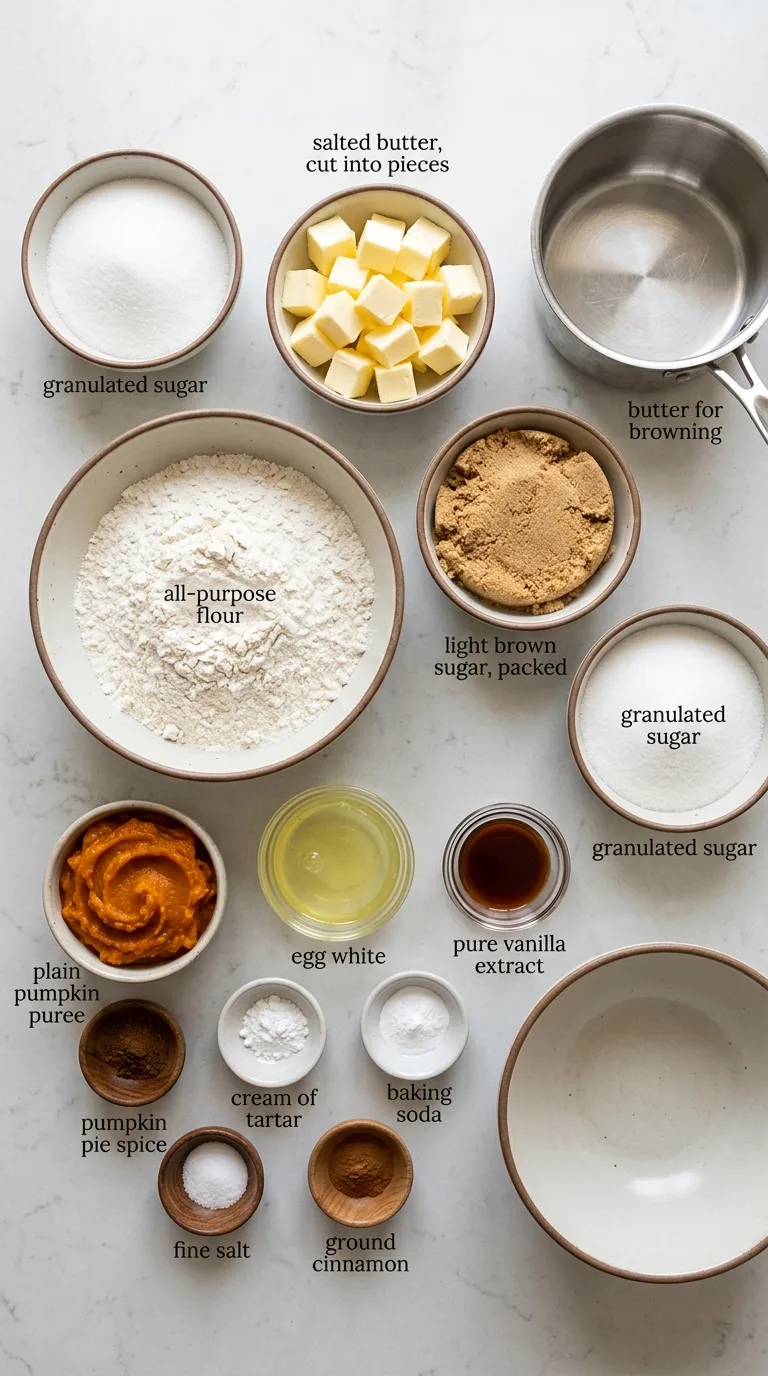
For the Cookie Dough
- 1/2 cup (113 g) salted butter, cut into pieces, for browning
- 1/2 cup (107 g) light brown sugar, packed
- 1/2 cup (100 g) granulated sugar
- 1 teaspoon (5 mL) pure vanilla extract
- 1 large egg white (about 30 g), at room temperature
- 1/4 cup (61 g) plain pumpkin puree, canned or homemade, not pumpkin pie filling
- 1 1/2 cups (180 g) all-purpose flour, spooned and leveled
- 2 teaspoons (about 4 g) pumpkin pie spice
- 1 teaspoon (3 g) cream of tartar
- 1/2 teaspoon (2.5 g) baking soda
- 1/4 teaspoon (1.5 g) fine salt
For the Cinnamon-Sugar Coating
- 1/4 cup (50 g) granulated sugar
- 2 teaspoons (5 g) ground cinnamon
Ingredient Notes and Substitutions
Salted Butter: Browning the butter develops the warm, nutty flavor that makes these cookies special. The browned milk solids provide much of that flavor, so don't discard them. Substitution: Use the same amount of unsalted butter. The cookies will taste slightly less salty, allowing the sweetness and spices to stand out more.
Pumpkin Puree: Plain pumpkin puree provides moisture, a mild earthy sweetness, and a natural orange color. Use pure pumpkin rather than pumpkin pie filling, which contains added sweeteners and spices. Substitution: Use the same amount of thick, unsweetened butternut squash puree. The cookies will have a similar soft texture but a slightly different squash flavor.
Pumpkin Pie Spice: This spice blend brings together warm flavors that complement browned butter and pumpkin. It's an easy way to season the dough without measuring several individual spices. Substitution: Replace it with the same amount of ground cinnamon. You'll get a simpler cinnamon flavor without the additional warm spice notes.
Step-by-Step Instructions
Step 1: Brown the Butter.
Place the 1/2 cup (113 g) salted butter in the light-colored saucepan over medium heat. Melt it, stirring frequently, then continue cooking for about 5–8 minutes as the butter foams and begins to crackle. Watch for golden-brown specks on the bottom and a distinctly nutty aroma. Immediately pour the butter, including the browned bits, into the large heatproof bowl. Let it cool for about 10 minutes, until warm rather than hot.

Step 2: Mix the Sugars and Butter.
Add the 1/2 cup (107 g) packed light brown sugar and 1/2 cup (100 g) granulated sugar to the cooled browned butter. Beat with an electric hand mixer on medium speed, or whisk vigorously by hand, for about 1–2 minutes. The mixture should look evenly blended, glossy, and slightly thick. It's fine if it still appears a little grainy.

Step 3: Add the Pumpkin and Wet Ingredients.
Add the 1 large egg white (about 30 g), 1/4 cup (61 g) plain pumpkin puree, and 1 teaspoon (5 mL) pure vanilla extract to the butter mixture. Mix for about 1 minute, until the pumpkin is evenly distributed and no large streaks remain. The mixture may look slightly separated or less smooth than ordinary cookie dough; that's normal at this stage.
Step 4: Combine the Dry Ingredients.
In the medium mixing bowl, whisk together 1 1/2 cups (180 g) all-purpose flour, 2 teaspoons (about 4 g) pumpkin pie spice, 1 teaspoon (3 g) cream of tartar, 1/2 teaspoon (2.5 g) baking soda, and 1/4 teaspoon (1.5 g) fine salt for about 30 seconds. Make sure the spices and leavening ingredients are evenly distributed. The mixture should have a uniform color with no visible pockets of baking soda or flour.
Step 5: Make and Chill the Dough.
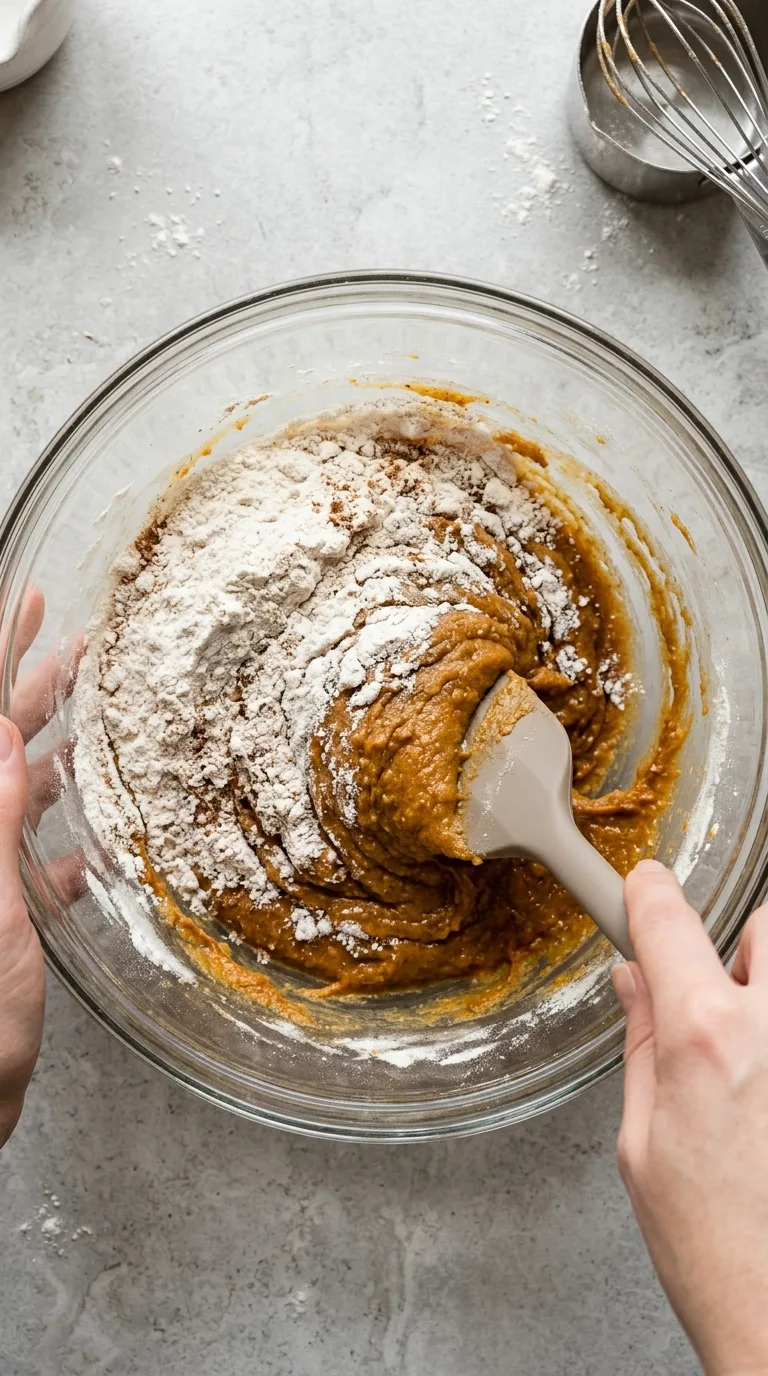
Add the dry ingredients to the wet mixture and fold gently with the silicone spatula until no dry flour remains, about 1–2 minutes. The dough should be soft, thick, and slightly sticky. Cover the bowl and refrigerate for 60 minutes, until the butter has firmed and the dough is easier to scoop and roll.
Step 6: Prepare the Oven and Coating.
Near the end of the chilling time, preheat the oven to 350°F (177°C). Line both 13 x 18-inch (33 x 46 cm) baking sheets with parchment paper. In the small bowl, stir together the 1/4 cup (50 g) granulated sugar and 2 teaspoons (5 g) ground cinnamon for the coating until evenly mixed. The mixture should look uniform, without any large clumps of cinnamon.
Step 7: Shape and Coat the Cookies.
Scoop the chilled dough into 14 portions, using approximately 1 1/2 tablespoons (22 mL) per portion. Roll each portion gently between your palms to make a ball, then roll it in the cinnamon-sugar mixture until evenly coated. Arrange the dough balls on the prepared baking sheets, leaving approximately 2 inches (5 cm) between them. They should feel firm enough to hold their shape.

Step 8: Bake Until the Edges Set.
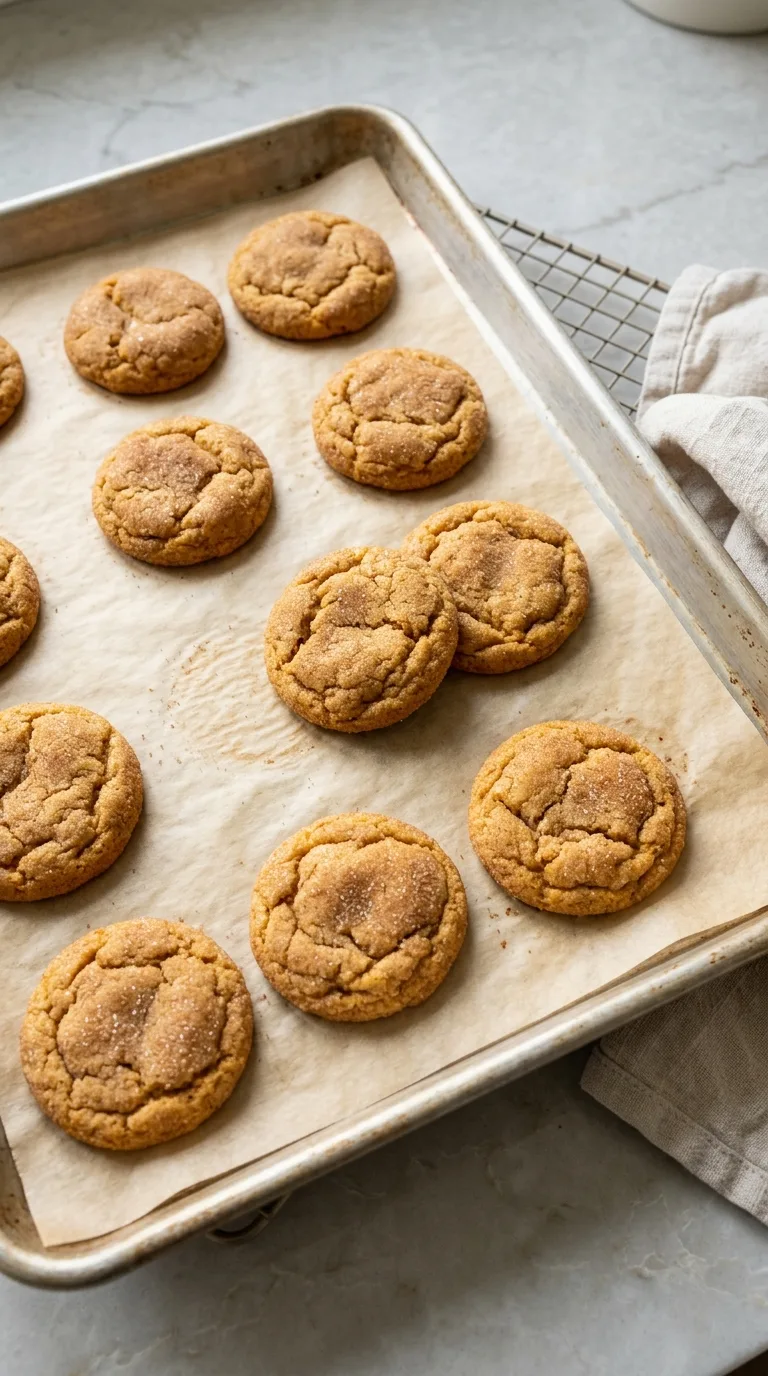
Place both baking sheets in the preheated 350°F (177°C) oven. Bake for 11–14 minutes, aiming for about 12 minutes, and switch the sheets between racks halfway through for more even baking. The edges should look set and lightly golden, while the centers remain slightly soft and puffed. Don't wait for the centers to become completely firm; they will continue setting as the cookies cool.
Step 9: Cool the Cookies.
Remove the baking sheets from the oven and let the cookies rest on the sheets for 5–10 minutes. The centers should become firmer and the edges should hold together when gently lifted. Transfer the cookies to a wire rack and allow them to cool completely before storing. They'll be delicate right out of the oven, so give them time to firm up.
Storage, Freezing, and Make-Ahead Instructions
Refrigerator: Once the cookies have cooled completely, place them in an airtight container. They'll generally keep at room temperature for about 3 days or in the refrigerator for up to 5 days. Refrigeration may make them firmer, so let them come to room temperature before serving if you prefer a softer texture. Don't put warm cookies into a sealed container, since trapped moisture can make the cinnamon-sugar coating damp.
Freezer: You can freeze the fully cooled baked cookies in an airtight, freezer-safe container for up to 2 months. Separate layers with parchment paper to reduce sticking and help protect the cinnamon-sugar coating. Thaw the cookies at room temperature before serving. Their coating may become slightly softer after thawing, but the cookies should still have a pleasant texture.
Make-Ahead and Reheating: The prepared cookie dough can be covered tightly and refrigerated for up to 2 days before baking. If it becomes too firm to scoop, let it soften briefly at room temperature until workable. Shape, coat, and bake as directed at 350°F (177°C), checking the edges for doneness. For a warm baked cookie, reheat at 300°F (149°C) for about 3–5 minutes, just until warmed through. Avoid prolonged reheating, which can dry out the centers.

FAQ
Why are my pumpkin snickerdoodle cookies cakey instead of chewy?
Too much pumpkin moisture, excess flour, or overbaking can produce a cakier texture. Use thick pumpkin puree, measure the flour carefully, and remove the cookies when the edges are set but the centers are still soft.
Do I have to chill brown butter pumpkin snickerdoodle dough?
Yes, chilling is important for this recipe because the browned butter is liquid when mixed into the dough. Refrigerating it helps the cookies hold their shape and prevents excessive spreading during baking.
Can I make brown butter pumpkin snickerdoodles without cream of tartar?
You can omit the cream of tartar, but the flavor and texture will change. The cookies will lose some of their signature snickerdoodle tang and may spread or rise differently.
Can I use homemade pumpkin puree instead of canned pumpkin?
Yes, homemade pumpkin puree works if it's thick, smooth, and unsweetened. If yours looks watery, drain or blot away excess moisture before measuring so the dough doesn't become too loose.

Brown Butter Pumpkin Snickerdoodle Cookies
Ingredients
Method
- Place the 1/2 cup (113 g) salted butter in the light-colored saucepan over medium heat. Melt it, stirring frequently, then continue cooking for about 5–8 minutes as the butter foams and begins to crackle. Watch for golden-brown specks on the bottom and a distinctly nutty aroma. Immediately pour the butter, including the browned bits, into the large heatproof bowl. Let it cool for about 10 minutes, until warm rather than hot.
- Add the 1/2 cup (107 g) packed light brown sugar and 1/2 cup (100 g) granulated sugar to the cooled browned butter. Beat with an electric hand mixer on medium speed, or whisk vigorously by hand, for about 1–2 minutes. The mixture should look evenly blended, glossy, and slightly thick. It&x27;s fine if it still appears a little grainy.
- Add the 1 large egg white (about 30 g), 1/4 cup (61 g) plain pumpkin puree, and 1 teaspoon (5 mL) pure vanilla extract to the butter mixture. Mix for about 1 minute, until the pumpkin is evenly distributed and no large streaks remain. The mixture may look slightly separated or less smooth than ordinary cookie dough; that&x27;s normal at this stage.
- In the medium mixing bowl, whisk together 1 1/2 cups (180 g) all-purpose flour, 2 teaspoons (about 4 g) pumpkin pie spice, 1 teaspoon (3 g) cream of tartar, 1/2 teaspoon (2.5 g) baking soda, and 1/4 teaspoon (1.5 g) fine salt for about 30 seconds. Make sure the spices and leavening ingredients are evenly distributed. The mixture should have a uniform color with no visible pockets of baking soda or flour.
- Add the dry ingredients to the wet mixture and fold gently with the silicone spatula until no dry flour remains, about 1–2 minutes. The dough should be soft, thick, and slightly sticky. Cover the bowl and refrigerate for 60 minutes, until the butter has firmed and the dough is easier to scoop and roll.
- Near the end of the chilling time, preheat the oven to 350°F (177°C). Line both 13 x 18-inch (33 x 46 cm) baking sheets with parchment paper. In the small bowl, stir together the 1/4 cup (50 g) granulated sugar and 2 teaspoons (5 g) ground cinnamon for the coating until evenly mixed. The mixture should look uniform, without any large clumps of cinnamon.
- Scoop the chilled dough into 14 portions, using approximately 1 1/2 tablespoons (22 mL) per portion. Roll each portion gently between your palms to make a ball, then roll it in the cinnamon-sugar mixture until evenly coated. Arrange the dough balls on the prepared baking sheets, leaving approximately 2 inches (5 cm) between them. They should feel firm enough to hold their shape.
- Place both baking sheets in the preheated 350°F (177°C) oven. Bake for 11–14 minutes, aiming for about 12 minutes, and switch the sheets between racks halfway through for more even baking. The edges should look set and lightly golden, while the centers remain slightly soft and puffed. Don&x27;t wait for the centers to become completely firm; they will continue setting as the cookies cool.
- Remove the baking sheets from the oven and let the cookies rest on the sheets for 5–10 minutes. The centers should become firmer and the edges should hold together when gently lifted. Transfer the cookies to a wire rack and allow them to cool completely before storing. They&x27;ll be delicate right out of the oven, so give them time to firm up.