Sweet Potato Casserole with Marshmallows is a comforting American side dish made with creamy mashed sweet potatoes, warm cinnamon, brown sugar, and a golden layer of toasted mini marshmallows. It's especially popular at Thanksgiving and Christmas, but you can enjoy it with any cozy family dinner. The naturally sweet potatoes and soft, buttery filling pair beautifully with the lightly caramelized marshmallow topping.
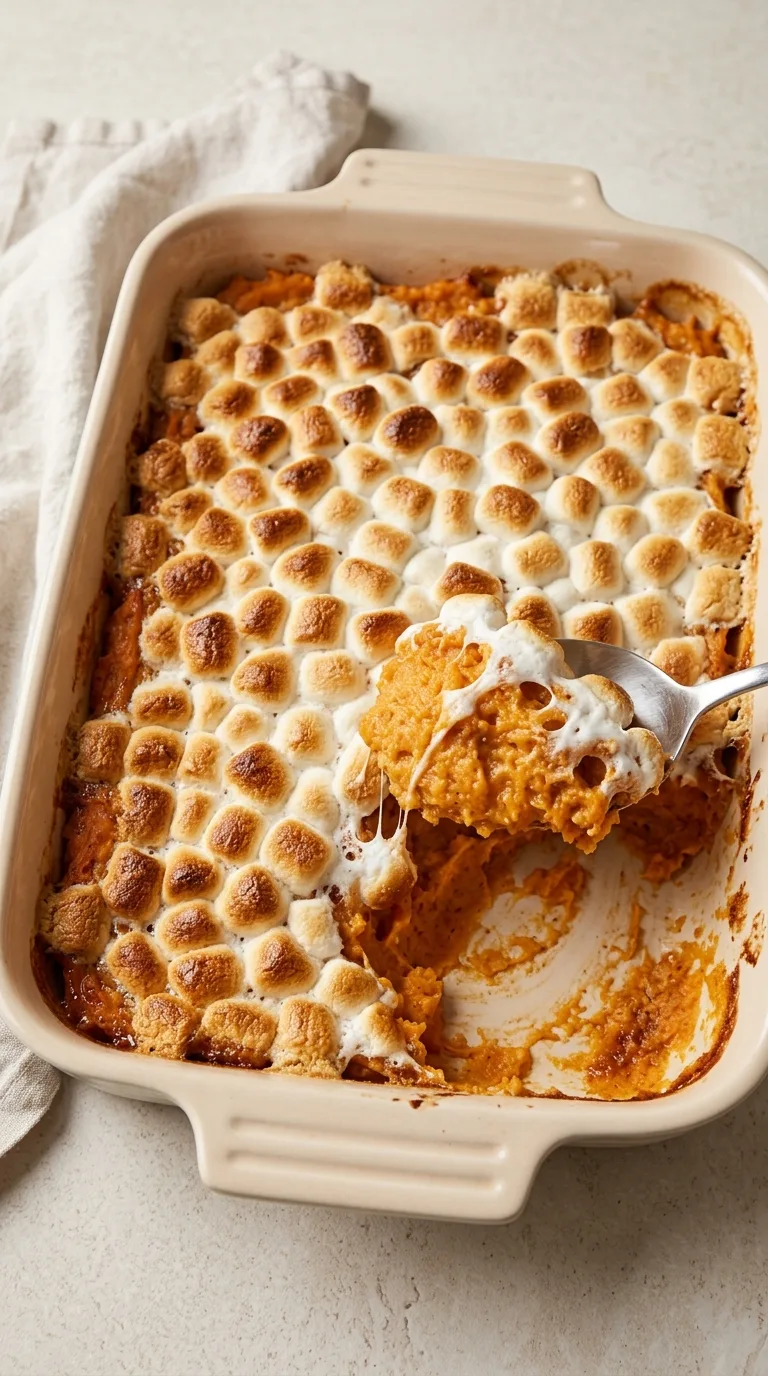
The secret to a creamy casserole is roasting the sweet potatoes before mashing them. Roasting brings out their natural sweetness without adding the extra moisture that boiling can introduce. A little butter and milk make the filling smooth, while brown sugar, vanilla, and cinnamon add warmth. You'll finish the casserole in the oven so the marshmallows turn golden and lightly crisp on top while staying soft underneath.
Why This Recipe Works
Roasting develops natural sweetness: Sweet potatoes become tender and more concentrated in flavor as they roast. You'll also avoid excess water in the filling, which helps the casserole stay creamy instead of runny.
Butter and milk create a smooth texture. Melted butter adds richness, while milk makes the mashed sweet potatoes easier to mix and spread. You don't need heavy cream to get a soft, velvety filling.
Adding marshmallows near the end prevents burning. Mini marshmallows brown much faster than the sweet potato filling heats through. Adding them after the initial baking period gives you a golden, fluffy topping without drying out the casserole.
Equipment Needed
- 1 large rimmed baking sheet, approximately 13 x 18 inches (33 x 46 cm)
- 1 oven-safe 9 x 13-inch (23 x 33 cm) baking dish
- 1 large mixing bowl, at least 4-quart (3.8 L) capacity
- 1 potato masher or sturdy fork
- 1 sturdy mixing spoon or silicone spatula
- 1 small microwave-safe bowl for melting butter
- 1 fork for piercing the sweet potatoes
- Measuring cups and measuring spoons
- Oven mitts
- Aluminum foil for storing or covering the prepared casserole
Ingredients List
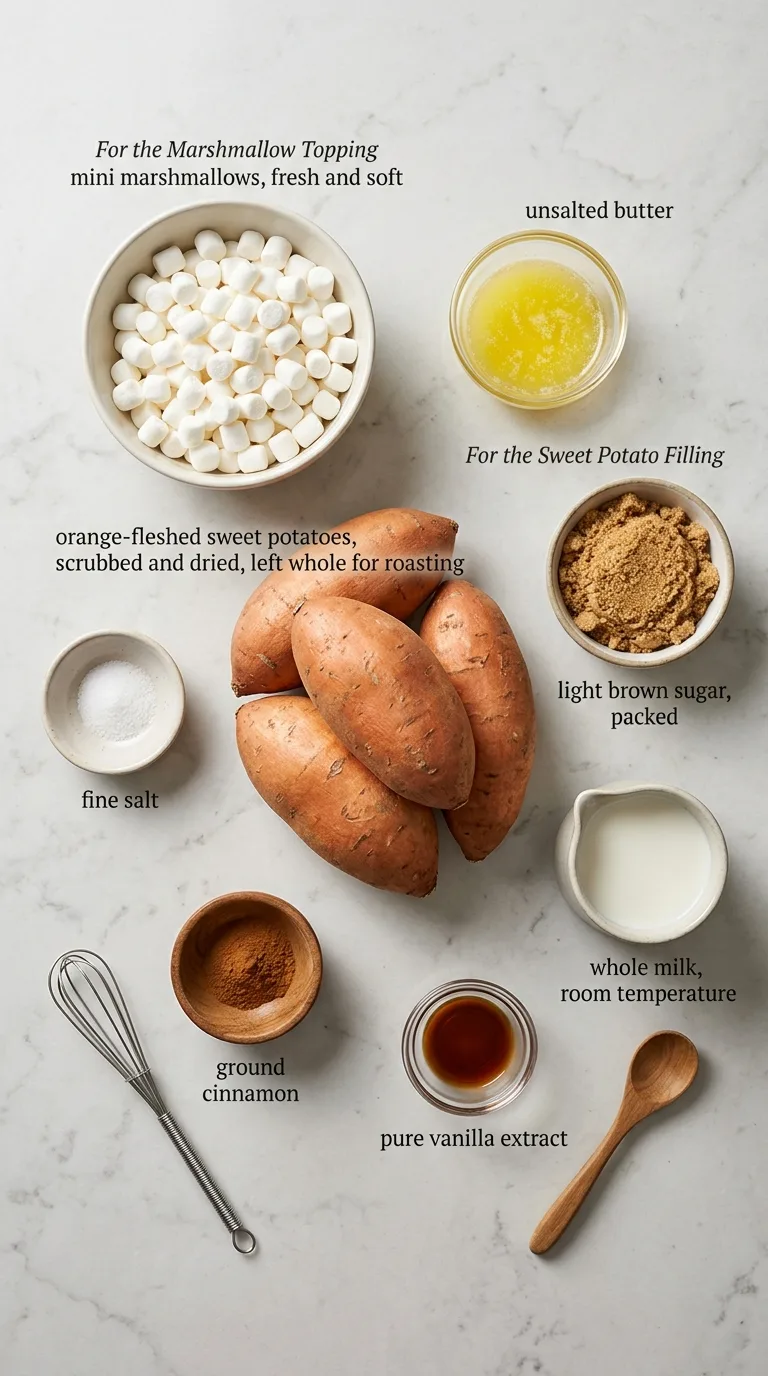
For the Sweet Potato Filling
- 3 pounds (1.36 kg) orange-fleshed sweet potatoes, scrubbed and dried, left whole for roasting
- 1/4 cup (57 g) unsalted butter, melted
- 1/3 cup (70 g) light brown sugar, packed
- 1/4 cup (60 ml) whole milk, room temperature
- 1 teaspoon (5 ml) pure vanilla extract
- 1/2 teaspoon (1.3 g) ground cinnamon
- 1/4 teaspoon (1.5 g) fine salt
For the Marshmallow Topping
- 2 cups (approximately 100 g) mini marshmallows, fresh and soft
Ingredient Notes and Substitutions
Sweet Potatoes: Orange-fleshed sweet potatoes provide the natural sweetness, moisture, and creamy texture that make this casserole so comforting. Choose firm potatoes without soft spots, and don't worry if their sizes vary slightly. Substitution: Use an equal weight of Garnet or Jewel sweet potatoes if your grocery store carries them under a different variety name; both work well, although sweetness and moisture may vary.
Unsalted Butter: Butter gives the mashed sweet potatoes a rich, smooth consistency and helps carry the warm flavors of cinnamon and vanilla. Using unsalted butter also makes the seasoning easier to control. Substitution: Use an equal amount of melted plant-based butter for a dairy-free alternative, but expect a slightly different buttery flavor.
Mini Marshmallows: Mini marshmallows form the sweet, golden topping and melt together into a soft layer. Their small size helps them brown evenly without leaving large, unmelted centers. Substitution: Use an equal weight of regular marshmallows, cut into smaller pieces; the topping may look less even and take slightly longer to color.
Step-by-Step Instructions
Step 1: Preheat the Oven.
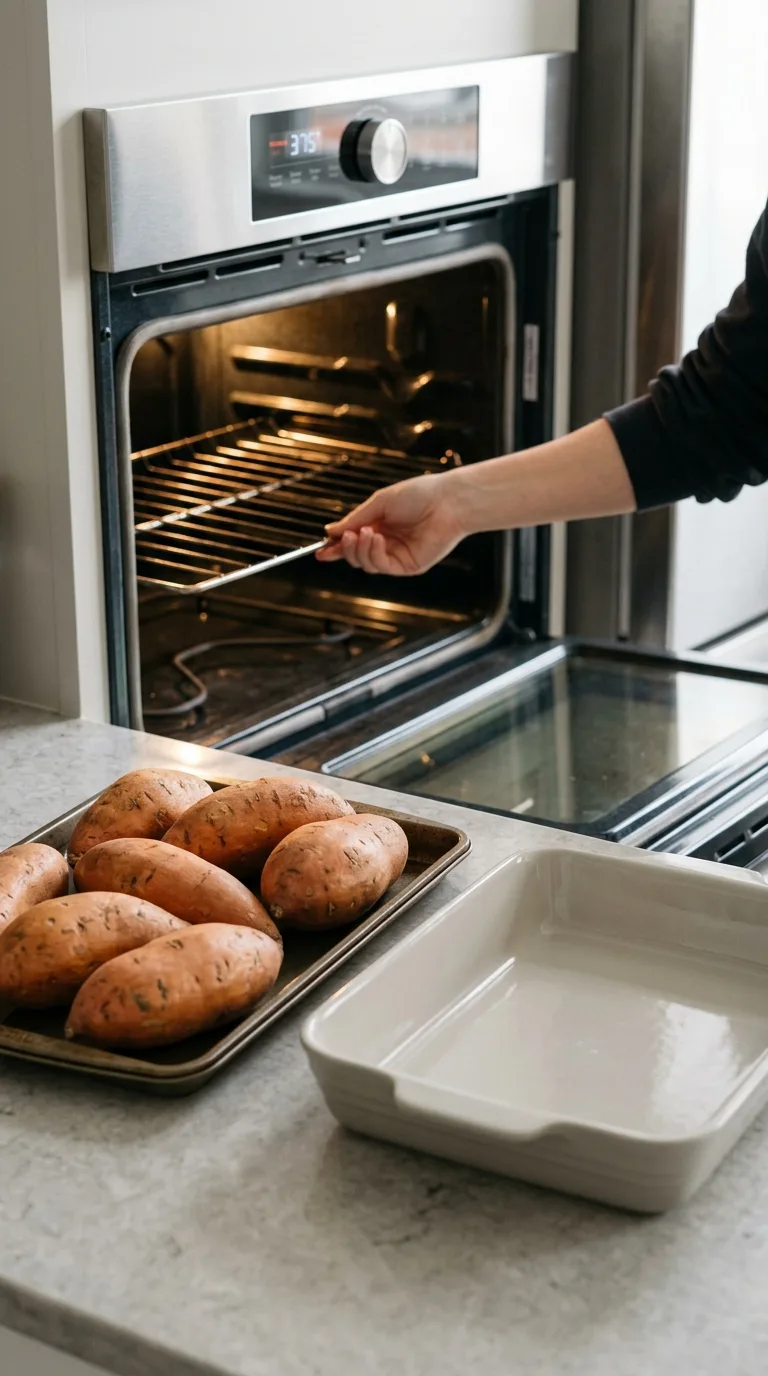
Preheat your oven to 400°F (204°C). Position an oven rack in the middle. Prepare the 3 pounds (1.36 kg) orange-fleshed sweet potatoes, scrubbed and dried, left whole for roasting. Pierce each potato several times with a fork to allow steam to escape. The potatoes should be clean, dry, and ready for roasting.
Step 2: Roast the Sweet Potatoes.
Arrange the whole sweet potatoes on the 13 x 18-inch (33 x 46 cm) rimmed baking sheet, leaving space between them. Roast at 400°F (204°C) for 60 minutes, or until a fork slides easily into the thickest part and the centers feel completely soft. Don't worry if a little syrupy juice appears on the baking sheet; that's normal.
Step 3: Cool and Peel.
Remove the baking sheet from the oven and let the sweet potatoes cool for 10 minutes, until you can handle them carefully. Reduce the oven temperature to 350°F (177°C). Split the potatoes lengthwise, scoop the soft orange flesh into the large mixing bowl, and discard the skins. The flesh should look tender and separate easily from the peel.
Step 4: Mash the Sweet Potatoes.
Mash the roasted sweet potato flesh with a potato masher or sturdy fork until mostly smooth. Break apart any large pieces so the filling has an even texture. A few small lumps are fine, but there shouldn't be any firm chunks left.
Step 5: Mix the Filling.
Add the following ingredients to the mashed sweet potatoes, using the exact quantities and prepared states listed:
1/4 cup (57 g) unsalted butter, melted
1/3 cup (70 g) light brown sugar, packed
1/4 cup (60 ml) whole milk, room temperature
1 teaspoon (5 ml) pure vanilla extract
1/2 teaspoon (1.3 g) ground cinnamon
1/4 teaspoon (1.5 g) fine salt
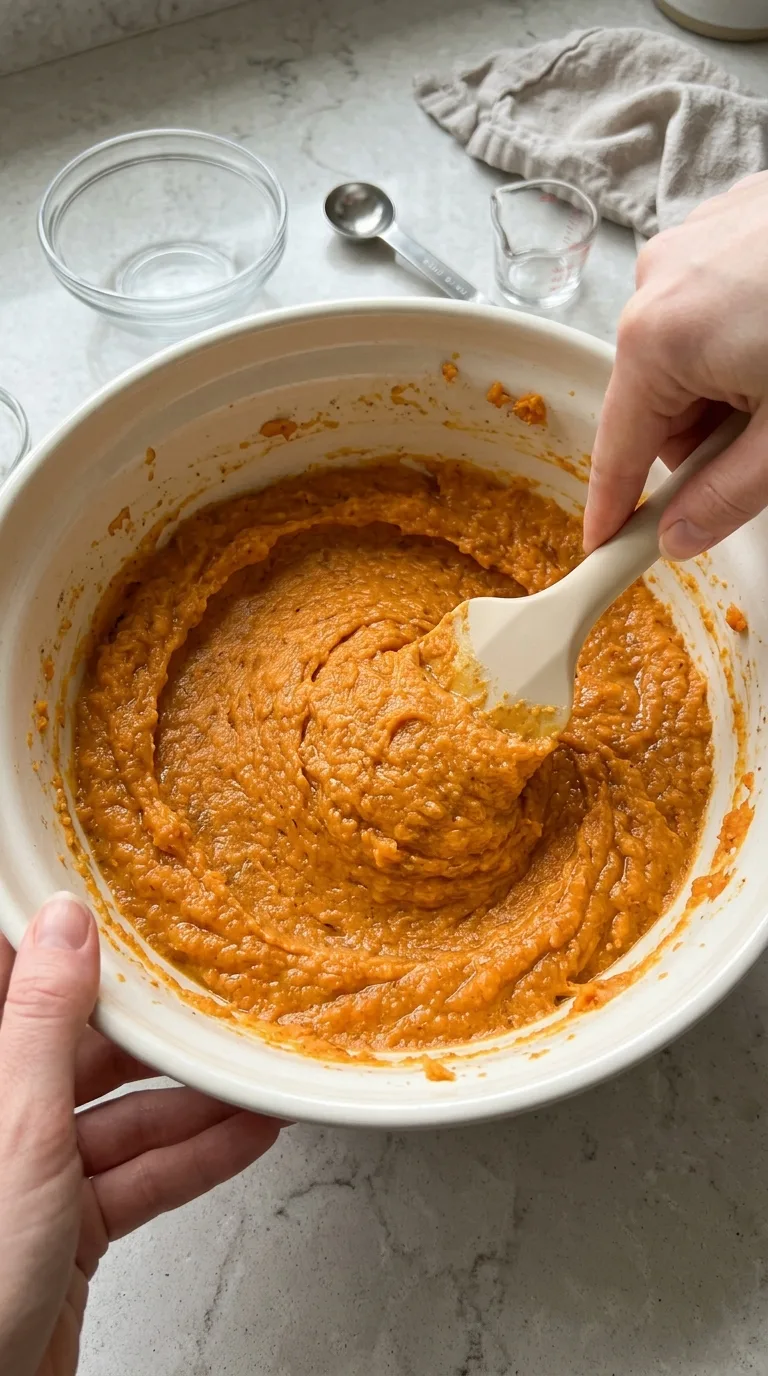
Stir the sweet potato mixture until all six ingredients are evenly incorporated. Scrape the sides and bottom of the bowl with a silicone spatula to remove any pockets of brown sugar, cinnamon, or salt. The filling should look smooth, creamy, and lightly glossy, with no visible streaks of melted butter or milk.
Step 6: Fill the Baking Dish.
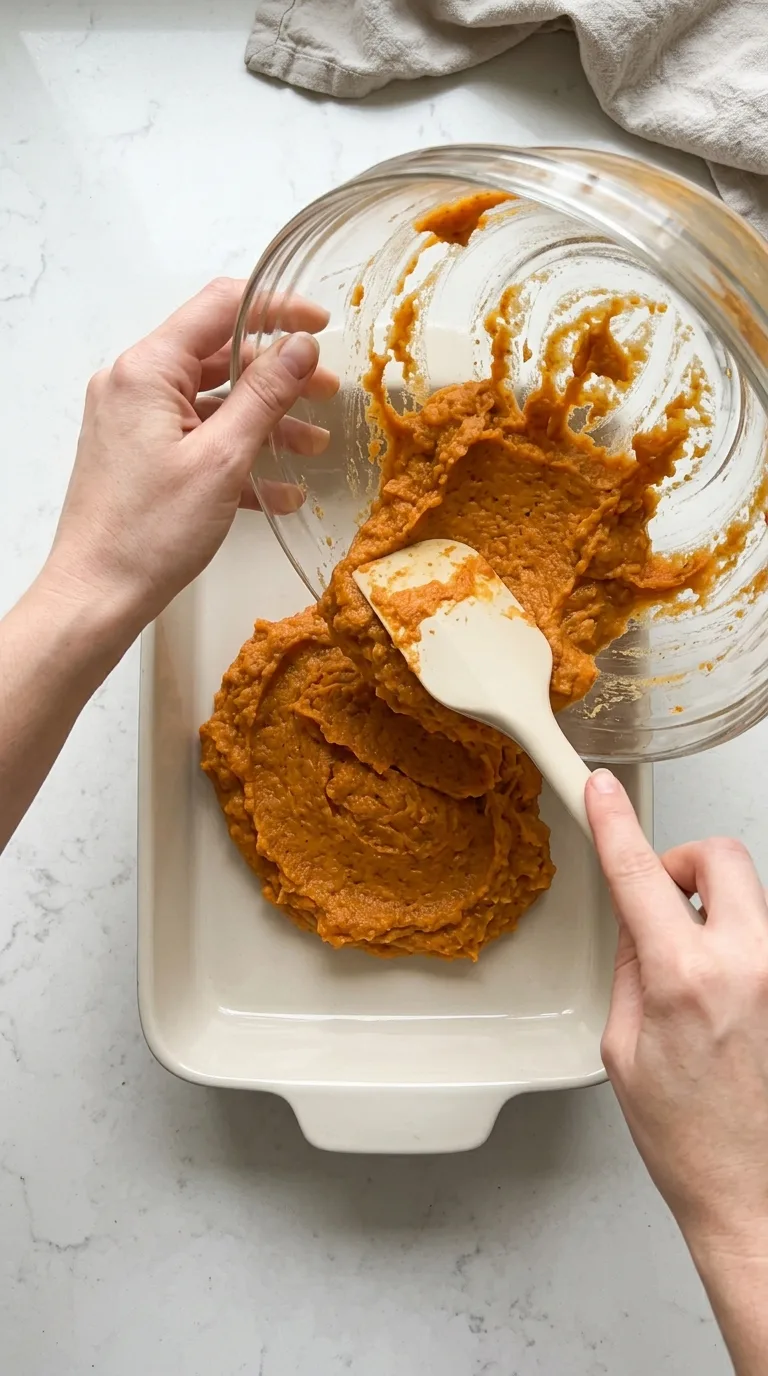
Transfer the sweet potato mixture to the 9 x 13-inch (23 x 33 cm) baking dish. Spread it into an even layer with the back of the spoon or silicone spatula. Smooth the top and gently press the mixture into the corners. The surface should look level, with no large gaps.
Step 7: Bake the Sweet Potato Filling.
Place the baking dish on the middle oven rack and bake uncovered at 350°F (177°C) for 20 minutes. The filling should be hot throughout, with lightly steaming edges and a surface that looks set rather than watery. Remove the dish carefully while keeping the oven at the same temperature.
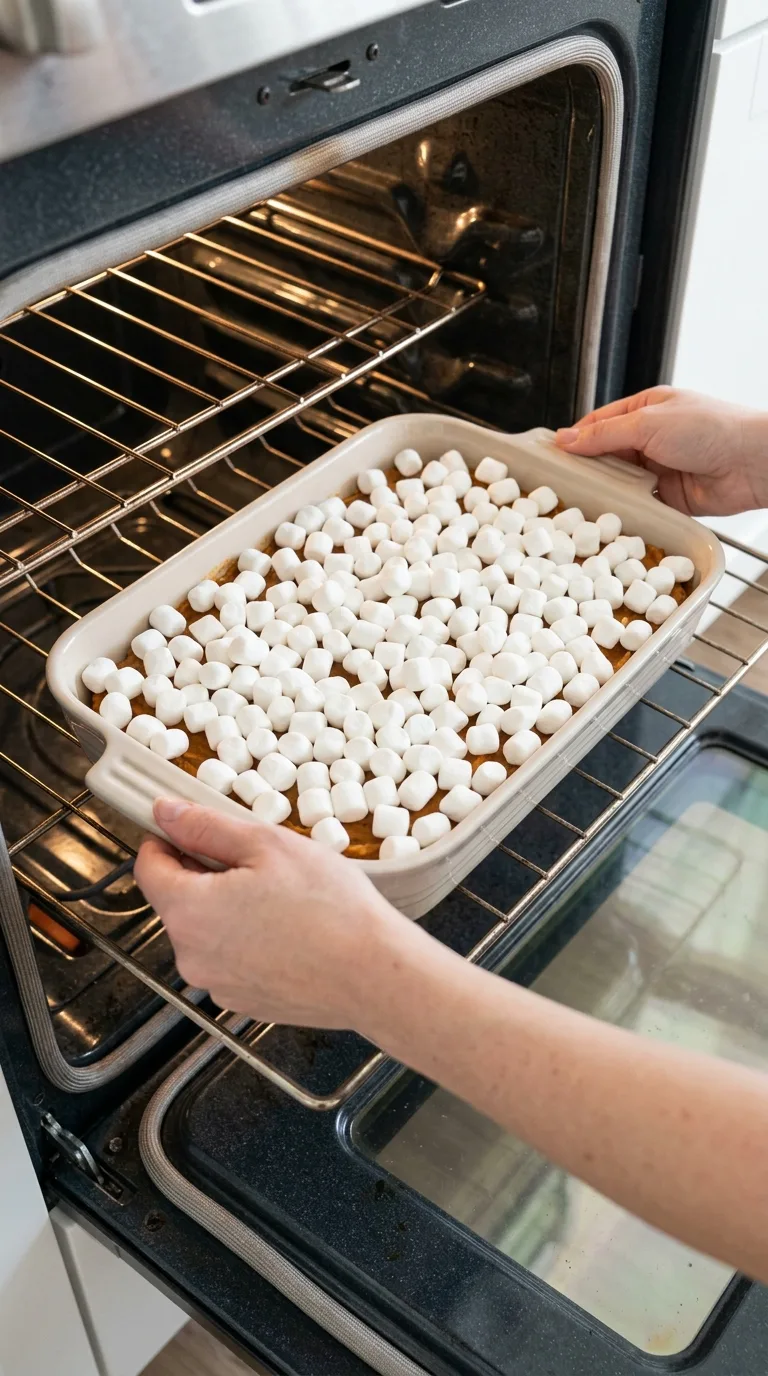
Step 8: Add the Marshmallow Topping.
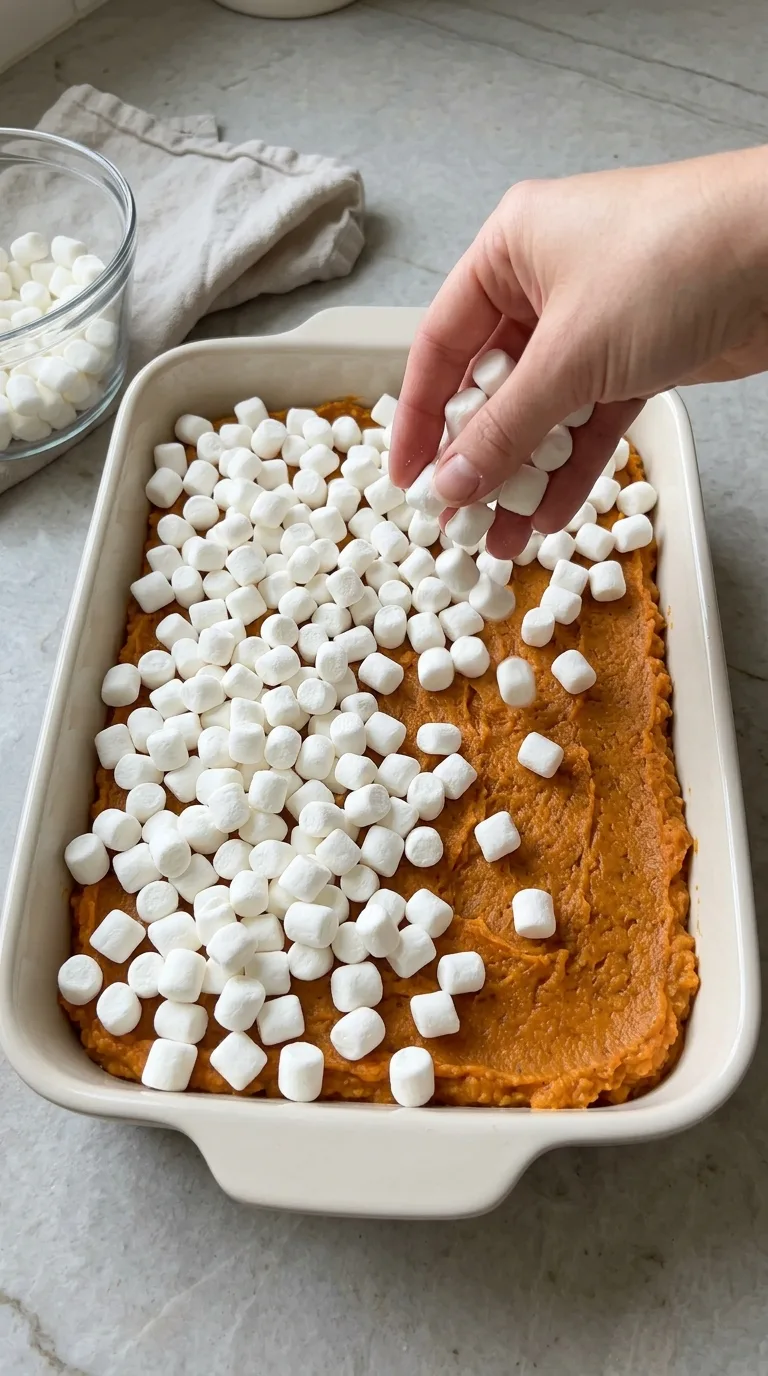
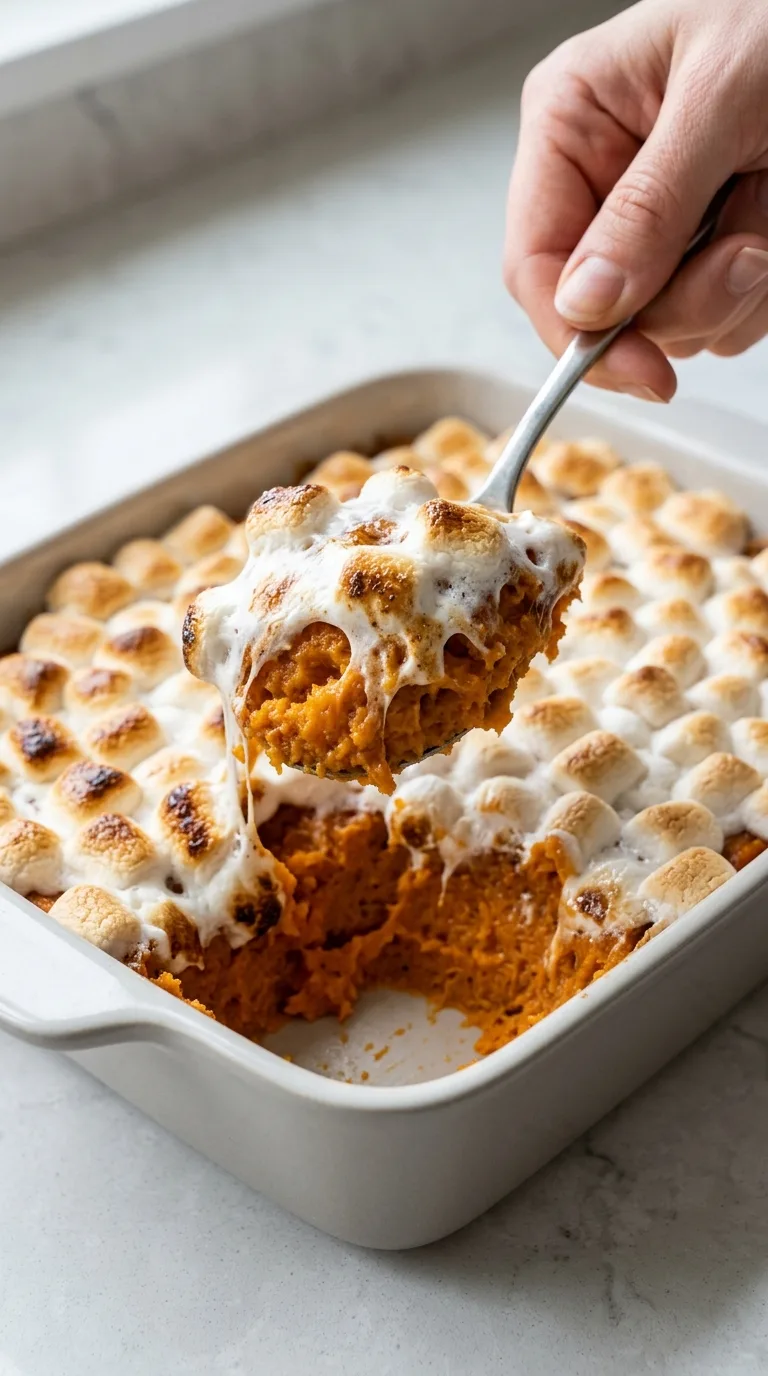
Scatter the 2 cups (approximately 100 g) mini marshmallows, fresh and soft, evenly over the hot sweet potato filling, covering the surface without pressing them down. Return the baking dish to the oven and bake at 350°F (177°C) for 8 minutes, or until the marshmallows are puffed, beginning to melt together, and lightly golden on top. Watch closely near the end because the topping can brown quickly. Serve warm.
Storage, Freezing, and Make-Ahead Instructions
Refrigerator: Let the casserole cool until it is no longer steaming, then cover tightly or transfer to an airtight container. Refrigerate within 2 hours of cooking and keep at 40°F (4°C) or below for 3 to 4 days. The marshmallow topping may soften or become sticky as it chills, but that's normal.
Freezer: For the best texture, freeze the baked sweet potato filling before adding the marshmallow topping. Cool completely, wrap tightly in freezer-safe packaging, and freeze at 0°F (-18°C) for up to 2 months for best quality. Thaw overnight in the refrigerator before reheating. Freezing the finished casserole with marshmallows is possible, but the topping may become wet and uneven after thawing.
Make-Ahead and Reheating: You can roast, mash, season, and assemble the sweet potato filling up to 24 hours ahead. Cover and refrigerate it without the marshmallows. When ready to serve, bake the chilled filling at 350°F (177°C) for approximately 25 to 35 minutes, until the center reaches 165°F (74°C), then add the 2 cups (approximately 100 g) mini marshmallows and bake for 8 minutes, watching for a lightly golden topping. For refrigerated leftovers, cover loosely with foil and reheat at 350°F (177°C) for approximately 15 to 25 minutes, depending on portion size, until heated to 165°F (74°C). Uncover briefly at the end if the topping needs to soften.
FAQ
Can I make sweet potato casserole with marshmallows the day before?
Yes, you can prepare the sweet potato filling the day before, cover it, and refrigerate it without the marshmallows. Add the topping only after reheating the filling so it stays soft and turns golden rather than becoming soggy.
Is it better to boil or roast sweet potatoes for casserole?
Roasting is a great choice because it concentrates the potatoes' natural sweetness and avoids adding water to the filling. Boiling also works, but you'll need to drain the potatoes thoroughly to prevent a watery casserole.
Why is my sweet potato casserole runny?
A runny casserole usually comes from excess moisture in the sweet potatoes or too much added liquid. Roasting until tender and measuring the 1/4 cup (60 ml) whole milk, room temperature, carefully will help you get a thick, creamy filling.
Can I use canned sweet potatoes instead of fresh?
Yes, canned sweet potatoes can work if they're well drained and mashed. Choose ones packed in water rather than syrup when possible, because syrup-packed sweet potatoes can make the finished casserole much sweeter.
Sweet Potato Casserole with Marshmallows
Ingredients
Method
- Preheat the Oven: Preheat your oven to 400°F (204°C). Position an oven rack in the middle. Prepare the 3 pounds (1.36 kg) orange-fleshed sweet potatoes, scrubbed and dried, left whole for roasting. Pierce each potato several times with a fork to allow steam to escape. The potatoes should be clean, dry, and ready for roasting.
- Roast the Sweet Potatoes: Arrange the whole sweet potatoes on the 13 x 18-inch (33 x 46 cm) rimmed baking sheet, leaving space between them. Roast at 400°F (204°C) for 60 minutes, or until a fork slides easily into the thickest part and the centers feel completely soft. Don't worry if a little syrupy juice appears on the baking sheet; that's normal.
- Cool and Peel: Remove the baking sheet from the oven and let the sweet potatoes cool for 10 minutes, until you can handle them carefully. Reduce the oven temperature to 350°F (177°C). Split the potatoes lengthwise, scoop the soft orange flesh into the large mixing bowl, and discard the skins. The flesh should look tender and separate easily from the peel.
- Mash the Sweet Potatoes: Mash the roasted sweet potato flesh with a potato masher or sturdy fork until mostly smooth. Break apart any large pieces so the filling has an even texture. A few small lumps are fine, but there shouldn't be any firm chunks left.
- Mix the Filling: Add the following ingredients to the mashed sweet potatoes, using the exact quantities and prepared states listed:
- 1/4 cup (57 g) unsalted butter, melted
- 1/3 cup (70 g) light brown sugar, packed
- 1/4 cup (60 ml) whole milk, room temperature
- teaspoon (5 ml) pure vanilla extract
- 1/2 teaspoon (1.3 g) ground cinnamon
- 1/4 teaspoon (1.5 g) fine salt
- Stir the sweet potato mixture until all six ingredients are evenly incorporated. Scrape the sides and bottom of the bowl with a silicone spatula to remove any pockets of brown sugar, cinnamon, or salt. The filling should look smooth, creamy, and lightly glossy, with no visible streaks of melted butter or milk.
- Fill the Baking Dish: Transfer the sweet potato mixture to the 9 x 13-inch (23 x 33 cm) baking dish. Spread it into an even layer with the back of the spoon or silicone spatula. Smooth the top and gently press the mixture into the corners. The surface should look level, with no large gaps.
- Bake the Sweet Potato Filling: Place the baking dish on the middle oven rack and bake uncovered at 350°F (177°C) for 20 minutes. The filling should be hot throughout, with lightly steaming edges and a surface that looks set rather than watery. Remove the dish carefully while keeping the oven at the same temperature.
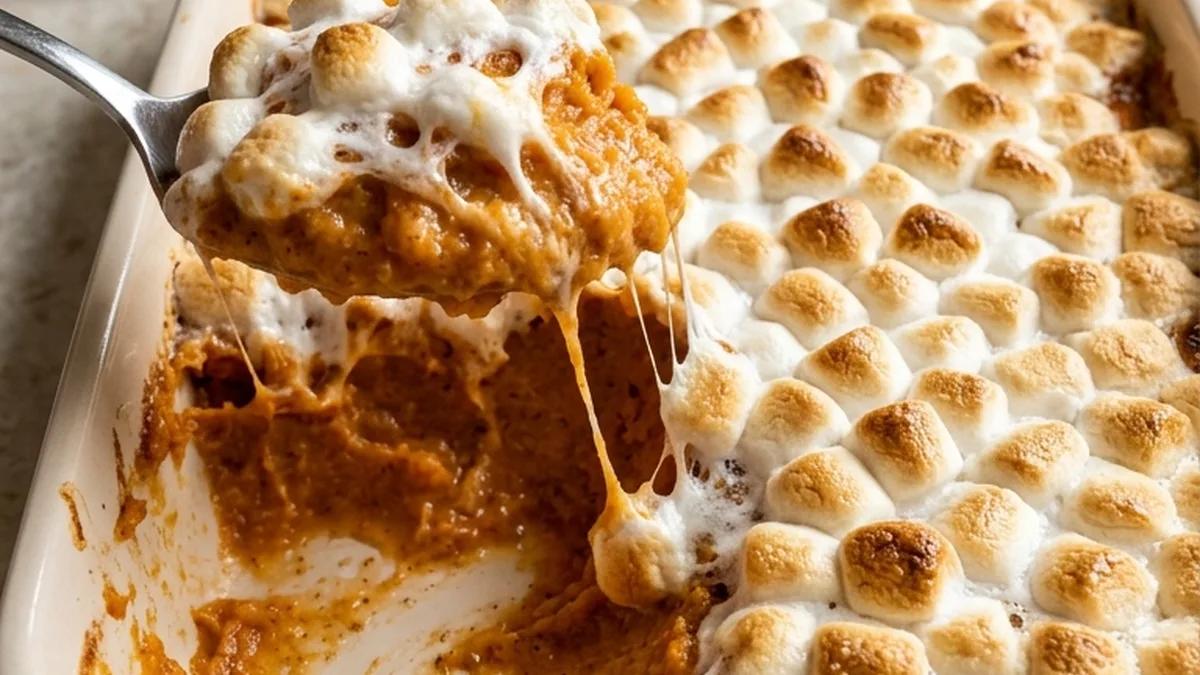
- Add the Marshmallow Topping: Scatter the 2 cups (approximately 100 g) mini marshmallows, fresh and soft, evenly over the hot sweet potato filling, covering the surface without pressing them down. Return the baking dish to the oven and bake at 350°F (177°C) for 8 minutes, or until the marshmallows are puffed, beginning to melt together, and lightly golden on top. Watch closely near the end because the topping can brown quickly. Serve warm.