Christmas Sugar Cookie Bars are soft, buttery vanilla cookie bars topped with creamy homemade frosting and festive red and green sprinkles. They have tender centers, lightly golden edges, and the familiar sweet flavor of classic Christmas sugar cookies. Instead of rolling dough and cutting individual cookies, you'll press everything into one baking pan, bake it, and slice it into squares. They're a lovely choice for Christmas dessert trays, holiday parties, and homemade cookie gifts.
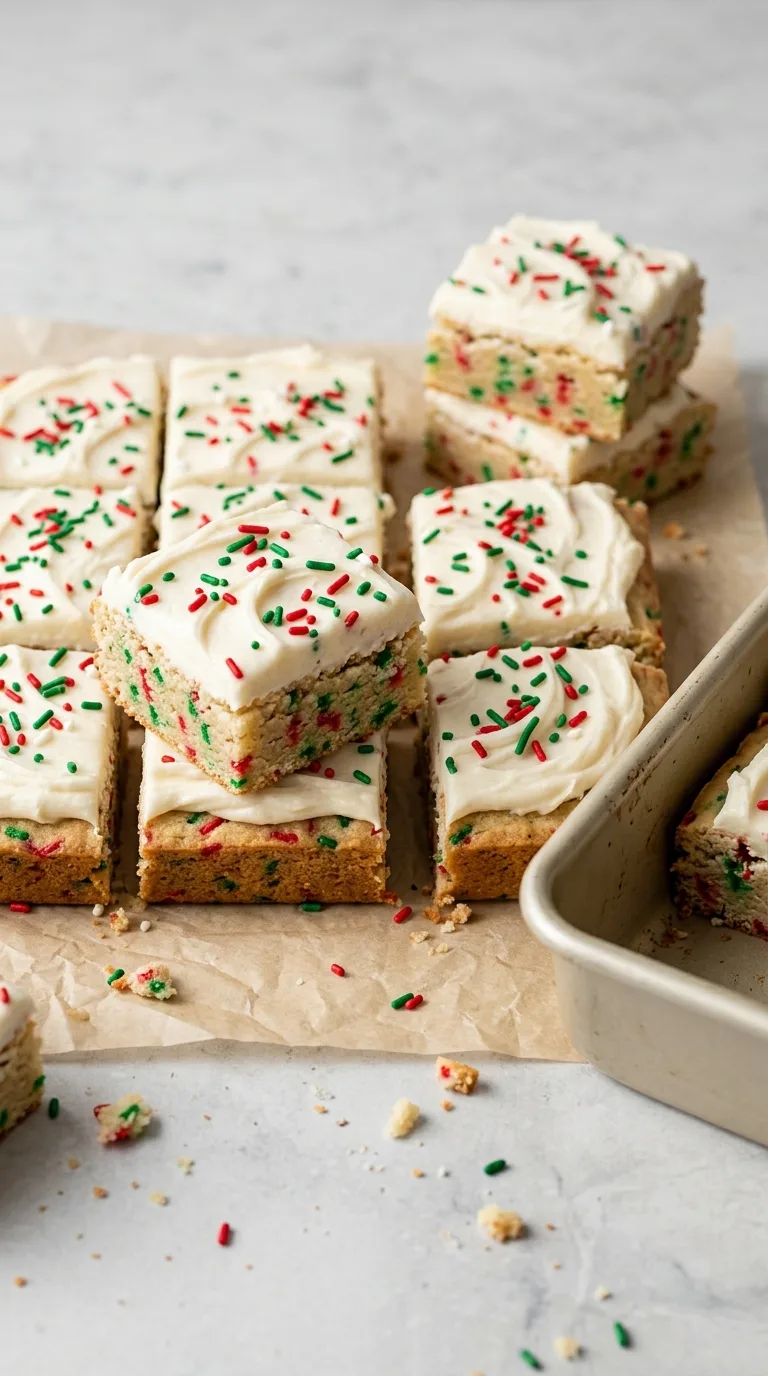
The secret to their soft texture is a combination of softened butter, an extra egg yolk, and a little cornstarch. These ingredients help the bars stay tender without becoming too cakey. Baking just until the edges turn lightly golden also keeps the centers from drying out. Don't worry if the middle looks slightly soft when the pan comes out of the oven. The cookie layer continues to firm up as it cools, giving you a sturdy base for the vanilla buttercream frosting.
Why This Recipe Works
- Soft, tender centers: Cornstarch reduces some of the gluten-forming potential of the flour mixture, while the additional egg yolk contributes richness and moisture. Together, they help create cookie bars that are tender rather than dry or crumbly. You don't need a complicated technique to get that lovely texture.
- Even baking without chilling: Pressing the dough into a single, even layer helps the cookie bars bake consistently. The baking powder and baking soda provide gentle lift, while the butter and sugar contribute to the slightly chewy texture. There's no need to refrigerate the dough before baking, so you can move straight from mixing to the oven.
- Creamy frosting and festive decoration: Softened butter creates a smooth base for the vanilla buttercream, while confectioners' sugar provides sweetness and structure. Heavy cream helps make the frosting spreadable. The red and green sprinkles add Christmas color without changing the cookie's familiar vanilla flavor.
Equipment Needed
- 9 x 9-inch (23 x 23 cm) square metal baking pan
- Parchment paper for lining the pan
- Large mixing bowl, approximately 3-quart (2.8 L) capacity
- Medium mixing bowl, approximately 2-quart (1.9 L) capacity
- Electric hand mixer or stand mixer with paddle attachment
- Measuring cups and measuring spoons
- Kitchen scale for accurate ingredient measurements
- Wire whisk
- Silicone spatula
- Offset spatula or butter knife for spreading frosting
- Wire cooling rack
- Cutting board
- Sharp kitchen knife
Ingredients List
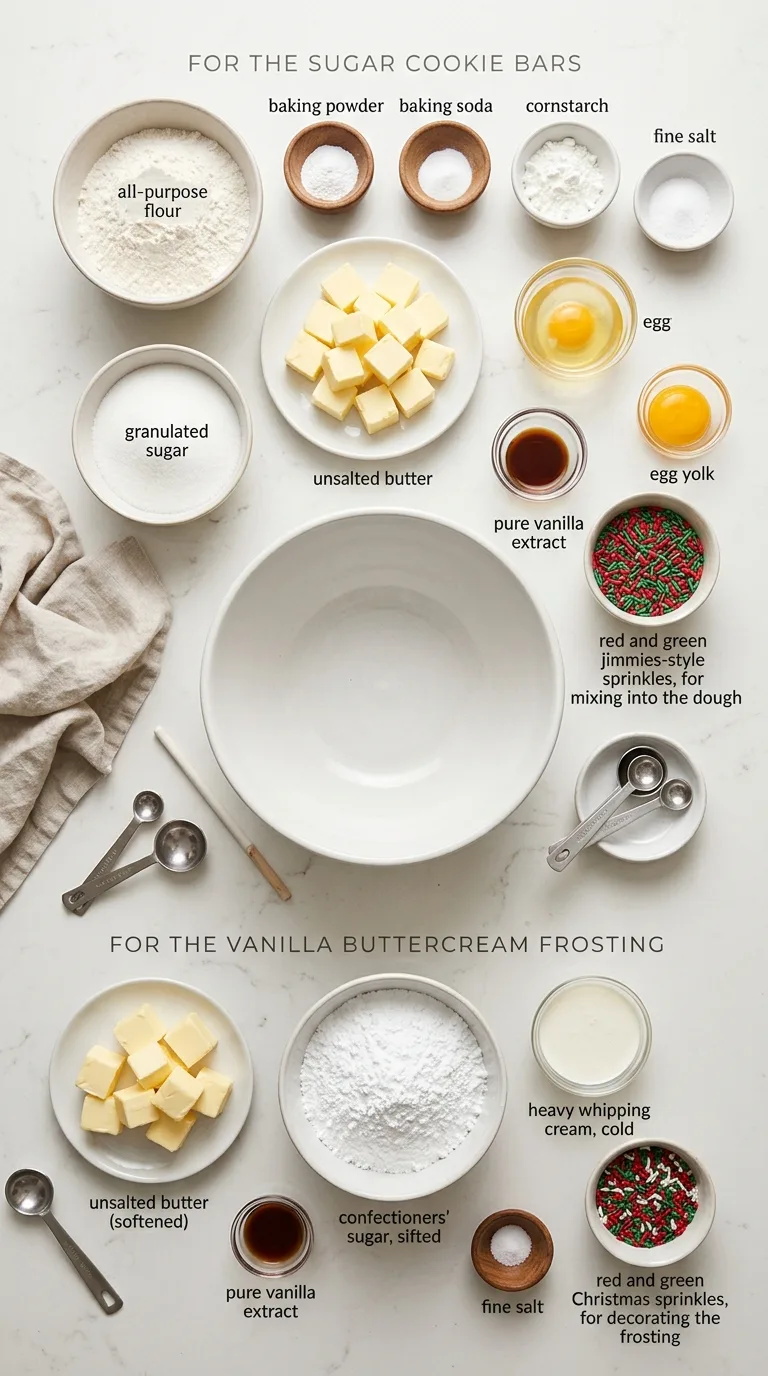
For the Sugar Cookie Bars
- 1 1/2 cups (188 g) all-purpose flour, spooned and leveled
- 1 teaspoon (4 g) baking powder
- 1/4 teaspoon (1 g) baking soda
- 1 1/2 teaspoons (4 g) cornstarch
- 1/4 teaspoon (1.5 g) fine salt
- 1/2 cup (113 g) unsalted butter, softened to room temperature
- 3/4 cup (150 g) granulated sugar
- 1 large egg (approximately 50 g without shell), at room temperature
- 1 large egg yolk (approximately 18 g), at room temperature
- 2 teaspoons (10 mL) pure vanilla extract
- 6 tablespoons (approximately 60 g) red and green jimmies-style sprinkles, for mixing into the dough
For the Vanilla Buttercream Frosting
- 3/4 cup (170 g) unsalted butter, softened to room temperature
- 2 1/4 cups (270 g) confectioners' sugar, sifted
- 3 tablespoons (45 mL) heavy whipping cream, cold
- 1 teaspoon (5 mL) pure vanilla extract
- 1/8 teaspoon (approximately 0.75 g) fine salt
- 2 tablespoons (approximately 20 g) red and green Christmas sprinkles, for decorating the frosting
Ingredient Notes and Substitutions
- All-purpose flour: Flour provides the structure that keeps the cookie bars firm enough to slice while still allowing a soft center. Measuring it carefully matters because too much flour makes the bars dry. Substitution: You can use an equal weight of a gluten-free 1-to-1 baking flour blend that contains xanthan gum, although the bars may be slightly more delicate or crumbly.
- Unsalted butter: Butter gives the cookie layer its rich flavor and helps create a tender texture when beaten with sugar. It also forms the creamy base of the frosting. Make sure it's softened rather than melted so the mixture can hold air. Substitution: Salted butter can replace unsalted butter in equal amounts, but omit the separately listed salt in the corresponding component; the finished bars may still taste slightly saltier.
- Heavy whipping cream: Heavy cream loosens the confectioners' sugar and butter mixture, making the frosting smooth and easier to spread. It also contributes a rich mouthfeel. Substitution: Whole milk can replace heavy cream in equal amounts, though the frosting will be a little less rich and may have a softer consistency.
Step-by-Step Instructions
Step 1: Prepare the Baking Pan.
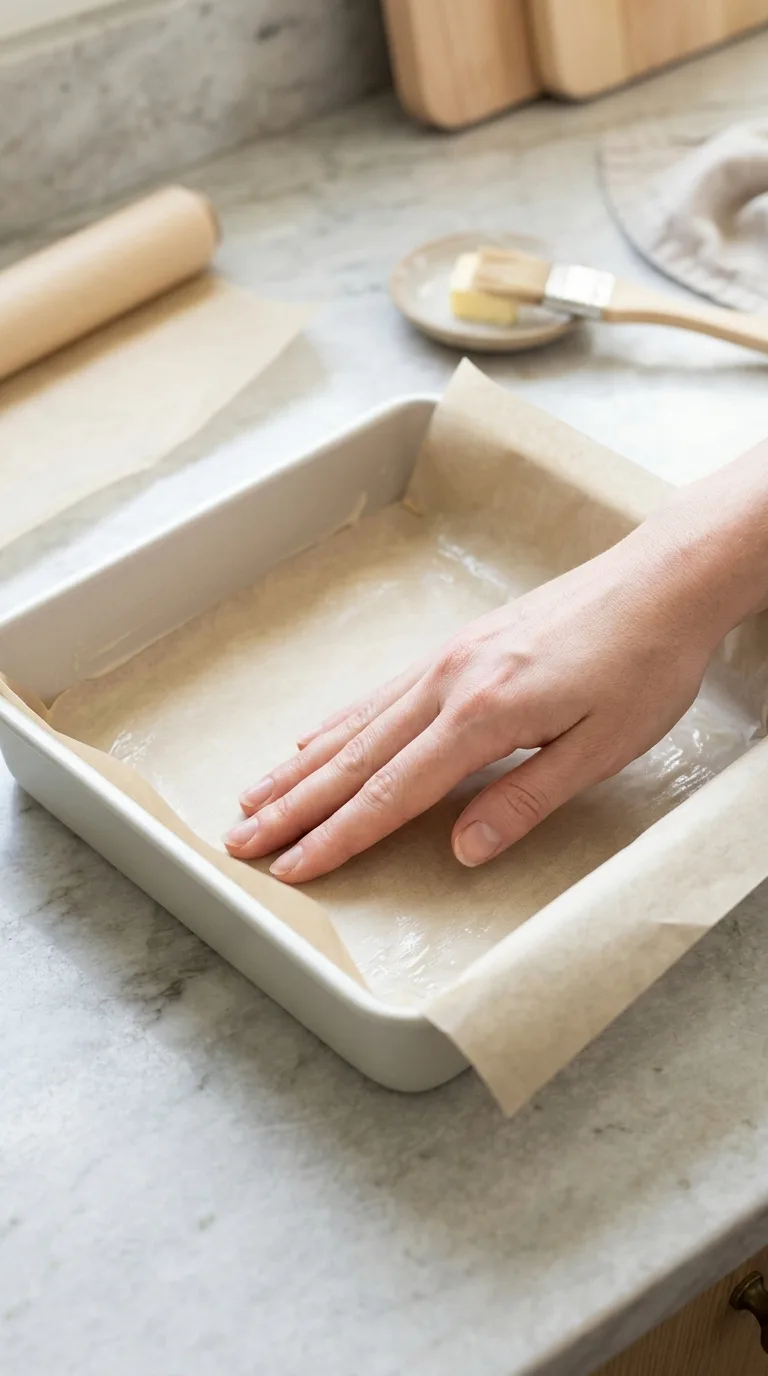
Preheat your oven to 350°F (177°C). Line a 9 x 9-inch (23 x 23 cm) square metal baking pan with parchment paper, leaving an overhang on two sides so you can lift the bars out later. Press the parchment neatly into the corners. The pan should be fully lined across the bottom, with the paper lying reasonably flat.
Step 2: Combine the Dry Ingredients.
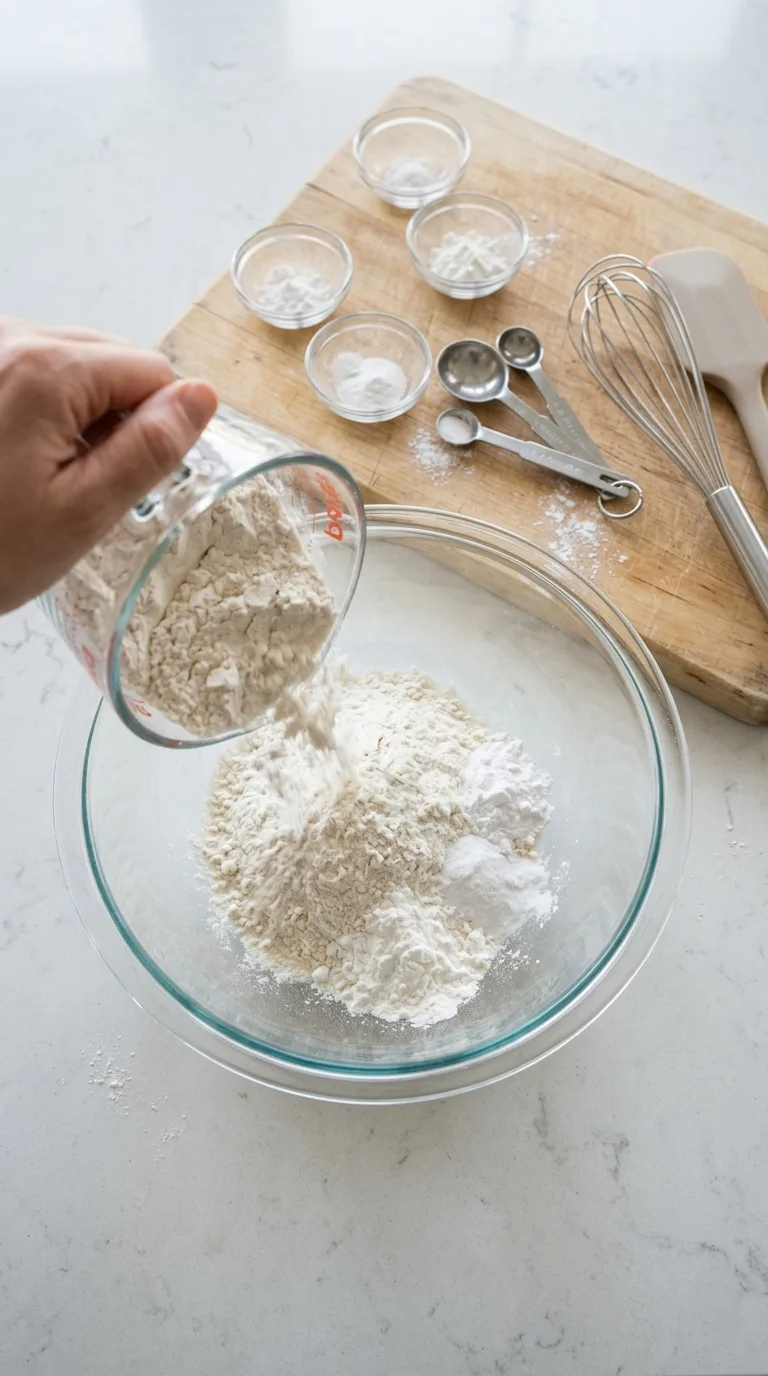
In the medium mixing bowl, add the following ingredients from the Sugar Cookie Bars section, keeping each measured amount exactly as listed: 1 1/2 cups (188 g) all-purpose flour, spooned and leveled; 1 teaspoon (4 g) baking powder; 1/4 teaspoon (1 g) baking soda; 1 1/2 teaspoons (4 g) cornstarch; and 1/4 teaspoon (1.5 g) fine salt. Whisk until all the ingredients are evenly distributed and no visible lumps of cornstarch remain. Set the bowl aside while you prepare the butter mixture.
Step 3: Cream the Butter and Sugar.
Add the following ingredients to the large mixing bowl: 1/2 cup (113 g) unsalted butter, softened to room temperature; and 3/4 cup (150 g) granulated sugar. Beat with an electric mixer on medium-high speed for about 3 minutes, scraping down the bowl as needed. The mixture should look lighter in color, creamy, and slightly fluffy rather than dense or oily.
Step 4: Add the Egg, Yolk, and Vanilla.
Add 1 large egg (approximately 50 g without shell), at room temperature, 1 large egg yolk (approximately 18 g), at room temperature, and 2 teaspoons (10 mL) pure vanilla extract to the creamed butter mixture. Beat on medium speed until everything is evenly combined, stopping to scrape the bowl. The mixture should look thick and creamy. A slightly uneven appearance at first is normal; continue mixing until the egg and egg yolk are fully incorporated.
Step 5: Mix the Cookie Dough.
Add the prepared dry ingredient mixture to the wet ingredients. Mix on low speed until the flour is mostly incorporated, then briefly increase to medium speed until no dry flour remains. Measure the following ingredient exactly as listed: 6 tablespoons (approximately 60 g) red and green jimmies-style sprinkles, for mixing into the dough. Fold the measured sprinkles into the dough using a silicone spatula. The finished dough should be thick, soft, and slightly sticky, with the sprinkles distributed throughout.
Step 6: Spread the Dough and Bake.
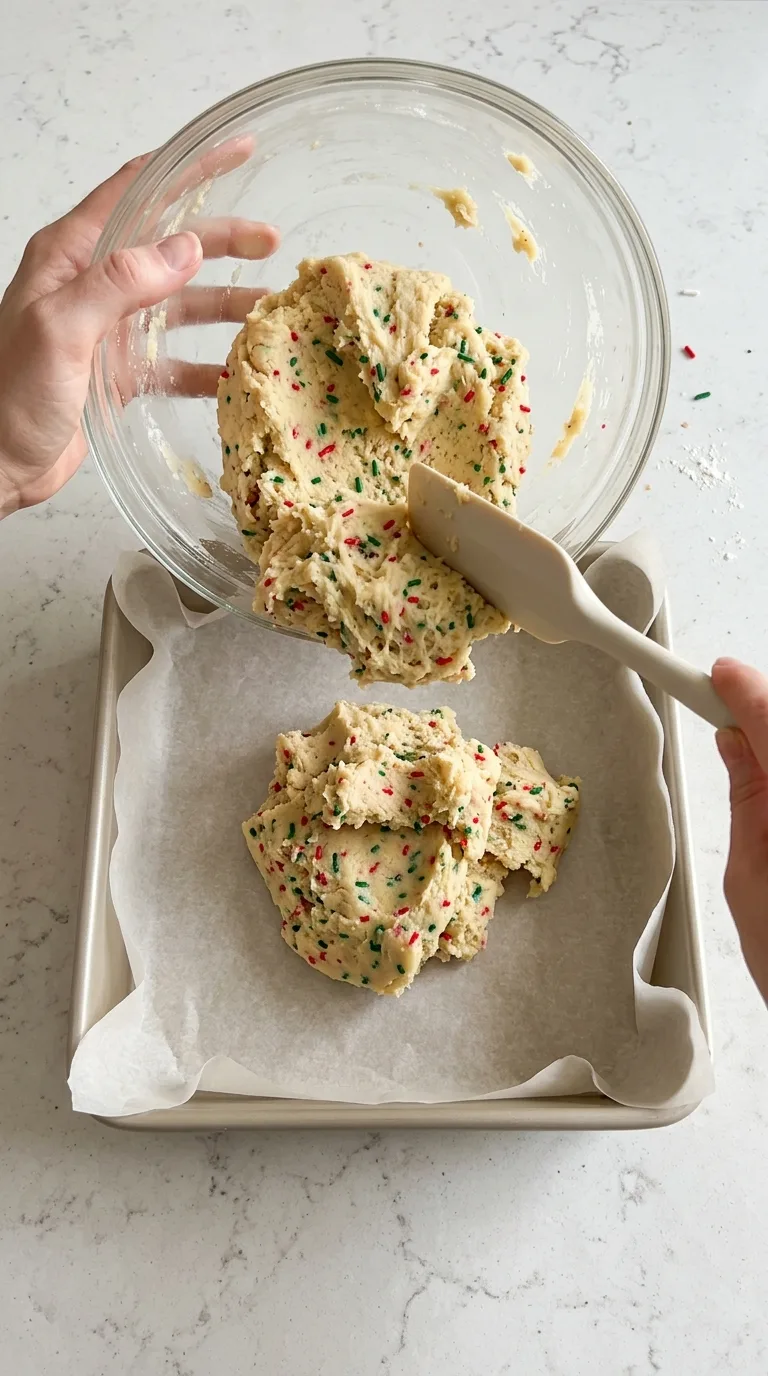
Transfer the cookie dough into the prepared 9 x 9-inch (23 x 23 cm) square metal baking pan. Use the silicone spatula to press it into an even layer, making sure the dough reaches the corners. Bake at 350°F (177°C) for 25–26 minutes, checking the edges near the end. The bars are ready when the edges look very lightly golden and the center appears set but still soft. Avoid waiting for the entire top to become brown, which can make the finished bars dry.
Step 7: Cool the Cookie Layer.
Remove the pan from the oven and place it on a wire cooling rack. Allow the cookie layer to cool completely, approximately 60 minutes, before adding the frosting. The top should feel cool, and the center should be firm enough to support the frosting without crumbling. Don't worry if the middle sinks slightly during cooling; that's normal for soft sugar cookie bars. If the bars are still warm after the cooling period, continue cooling until they reach room temperature.
Step 8: Prepare the Vanilla Buttercream.
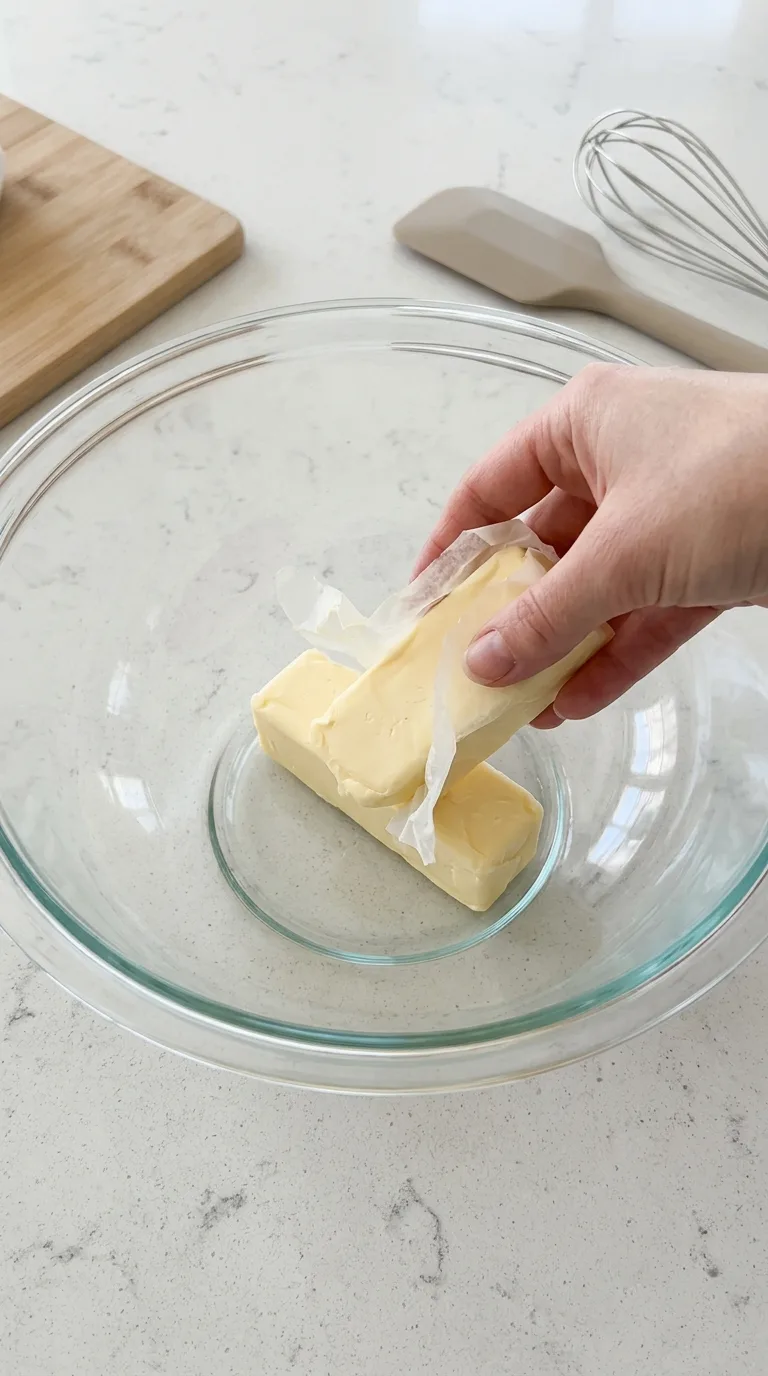
Place 3/4 cup (170 g) unsalted butter, softened to room temperature, in the large mixing bowl after cleaning and drying it. Beat on medium speed for about 2 minutes until smooth and creamy. Add the following ingredients from the Vanilla Buttercream Frosting section, keeping the specified amounts and ingredient states unchanged: 2 1/4 cups (270 g) confectioners' sugar, sifted; 3 tablespoons (45 mL) heavy whipping cream, cold; 1 teaspoon (5 mL) pure vanilla extract; and 1/8 teaspoon (approximately 0.75 g) fine salt. Mix on low speed for about 30 seconds, then increase to medium-high speed and beat for approximately 3 minutes. The frosting should look smooth, light, and fluffy, with a consistency that spreads easily but holds its shape.
Step 9: Frost, Decorate, and Slice.
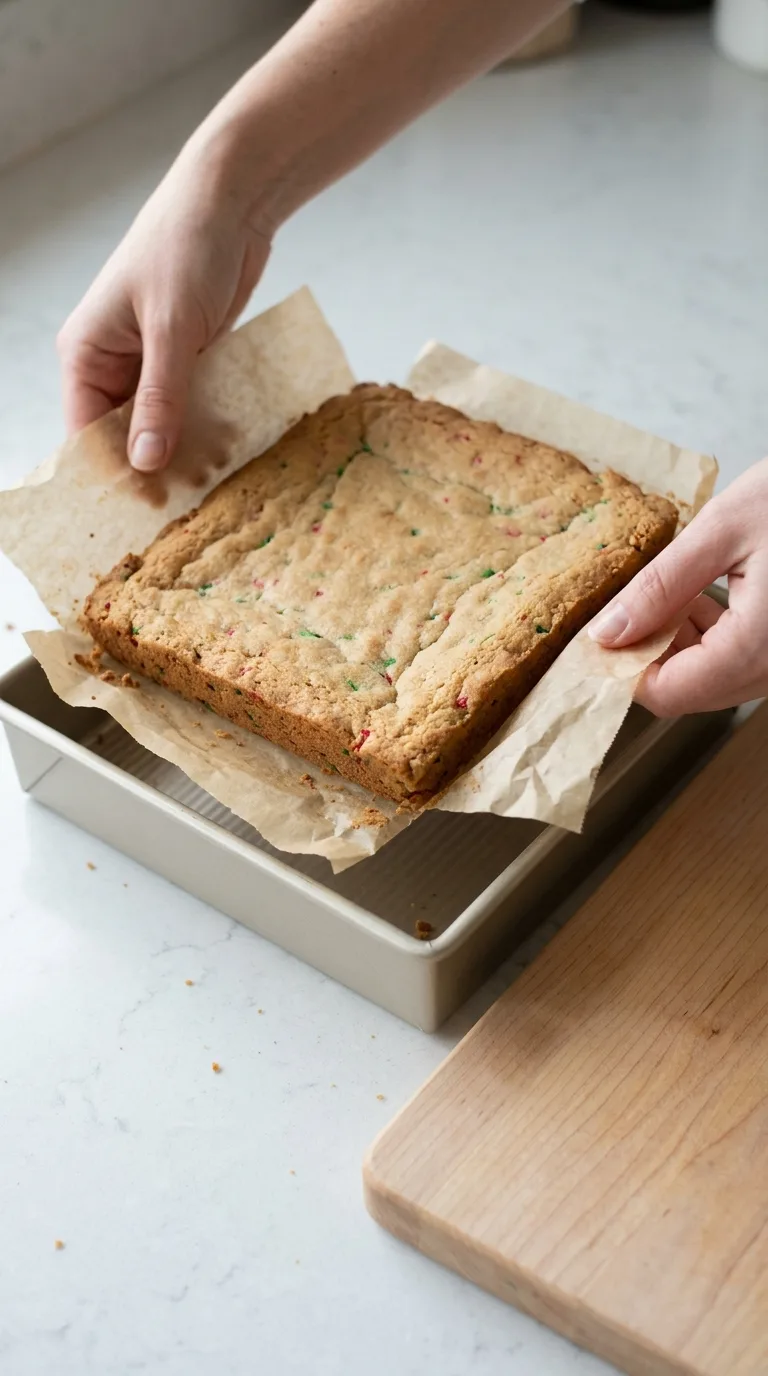
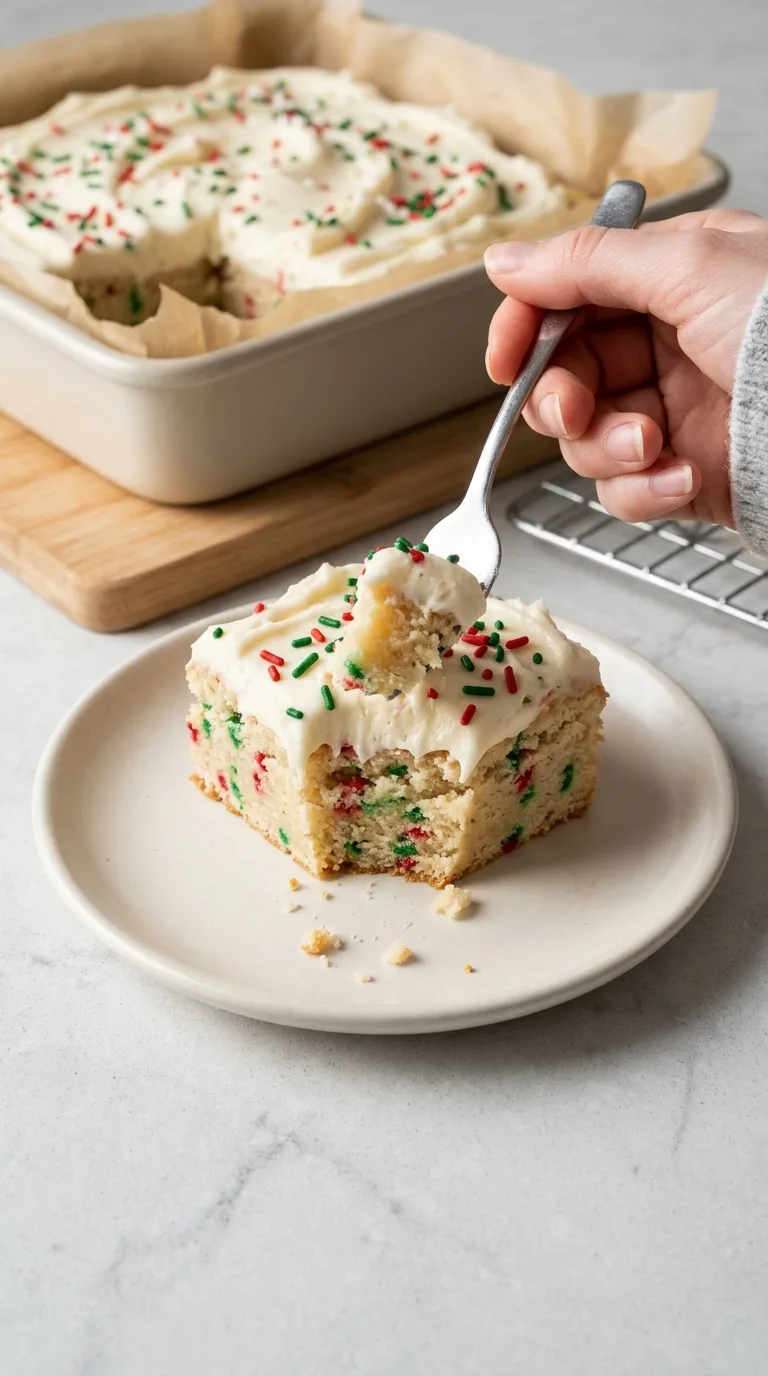
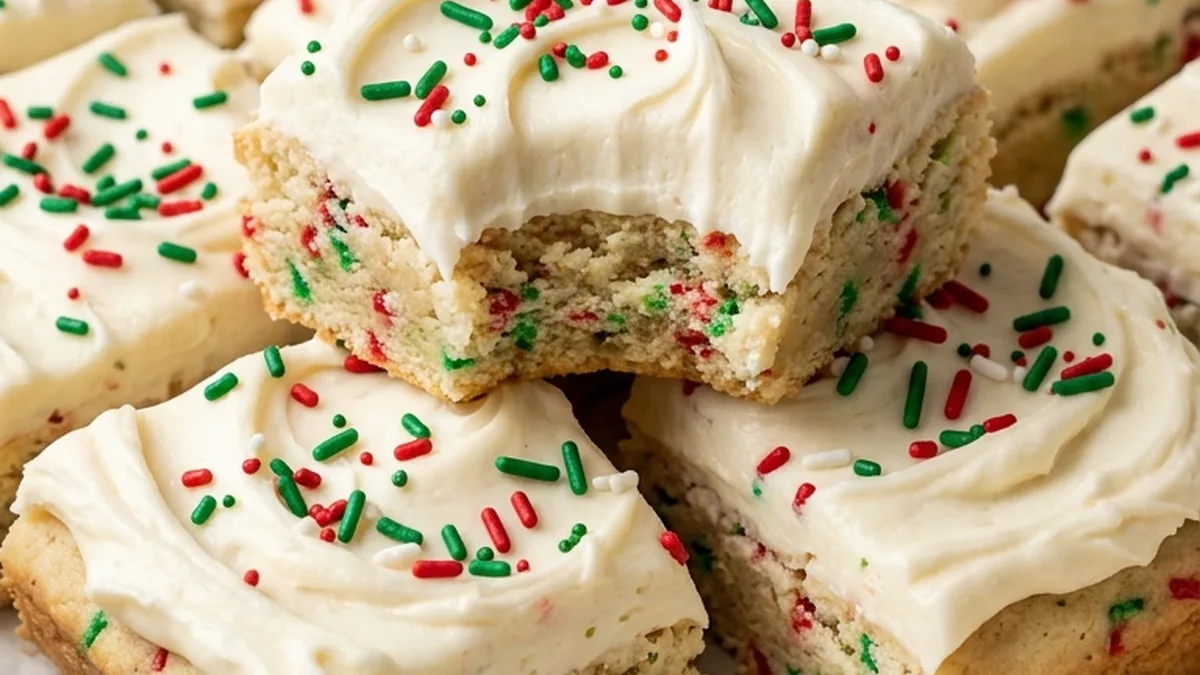
Lift the completely cooled cookie layer from the pan using the parchment overhang and place it on a cutting board. Spread the prepared vanilla buttercream evenly over the top with an offset spatula. Measure the final ingredient exactly as listed: 2 tablespoons (approximately 20 g) red and green Christmas sprinkles, for decorating the frosting. Scatter the measured sprinkles evenly over the frosting before the surface begins to set. Cut the slab into 16 equal bars using a sharp knife, wiping the blade clean between cuts. The finished bars should have tidy edges, a tender cookie base, and a smooth layer of frosting.
Storage, Freezing, and Make-Ahead Instructions
- Refrigerator: Store the frosted Christmas Sugar Cookie Bars in an airtight container in the refrigerator for up to 5 days. Arrange them in a single layer whenever possible to protect the frosting and decorations. If you need to stack them, place parchment paper between layers after the frosting has firmed up. Let refrigerated bars stand at room temperature for about 15–20 minutes before serving so the buttercream softens slightly.
- Freezer: Freeze the frosted or unfrosted cookie bars for up to 3 months. Place them in a freezer-safe airtight container, separating layers with parchment paper. For frosted bars, freeze them uncovered until the frosting firms up before wrapping or stacking. Thaw overnight in the refrigerator, then allow them to come closer to room temperature before serving. Avoid reheating frosted bars because the buttercream can melt and lose its texture.
- Make-Ahead and Reheating: You can bake the cookie layer 1 day ahead and keep it tightly covered at room temperature. Prepare the frosting separately and refrigerate it in an airtight container, then bring it to room temperature and briefly beat it again before spreading. For the best texture, frost and decorate the bars after the cookie layer has fully cooled. These bars are intended to be served at room temperature, so reheating isn't necessary.
FAQ
Can I make Christmas Sugar Cookie Bars without chilling the dough?
Yes, this dough is designed to be pressed directly into the prepared baking pan and baked without refrigeration. You can skip the chilling step normally required for cut-out sugar cookies.
Why are my sugar cookie bars dry or crumbly?
Too much flour or baking the bars too long can make them dry. Measure your flour carefully and remove the bars when the edges are lightly golden and the centers still look soft.
Can I use different Christmas sprinkles?
Yes, you can change the colors or shapes of the decorative sprinkles to match your holiday theme. For the cookie dough itself, jimmies-style sprinkles are preferable because tiny round nonpareils can release their color into the dough.
Can I make Christmas Sugar Cookie Bars ahead of time?
Yes, you can prepare the cookie layer and frosting separately the day before serving. Keep the cookie layer covered, refrigerate the frosting, and assemble the bars once the frosting is soft enough to spread.
Christmas Sugar Cookie Bars
Ingredients
Method
- Preheat your oven to 350°F (177°C). Line a 9 x 9-inch (23 x 23 cm) square metal baking pan with parchment paper, leaving an overhang on two sides so you can lift the bars out later. Press the parchment neatly into the corners. The pan should be fully lined across the bottom, with the paper lying reasonably flat.
- In the medium mixing bowl, add the following ingredients from the Sugar Cookie Bars section, keeping each measured amount exactly as listed: 1 1/2 cups (188 g) all-purpose flour, spooned and leveled; 1 teaspoon (4 g) baking powder; 1/4 teaspoon (1 g) baking soda; 1 1/2 teaspoons (4 g) cornstarch; and 1/4 teaspoon (1.5 g) fine salt. Whisk until all the ingredients are evenly distributed and no visible lumps of cornstarch remain. Set the bowl aside while you prepare the butter mixture.
- Add the following ingredients to the large mixing bowl: 1/2 cup (113 g) unsalted butter, softened to room temperature; and 3/4 cup (150 g) granulated sugar. Beat with an electric mixer on medium-high speed for about 3 minutes, scraping down the bowl as needed. The mixture should look lighter in color, creamy, and slightly fluffy rather than dense or oily.
- Add 1 large egg (approximately 50 g without shell), at room temperature, 1 large egg yolk (approximately 18 g), at room temperature, and 2 teaspoons (10 mL) pure vanilla extract to the creamed butter mixture. Beat on medium speed until everything is evenly combined, stopping to scrape the bowl. The mixture should look thick and creamy. A slightly uneven appearance at first is normal; continue mixing until the egg and egg yolk are fully incorporated.
- Add the prepared dry ingredient mixture to the wet ingredients. Mix on low speed until the flour is mostly incorporated, then briefly increase to medium speed until no dry flour remains. Measure the following ingredient exactly as listed: 6 tablespoons (approximately 60 g) red and green jimmies-style sprinkles, for mixing into the dough. Fold the measured sprinkles into the dough using a silicone spatula. The finished dough should be thick, soft, and slightly sticky, with the sprinkles distributed throughout.
- Transfer the cookie dough into the prepared 9 x 9-inch (23 x 23 cm) square metal baking pan. Use the silicone spatula to press it into an even layer, making sure the dough reaches the corners. Bake at 350°F (177°C) for 25–26 minutes, checking the edges near the end. The bars are ready when the edges look very lightly golden and the center appears set but still soft. Avoid waiting for the entire top to become brown, which can make the finished bars dry.
- Remove the pan from the oven and place it on a wire cooling rack. Allow the cookie layer to cool completely, approximately 60 minutes, before adding the frosting. The top should feel cool, and the center should be firm enough to support the frosting without crumbling. Don&x27;t worry if the middle sinks slightly during cooling; that&x27;s normal for soft sugar cookie bars. If the bars are still warm after the cooling period, continue cooling until they reach room temperature.
- Place 3/4 cup (170 g) unsalted butter, softened to room temperature, in the large mixing bowl after cleaning and drying it. Beat on medium speed for about 2 minutes until smooth and creamy. Add the following ingredients from the Vanilla Buttercream Frosting section, keeping the specified amounts and ingredient states unchanged: 2 1/4 cups (270 g) confectioners&x27; sugar, sifted; 3 tablespoons (45 mL) heavy whipping cream, cold; 1 teaspoon (5 mL) pure vanilla extract; and 1/8 teaspoon (approximately 0.75 g) fine salt. Mix on low speed for about 30 seconds, then increase to medium-high speed and beat for approximately 3 minutes. The frosting should look smooth, light, and fluffy, with a consistency that spreads easily but holds its shape.
- Lift the completely cooled cookie layer from the pan using the parchment overhang and place it on a cutting board. Spread the prepared vanilla buttercream evenly over the top with an offset spatula. Measure the final ingredient exactly as listed: 2 tablespoons (approximately 20 g) red and green Christmas sprinkles, for decorating the frosting. Scatter the measured sprinkles evenly over the frosting before the surface begins to set. Cut the slab into 16 equal bars using a sharp knife, wiping the blade clean between cuts. The finished bars should have tidy edges, a tender cookie base, and a smooth layer of frosting.