
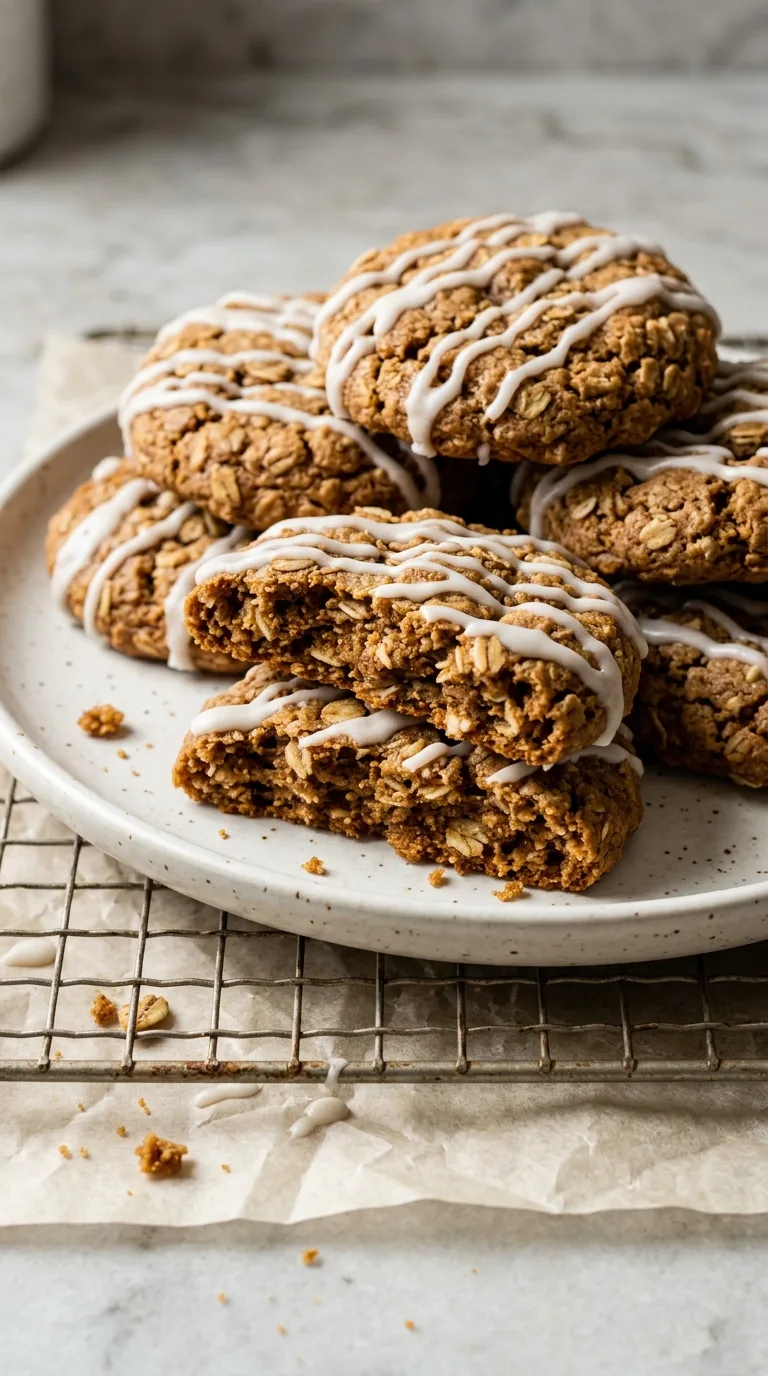
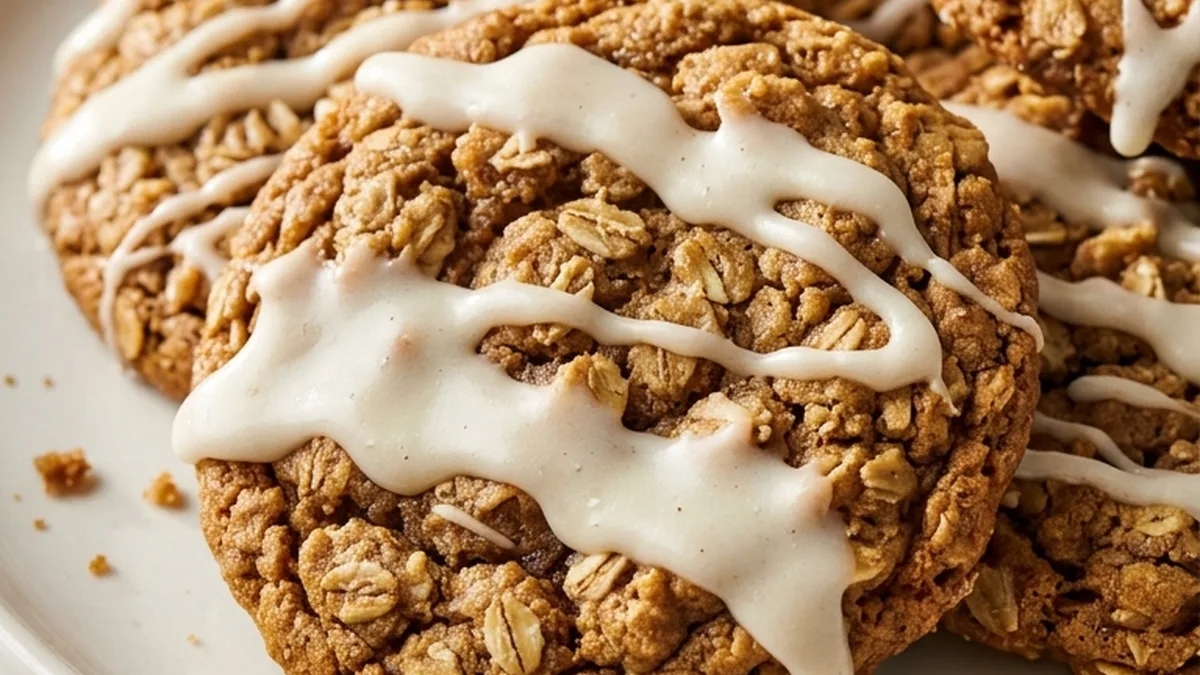
Iced Gingerbread Oatmeal Cookies combine the chewy texture of oatmeal cookies with the deep molasses flavor and warm spices of gingerbread. Old-fashioned oats give the centers a hearty chew, while ginger, cinnamon, cloves, and nutmeg create a cozy spice profile beneath a simple vanilla icing.
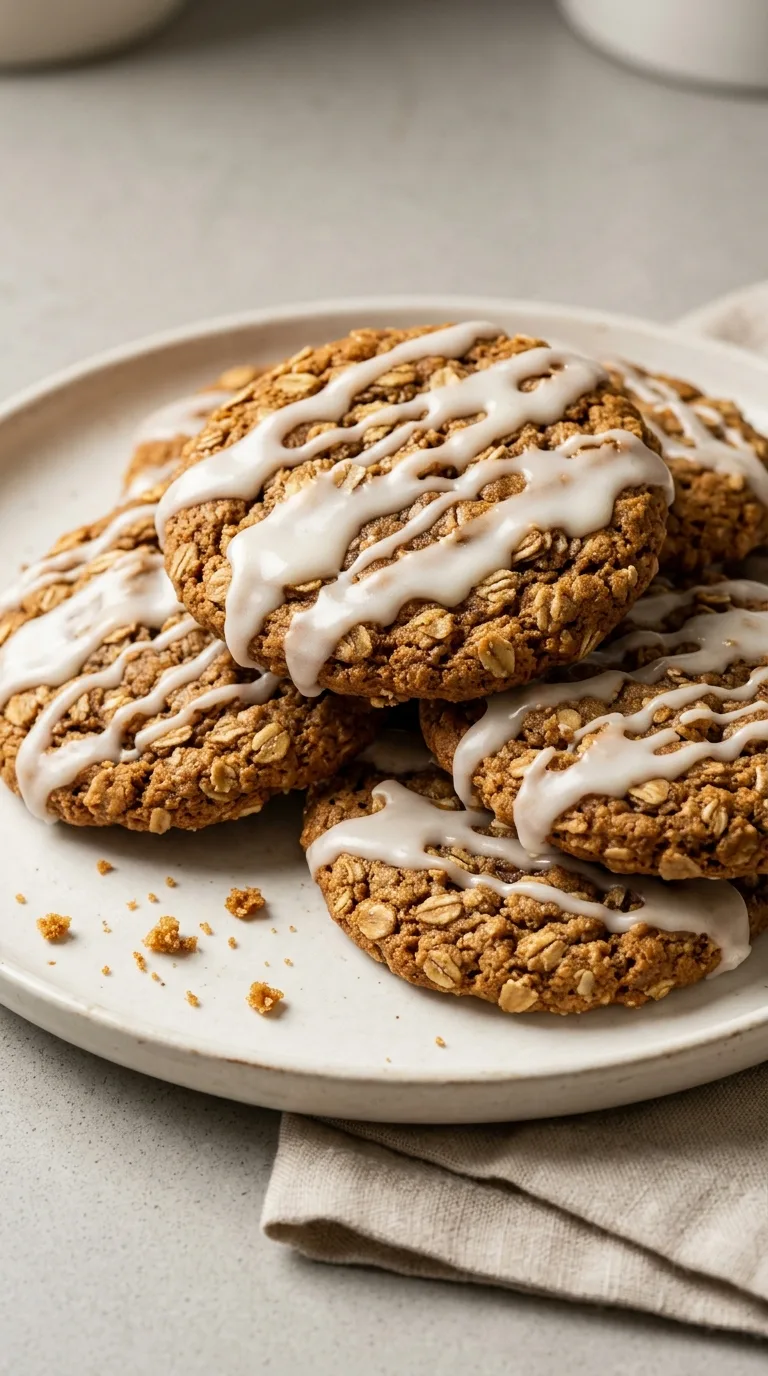
This version uses chilled dough to control spreading and keep the cookies thick and soft in the middle. Once baked and cooled, the cookies are drizzled with icing and left briefly to set before storing or serving.
Why This Recipe Works
- Old-fashioned oats provide a chewy structure. Their larger flakes keep the cookies hearty without making them dry.
- Molasses supplies classic gingerbread flavor and moisture. It gives the cookies their dark color and helps keep the centers soft.
- Brown sugar supports chewiness. Its moisture and mild caramel notes complement the molasses and spices.
- Chilling the dough limits excessive spreading. The oats also have time to absorb some moisture before baking.
- A thin vanilla icing balances the spices. The sweet finish contrasts with the deeper molasses flavor without overwhelming the cookie.
Equipment Needed
- Stand mixer fitted with a paddle attachment or electric hand mixer
- Large mixing bowl
- Medium mixing bowl
- 2 large rimmed baking sheets, approximately 18 × 13 inches
- Parchment paper
- 1½-tablespoon cookie scoop
- Wire cooling rack
- Small bowl
- Whisk
- Spoon or piping bag for icing
Ingredients List
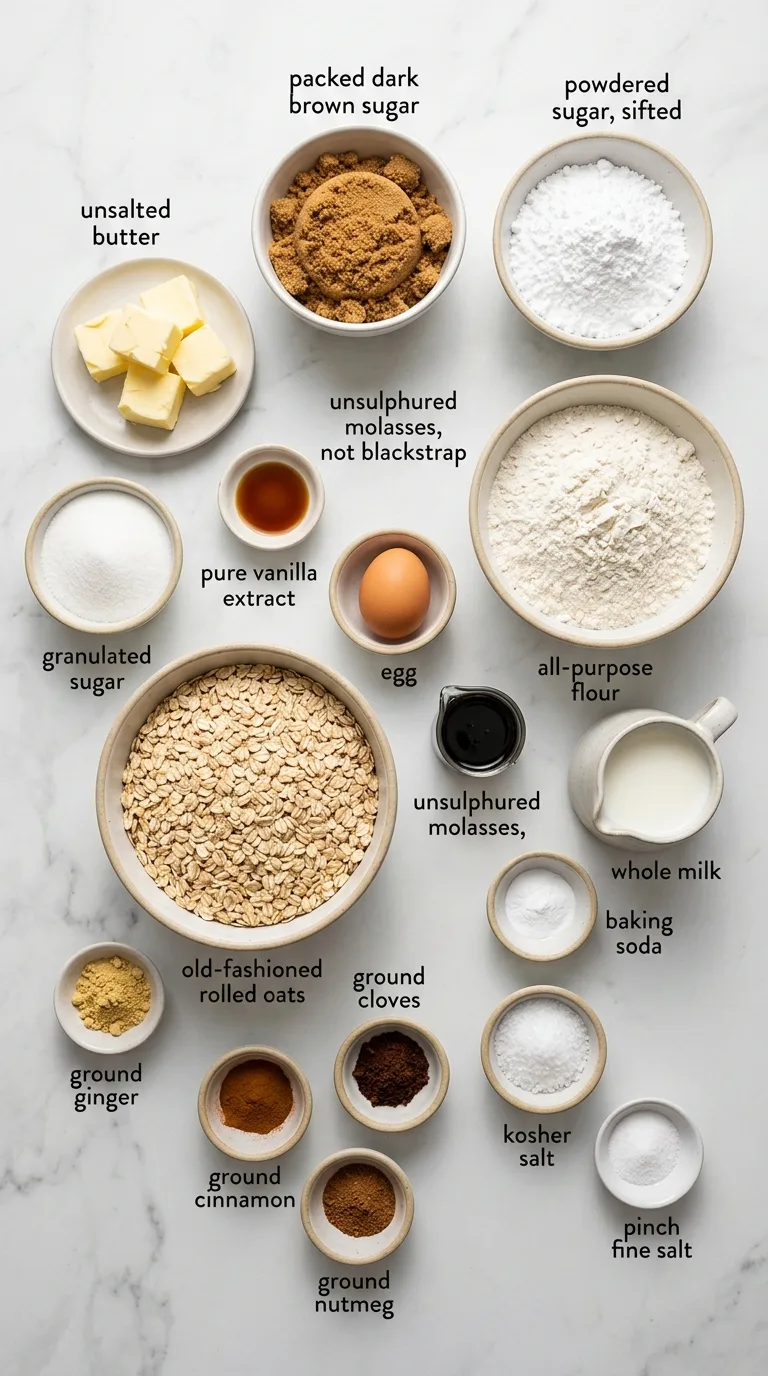
For the Gingerbread Oatmeal Cookies
- ¾ cup (170 g) unsalted butter, softened
- ¾ cup (165 g) packed dark brown sugar
- ¼ cup (50 g) granulated sugar
- ¼ cup (85 g) unsulphured molasses, not blackstrap
- 1 large egg (about 50 g without shell), at room temperature
- 1 teaspoon (5 mL) pure vanilla extract
- 1½ cups (188 g) all-purpose flour, spooned and leveled
- 1 teaspoon (5 g) baking soda
- ½ teaspoon (about 1.5 g) kosher salt
- 2 teaspoons (about 4 g) ground ginger
- 1½ teaspoons (about 4 g) ground cinnamon
- ¼ teaspoon (about 0.5 g) ground cloves
- ¼ teaspoon (about 0.5 g) ground nutmeg
- 2 cups (180 g) old-fashioned rolled oats
For the Vanilla Icing
- 1 cup (120 g) powdered sugar, sifted
- 2 tablespoons (30 mL) whole milk
- ½ teaspoon (2.5 mL) pure vanilla extract
- 1 small pinch fine salt
Ingredient Notes and Substitutions
- Old-Fashioned Rolled Oats: Old-fashioned oats give the cookies their characteristic chew and visible oatmeal texture. Quick oats can be used, but they absorb moisture faster and create a softer, more uniform texture. Steel-cut oats are not a suitable substitute because they will remain too firm.
- Molasses: Unsulphured molasses provides the deep flavor, color, and moisture associated with gingerbread. Avoid blackstrap molasses, which is much more bitter. Honey or maple syrup will change both the texture and flavor and are not reliable direct substitutes.
- Dark Brown Sugar: Dark brown sugar reinforces the molasses flavor and keeps the centers soft. Light brown sugar can be substituted in the same quantity for a milder flavor and slightly lighter-colored cookie.
- Ground Ginger: Ground ginger supplies the main spicy warmth. Fresh ginger is not a direct substitute because it adds extra moisture and produces a sharper, fresher flavor.
- Butter: Butter gives the cookies richness and encourages lightly crisp edges. Salted butter can be substituted, but reduce the added kosher salt to ¼ teaspoon.
Step-by-Step Instructions
1. Combine the Dry Ingredients
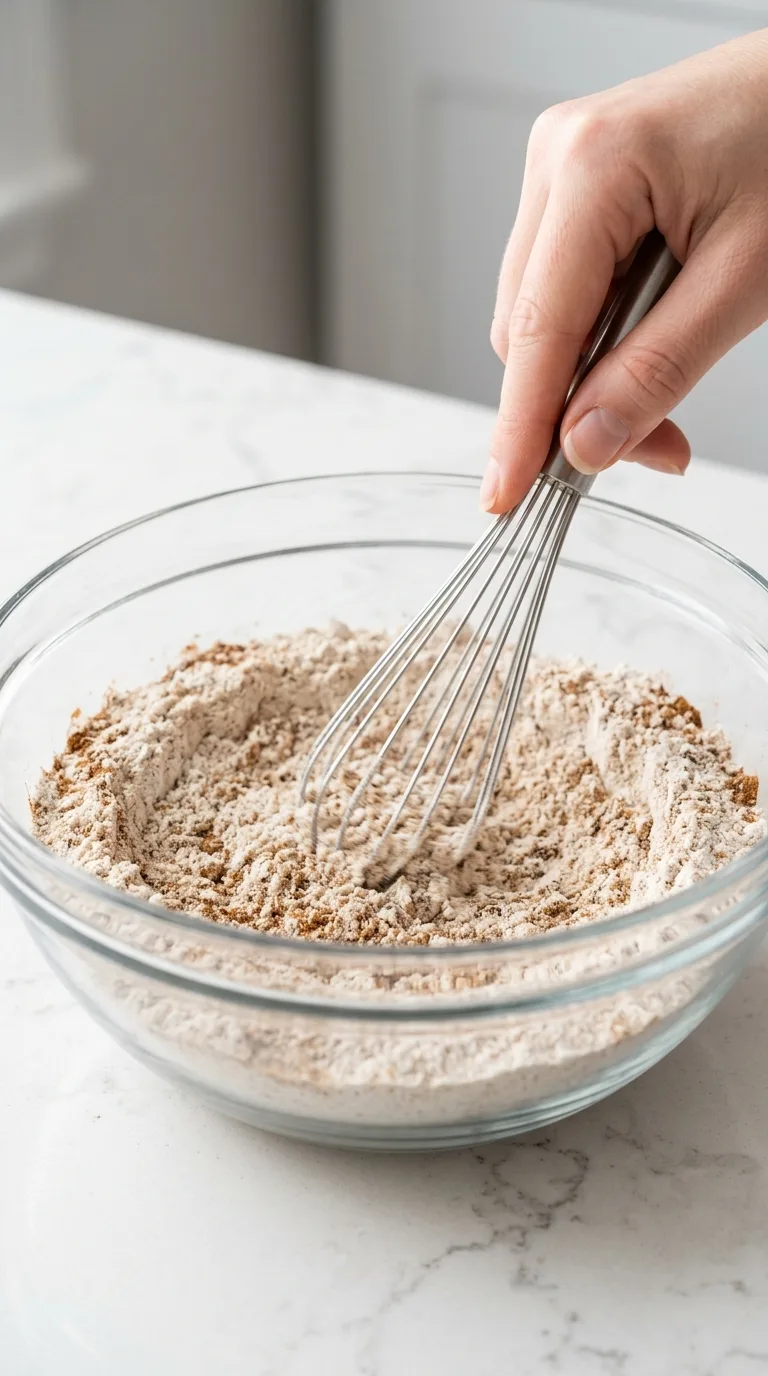
In a medium bowl, whisk together the flour, baking soda, kosher salt, ginger, cinnamon, cloves, and nutmeg.
Stir in the old-fashioned oats until evenly distributed.
Set the mixture aside.
2. Cream the Butter and Sugars
In a large mixing bowl, beat the softened butter, dark brown sugar, and granulated sugar on medium speed for 2–3 minutes.
The mixture should look creamy and slightly lighter in color.
Scrape down the sides of the bowl as needed.
3. Add the Molasses, Egg, and Vanilla
Add the molasses and beat until evenly incorporated.
Mix in the egg and vanilla extract.
The mixture should look smooth, glossy, and deep brown.
4. Make the Cookie Dough
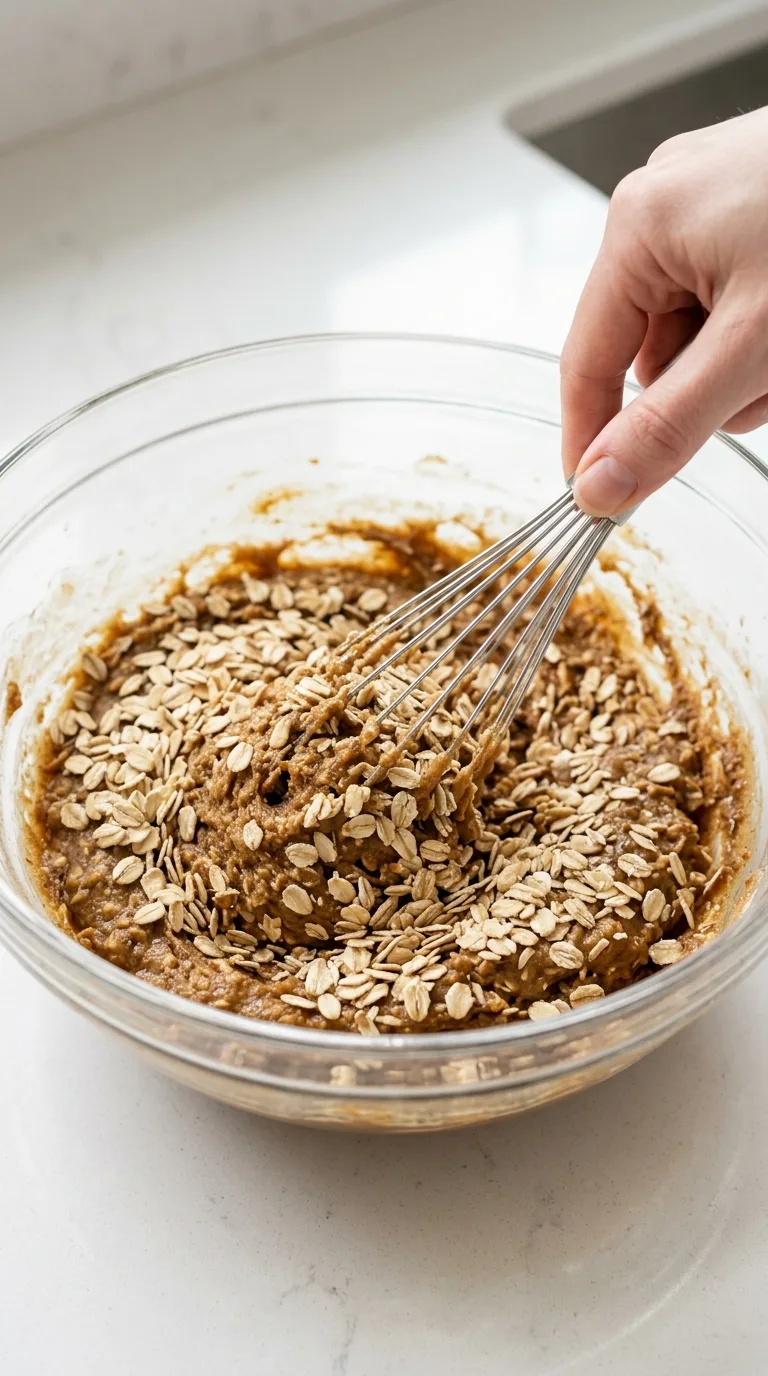
Add the flour-oat mixture to the wet ingredients in two additions.
Mix on low speed just until no dry flour remains.
The dough should be thick, sticky, and heavily textured with oats.
Avoid overmixing.
5. Chill the Dough
Cover the bowl and refrigerate the dough for 30 minutes.
After chilling, it should be noticeably firmer and easier to scoop.
6. Prepare the Oven and Baking Sheets
Preheat the oven to 350°F (175°C).
Line two large baking sheets with parchment paper.
7. Portion the Cookies
Scoop the chilled dough into 24 portions using about 1½ tablespoons per cookie.
Arrange 12 portions on each prepared baking sheet, leaving about 2 inches between them.
Gently roll rough portions into balls if needed, but do not flatten them.
8. Bake the First Batch
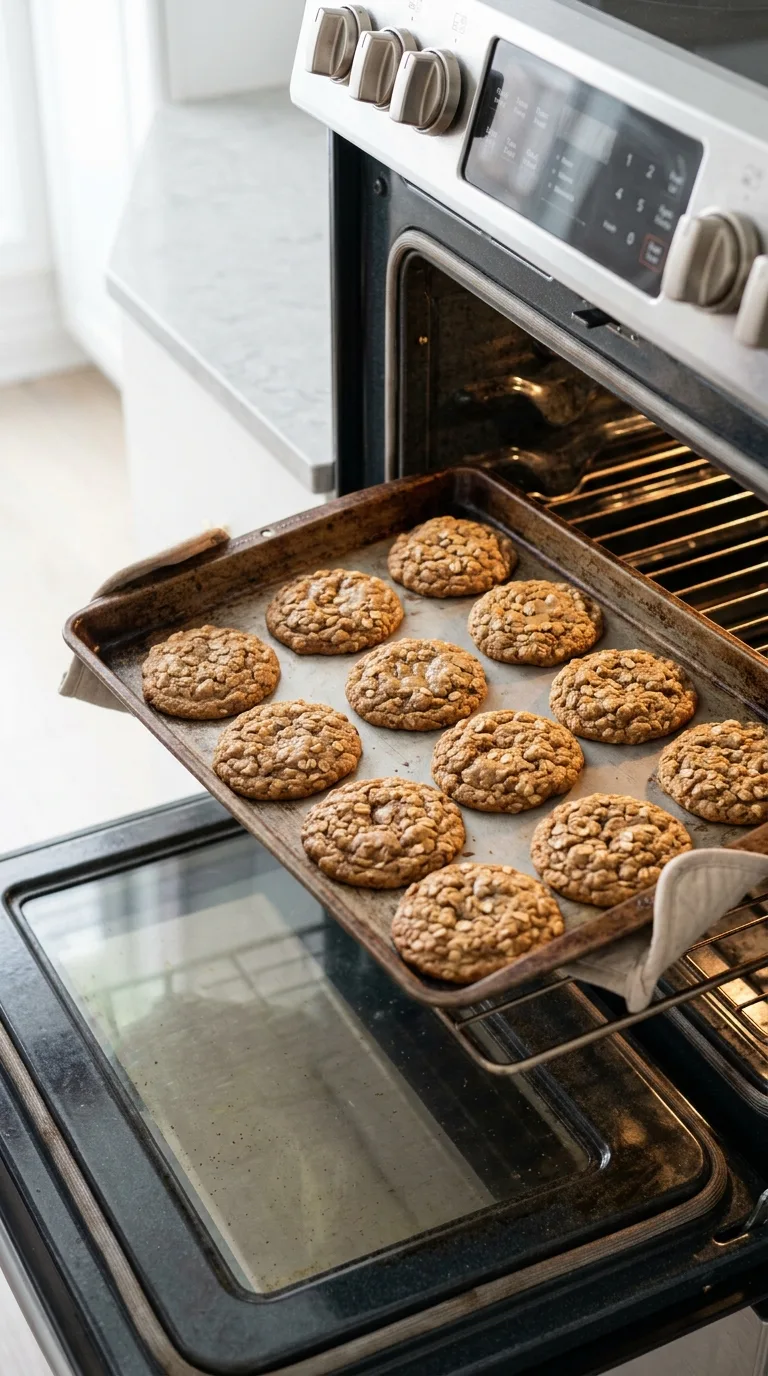
Bake one sheet at a time for 10–12 minutes.
The edges should look set and lightly browned, while the centers should still appear soft and slightly underdone.
The cookies will continue setting as they cool.
9. Bake the Remaining Cookies
Bake the second sheet in the same way.
If the unbaked dough becomes very soft while waiting, return it to the refrigerator until the oven is available.
10. Cool the Cookies
Let each batch cool on the baking sheet for 5 minutes.
Transfer the cookies to a wire rack and cool for another 20 minutes.
They should be completely cool before icing.
11. Make the Vanilla Icing
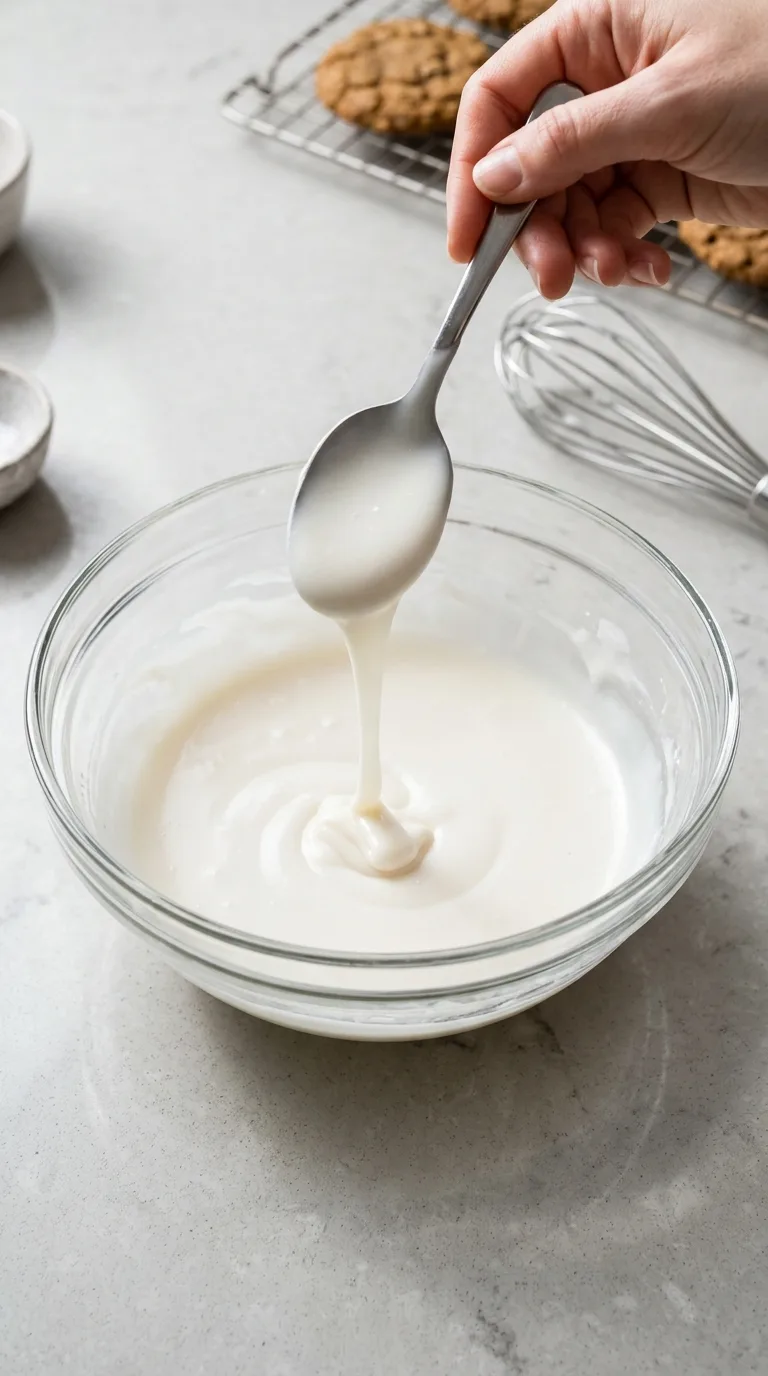
In a small bowl, whisk together the powdered sugar, whole milk, vanilla extract, and fine salt.
The icing should be smooth and thick enough to drizzle while still flowing slowly from a spoon.
If it is too thick, add milk a few drops at a time. If it becomes too thin, whisk in a little more powdered sugar.
12. Ice the Cookies
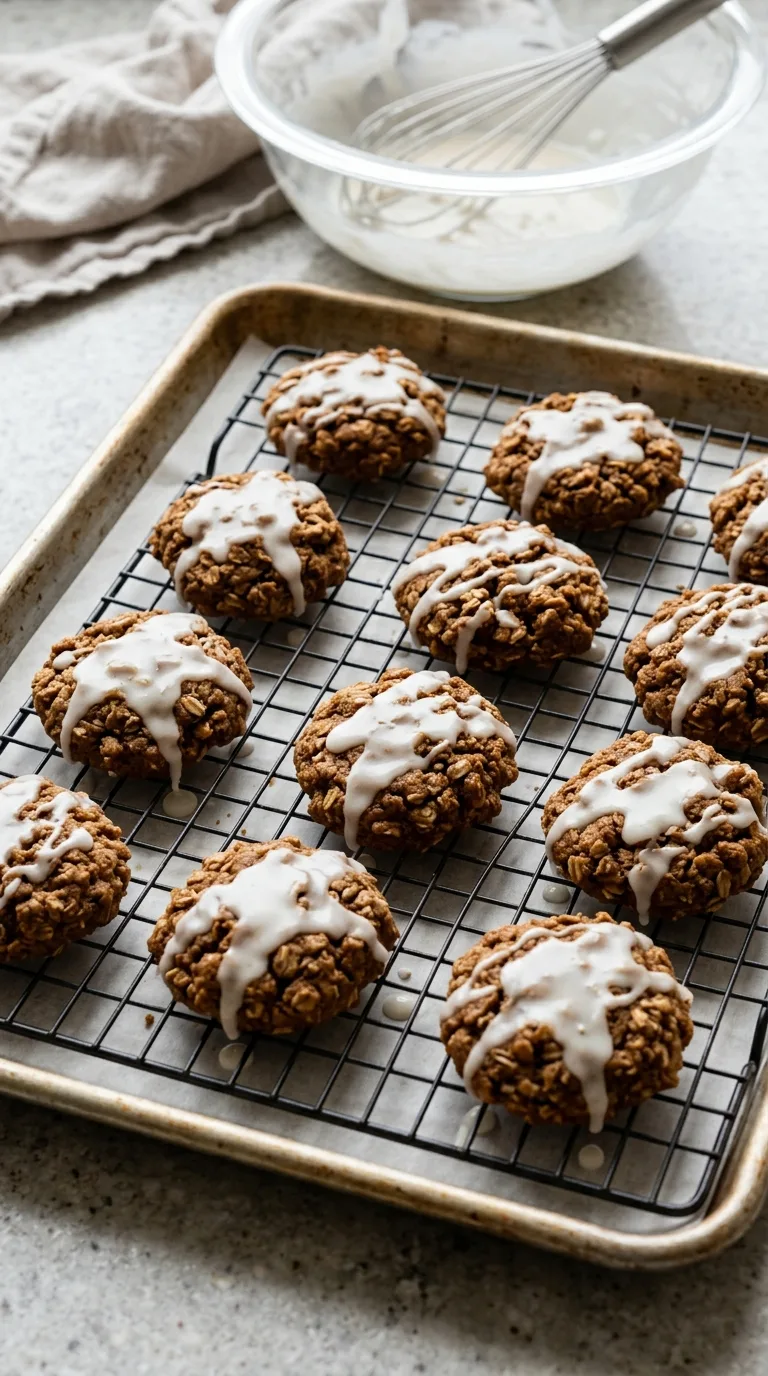
Drizzle the icing over the completely cooled cookies with a spoon or piping bag.
Leave some of the cookie surface visible rather than covering each cookie completely.
13. Let the Icing Set
Arrange the iced cookies in a single layer and let them stand for about 25 minutes.
The icing should feel dry to a light touch before the cookies are stacked or stored.
Storage, Freezing, and Make-Ahead Instructions
- Room-Temperature Storage: Once the icing has fully set, store the cookies in an airtight container at room temperature for up to 4 days. Place parchment paper between layers to protect the icing.
- Refrigeration: Refrigeration is not necessary and may make the cookies firmer. If refrigerated, let them return to room temperature before serving for a softer texture.
- Freezing Baked Cookies: For the best appearance, freeze the cookies before icing. Place completely cooled cookies in a freezer-safe container with parchment paper between layers. Freeze for up to 3 months. Thaw in the closed container at room temperature, then add the icing.
- Freezing Cookie Dough: Portion the chilled dough into individual balls and freeze them on a baking sheet until firm. Transfer to a freezer-safe bag and freeze for up to 2 months. Thaw overnight in the refrigerator before baking as directed.
- Make-Ahead Preparation: The cookie dough can be prepared up to 2 days ahead and refrigerated tightly covered. The cookies can also be baked 1 day ahead and iced the following day. For the cleanest appearance, add the icing after the cookies have completely cooled and as close to serving as practical.
FAQ
Can I make Iced Gingerbread Oatmeal Cookies ahead of time?
Yes. Prepare the dough up to 2 days ahead or bake the cookies a day before serving. Add the icing after the cookies have completely cooled.
Why did my oatmeal cookies spread too much?
The dough may have been too warm, the butter may have been overly soft, or the flour may have been undermeasured. Chill the dough for the full 30 minutes before baking.
Can I use quick oats instead of old-fashioned oats?
Yes, but the cookies will have a softer, less chewy texture because quick oats absorb moisture more rapidly and break down more easily.
Why are my gingerbread oatmeal cookies hard?
They may have been overbaked or too much flour may have been added. Remove them when the centers still look soft and measure the flour carefully.
Can I make the icing thicker?
Yes. Add powdered sugar 1 tablespoon at a time until the icing holds a thicker drizzle. For thinner icing, add milk only a few drops at a time.
Iced Gingerbread Oatmeal Cookies
Ingredients
Method
- In a medium bowl, whisk together the flour, baking soda, kosher salt, ginger, cinnamon, cloves, and nutmeg. Stir in the old-fashioned oats until evenly distributed. Set the mixture aside.
- In a large mixing bowl, beat the softened butter, dark brown sugar, and granulated sugar on medium speed for 2–3 minutes. The mixture should look creamy and slightly lighter in color. Scrape down the sides of the bowl as needed.
- Add the molasses and beat until evenly incorporated: Mix in the egg and vanilla extract. The mixture should look smooth, glossy, and deep brown.
- Add the flour-oat mixture to the wet ingredients in two additions. Mix on low speed just until no dry flour remains. The dough should be thick, sticky, and heavily textured with oats. Avoid overmixing.
- Cover the bowl and refrigerate the dough for 30 minutes. After chilling, it should be noticeably firmer and easier to scoop.
- Preheat the oven to 350°F (175°C) . Line two large baking sheets with parchment paper.
- Scoop the chilled dough into 24 portions using about 1½ tablespoons per cookie. Arrange 12 portions on each prepared baking sheet, leaving about 2 inches between them. Gently roll rough portions into balls if needed, but do not flatten them.
- Bake one sheet at a time for 10–12 minutes . The edges should look set and lightly browned, while the centers should still appear soft and slightly underdone. The cookies will continue setting as they cool.
- Bake the second sheet in the same way: If the unbaked dough becomes very soft while waiting, return it to the refrigerator until the oven is available.
- Let each batch cool on the baking sheet for 5 minutes. Transfer the cookies to a wire rack and cool for another 20 minutes. They should be completely cool before icing.
- In a small bowl, whisk together the powdered sugar, whole milk, vanilla extract, and fine salt. The icing should be smooth and thick enough to drizzle while still flowing slowly from a spoon. If it is too thick, add milk a few drops at a time. If it becomes too thin, whisk in a little more powdered sugar.
- Drizzle the icing over the completely cooled cookies with a spoon or piping bag. Leave some of the cookie surface visible rather than covering each cookie completely.
- Arrange the iced cookies in a single layer and let them stand for about 25 minutes. The icing should feel dry to a light touch before the cookies are stacked or stored.