
Kimchi Fried Rice is a savory Korean rice dish made with well-fermented kimchi, chilled cooked rice, garlic, green onions, gochujang, soy sauce, and toasted sesame oil. The rice develops lightly crisp edges in the skillet while the kimchi adds tangy, spicy flavor and a little crunch.
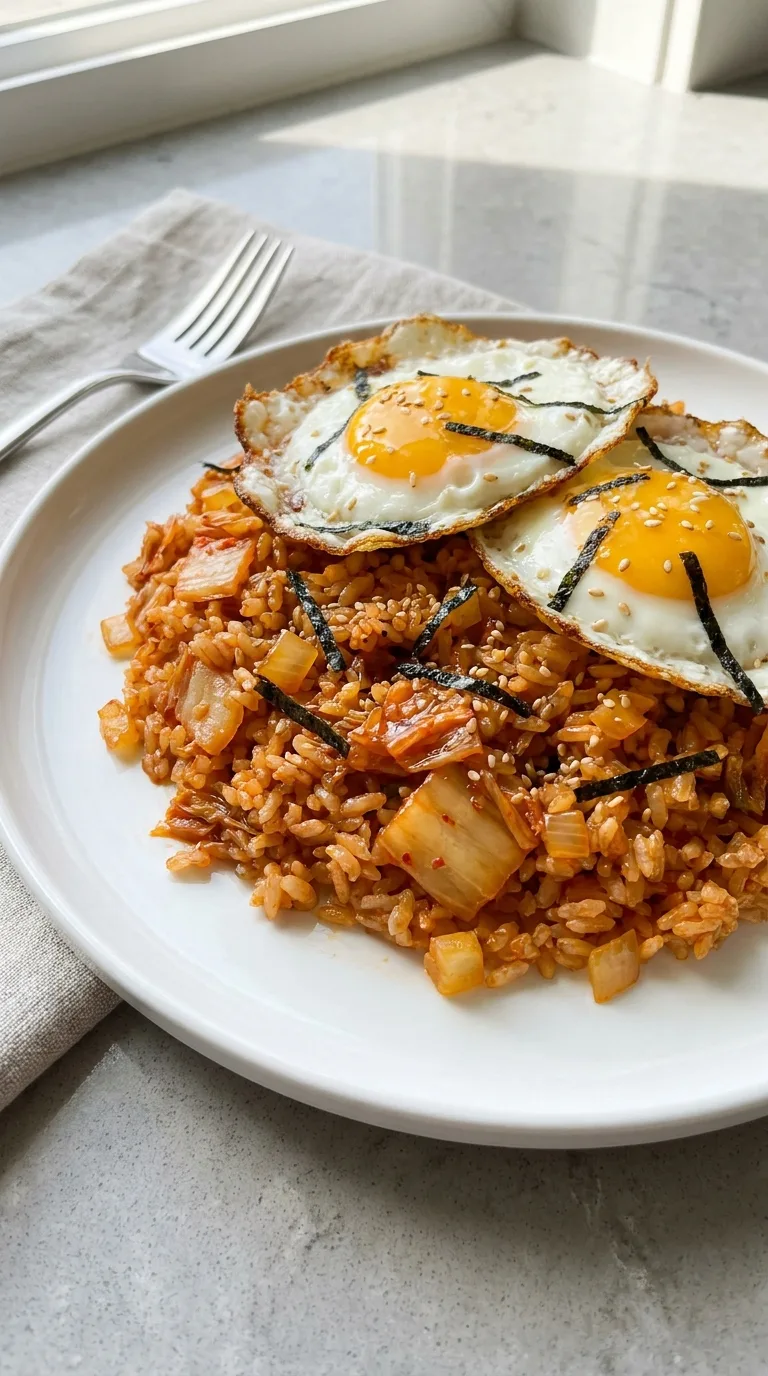
Cold rice works especially well because the grains are firmer and less likely to become mushy during frying. A fried egg on top adds richness, while a final drizzle of sesame oil rounds out the spicy, savory flavors.
Why This Recipe Works
- Chilled cooked rice contains less surface moisture than freshly cooked rice, helping the grains fry instead of steaming together.
- Well-fermented kimchi provides acidity, chile heat, and savory depth without requiring a long list of seasonings.
- Cooking the kimchi before adding the rice concentrates its flavor and removes some excess moisture.
- Gochujang and kimchi juice coat the rice evenly while adding color, spice, and fermented flavor.
- Toasted sesame oil is added near the end so its nutty aroma remains noticeable rather than cooking away.
Equipment Needed
- 12-inch wok or large heavy-bottomed skillet
- Wooden spoon or heat-resistant spatula
- Small bowl
- Nonstick skillet, optional, for frying the eggs separately
- Chef’s knife and cutting board
Ingredients List
For the Kimchi Fried Rice
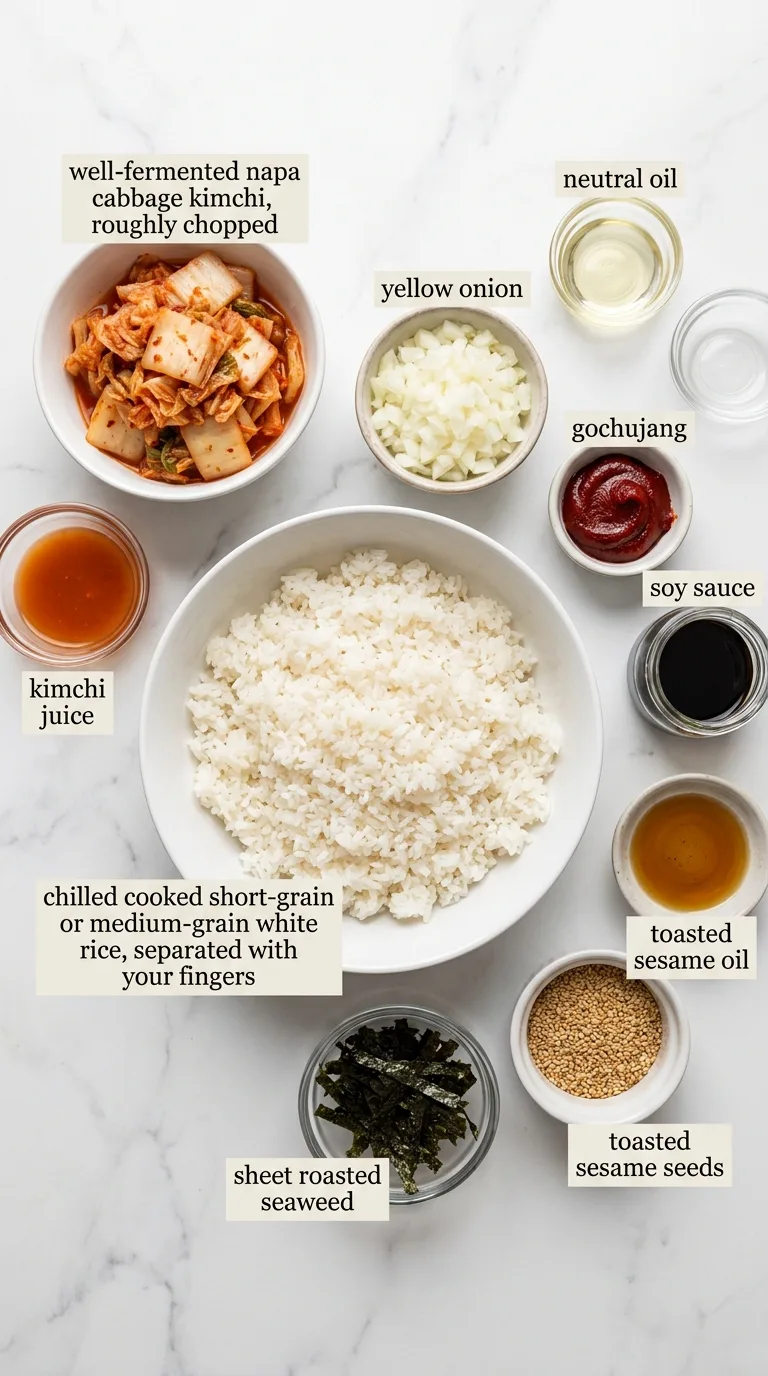
- 4 cups (640 g) chilled cooked short-grain or medium-grain white rice, separated with your fingers
- 1 1/2 cups (225 g) well-fermented napa cabbage kimchi, roughly chopped
- 1/4 cup (60 ml) kimchi juice
- 2 tablespoons (30 ml) neutral oil, such as avocado or canola oil, divided
- 1/2 medium yellow onion, about 3 ounces (85 g), finely diced
- 3 garlic cloves, minced
- 3 green onions, thinly sliced, white and green parts separated
- 1 tablespoon (18 g) gochujang
- 1 tablespoon (15 ml) soy sauce
- 2 teaspoons (10 ml) toasted sesame oil
For the Eggs
- 4 large eggs
- 1 teaspoon (5 ml) neutral oil
Optional Garnishes
- 1 tablespoon (9 g) toasted sesame seeds, optional
- 1 sheet roasted seaweed, about 0.1 ounce (3 g), cut into thin strips, optional
- Additional sliced green onions, optional
Ingredient Notes and Substitutions
- Kimchi: Well-fermented kimchi with a noticeably tangy flavor works especially well because its acidity balances the rich fried rice. Fresh, mild kimchi can be used, but the finished dish will taste less complex and may need a little additional kimchi juice.
- Chilled cooked rice: Cold cooked short-grain or medium-grain rice has a firm texture that fries well. Jasmine rice can also be used, but the grains will be looser and less sticky. Freshly cooked rice should be spread on a tray and cooled before frying so it does not turn mushy.
- Gochujang: Gochujang is a fermented Korean chile paste that contributes heat, sweetness, and savory flavor. There is no direct substitute with the same fermented character. If unavailable, a small amount of another chile paste can provide heat, but the final flavor will be different.
- Soy sauce: Soy sauce adds salt and savory depth. Reduced-sodium soy sauce can be substituted in the same quantity for better control over saltiness.
- Toasted sesame oil: Toasted sesame oil gives the finished rice a concentrated nutty aroma. Regular sesame oil is milder and can be substituted, but the flavor will be less pronounced.
Step-by-Step Instructions
Step 1: Prepare the rice
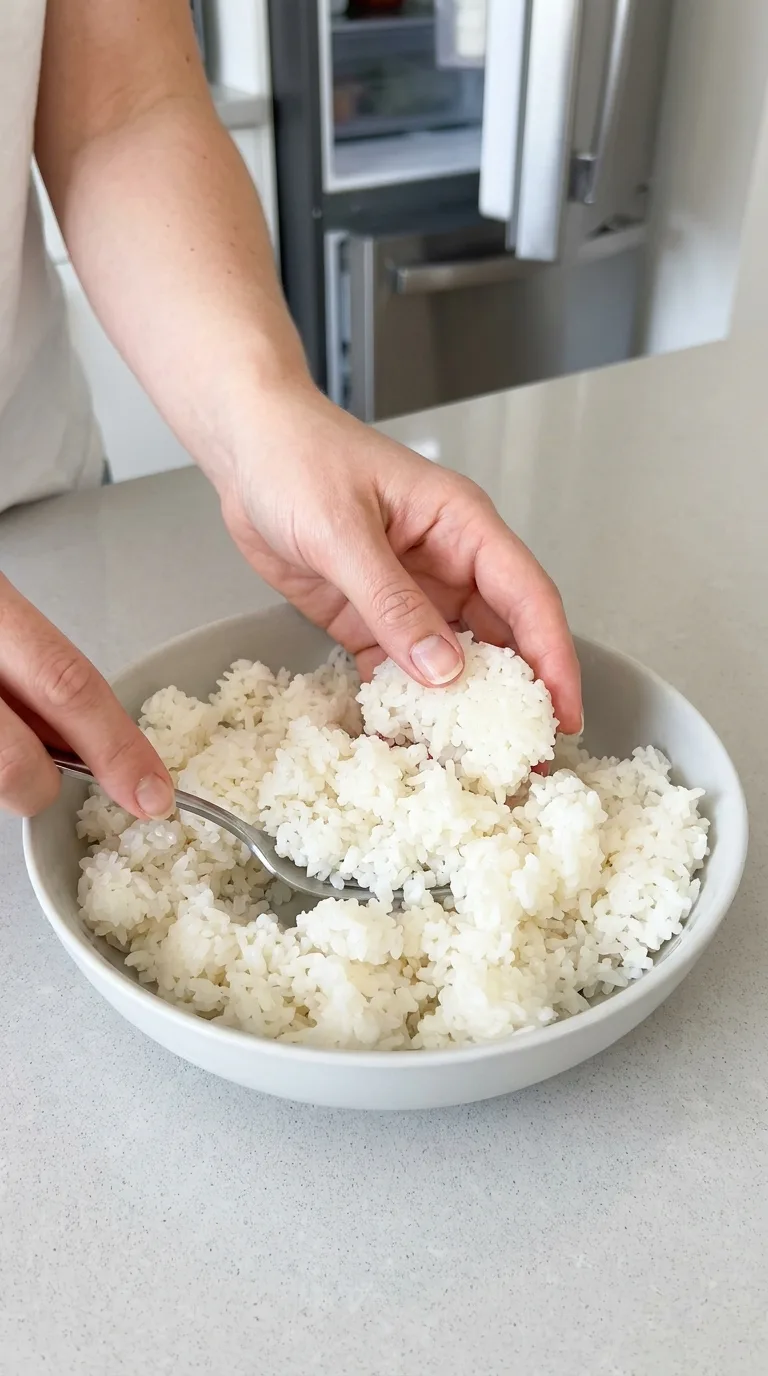
Remove the chilled rice from the refrigerator and break apart any large clumps with clean fingers or a fork. The grains should be loose enough to spread easily through the skillet.
Step 2: Prepare the kimchi mixture
Roughly chop the kimchi into bite-size pieces. In a small bowl, stir together the kimchi juice, gochujang, and soy sauce until the gochujang is mostly dissolved.
Step 3: Heat the skillet
Heat 1 tablespoon (15 ml) neutral oil in a 12-inch wok or skillet over medium-high heat until shimmering.
Step 4: Cook the onion
Add the diced onion and the white parts of the green onions. Cook for 2 to 3 minutes, stirring frequently, until softened and lightly translucent.
Step 5: Add the garlic
Stir in the garlic and cook for about 30 seconds, until fragrant but not browned.
Step 6: Cook the kimchi
Add the chopped kimchi. Cook for 3 to 4 minutes, stirring occasionally, until some moisture evaporates and the edges begin to soften and lightly caramelize.
Step 7: Add the rice
Add the chilled rice and remaining 1 tablespoon (15 ml) neutral oil. Toss and press the rice through the kimchi mixture until the grains are separated and evenly distributed.
Step 8: Season the rice
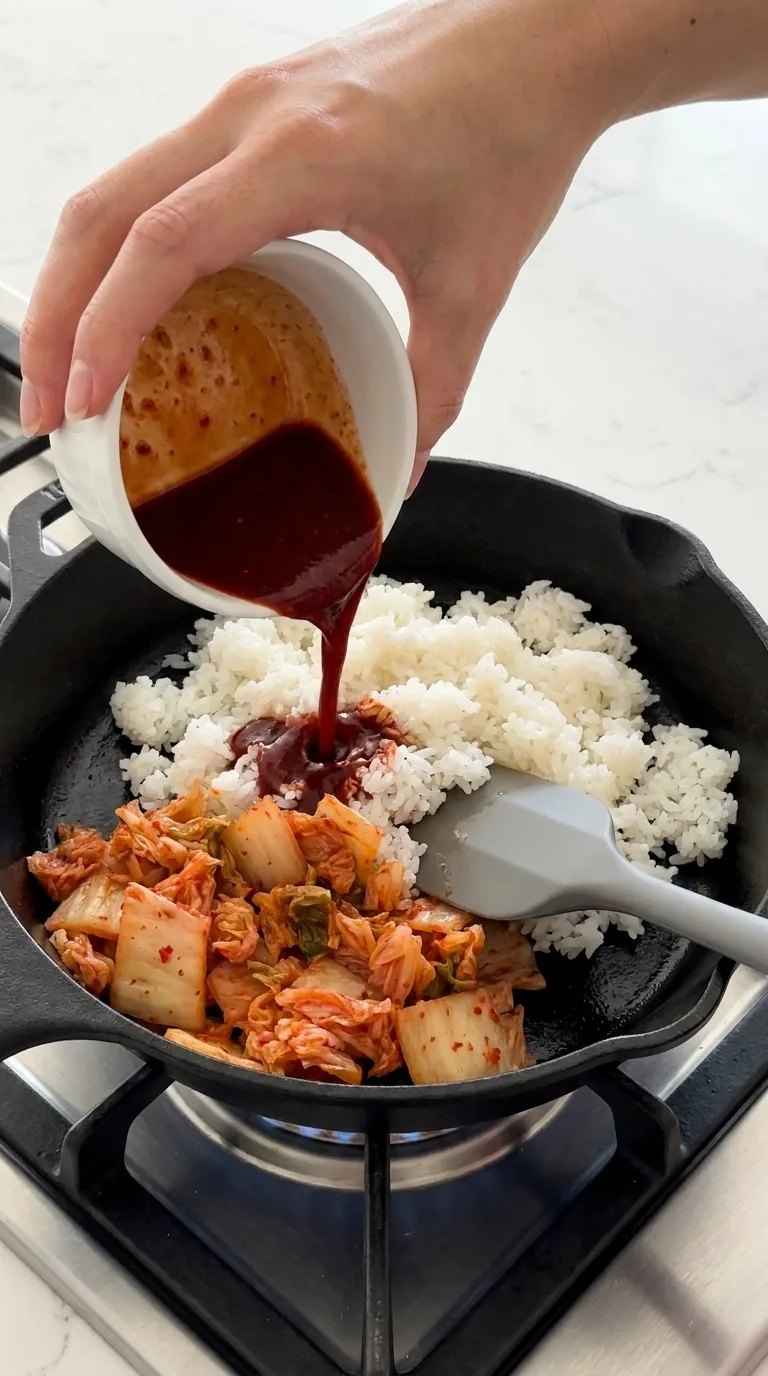
Pour the kimchi juice, gochujang, and soy sauce mixture over the rice. Stir and toss until the grains are evenly coated and turn a warm reddish-orange color.
Step 9: Fry until hot and lightly crisp
Spread the rice into an even layer and let it cook undisturbed for 1 to 2 minutes. Toss, spread it again, and cook for another 1 to 2 minutes. The rice should be steaming hot with a few lightly crisp areas.
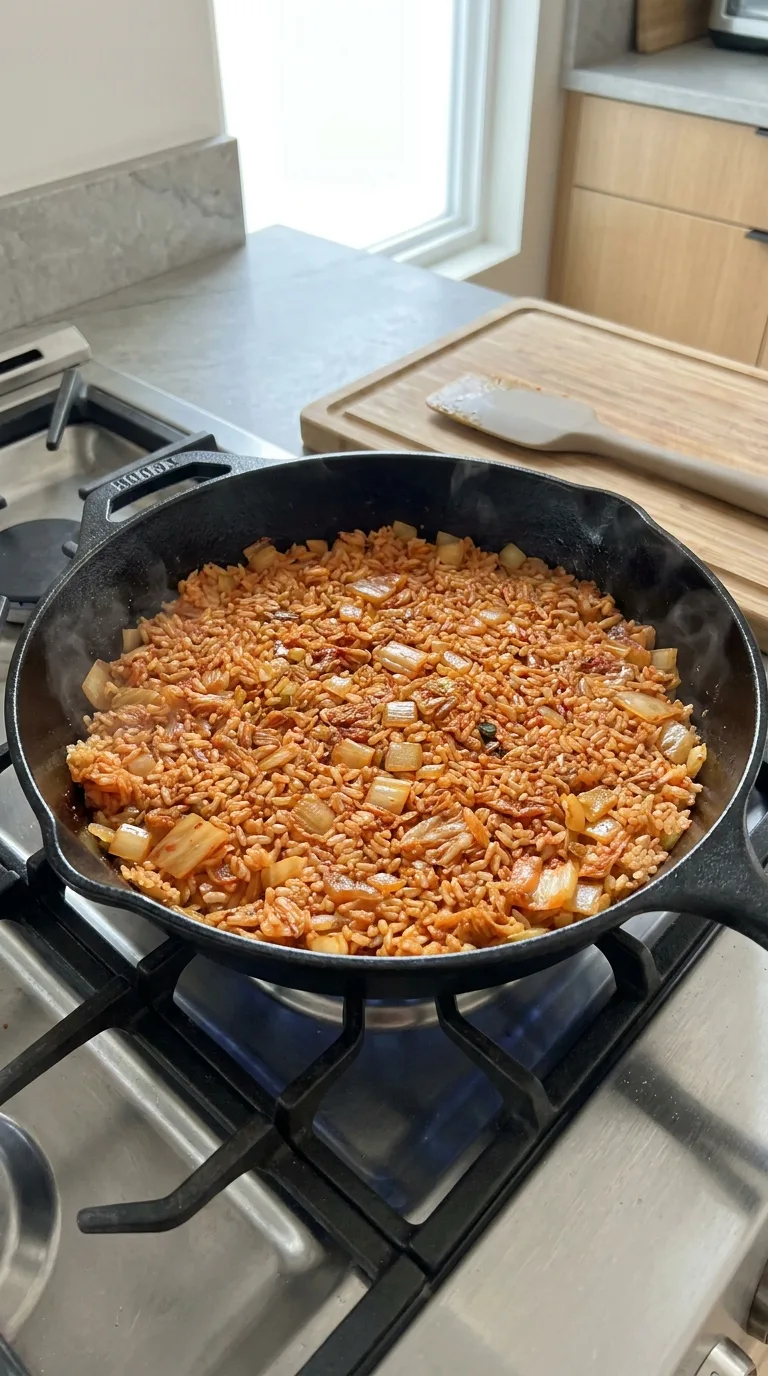
Step 10: Finish with sesame oil
Remove the skillet from direct heat. Stir in the toasted sesame oil and most of the green onion tops, reserving a little for garnish.
Step 11: Fry the eggs
Heat 1 teaspoon (5 ml) neutral oil in a nonstick skillet over medium-low heat. Crack in the eggs and cook until the whites are fully set and the yolks reach the preferred doneness. For fully cooked eggs, cook until the yolks reach 160°F (71°C).
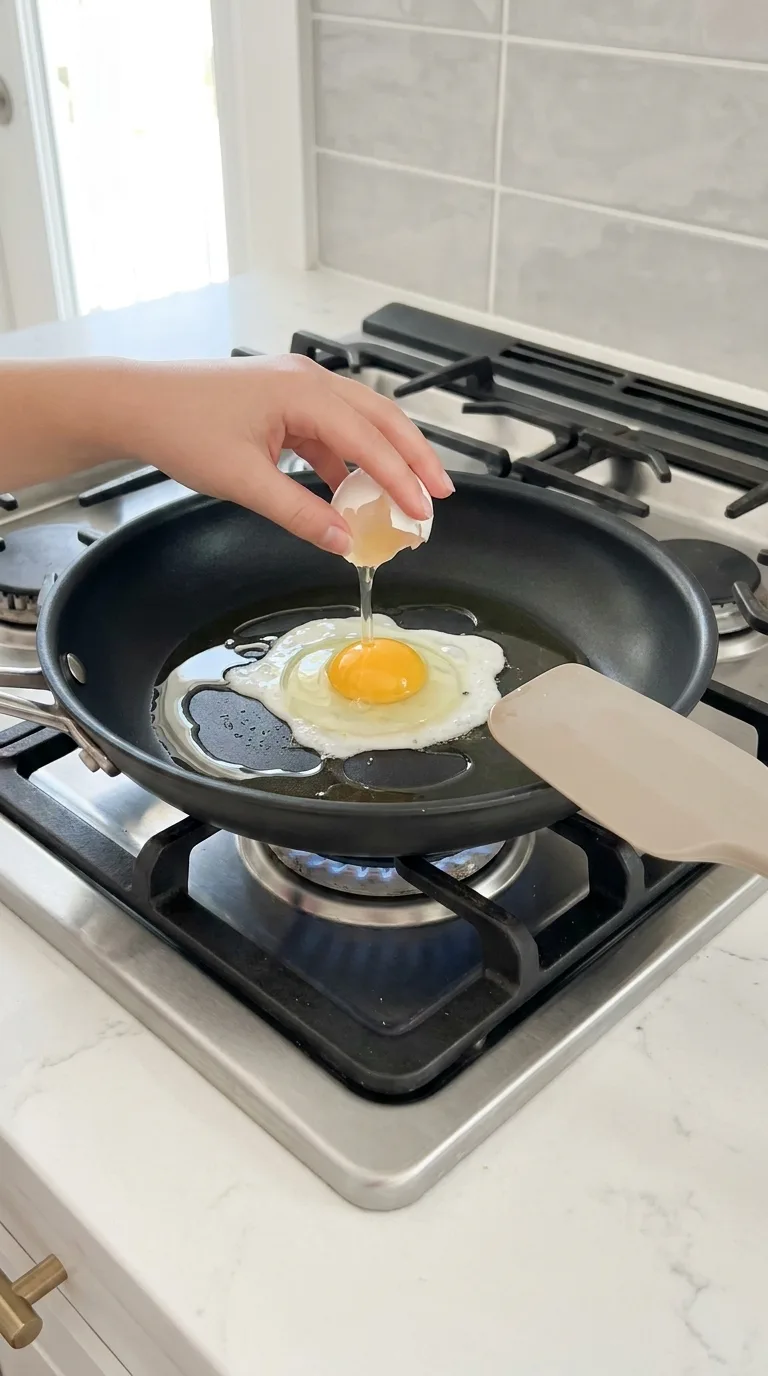
Step 12: Rest briefly
Let the fried rice stand off the heat for about 5 minutes. The grains will settle slightly while remaining hot.
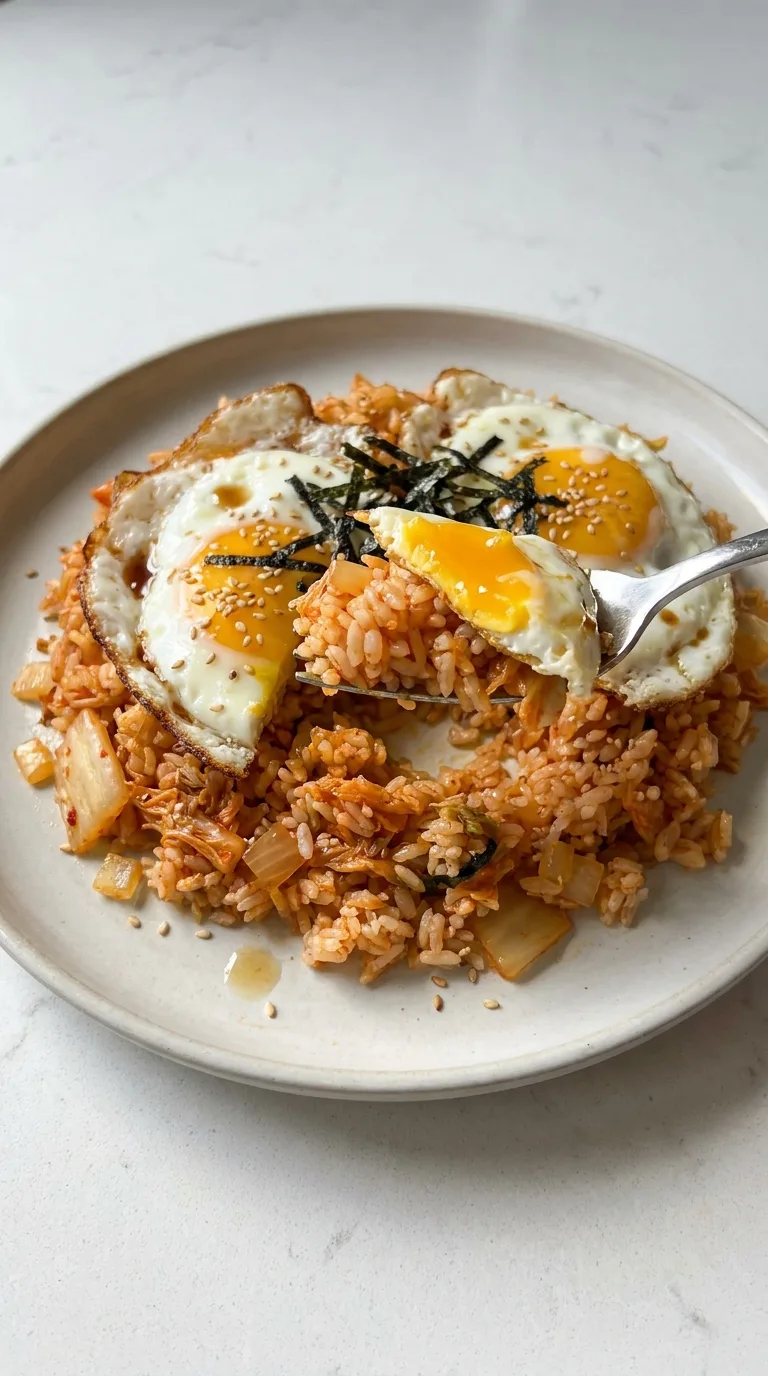
Step 13: Serve
Divide the kimchi fried rice among four bowls or plates and top each portion with one fried egg.
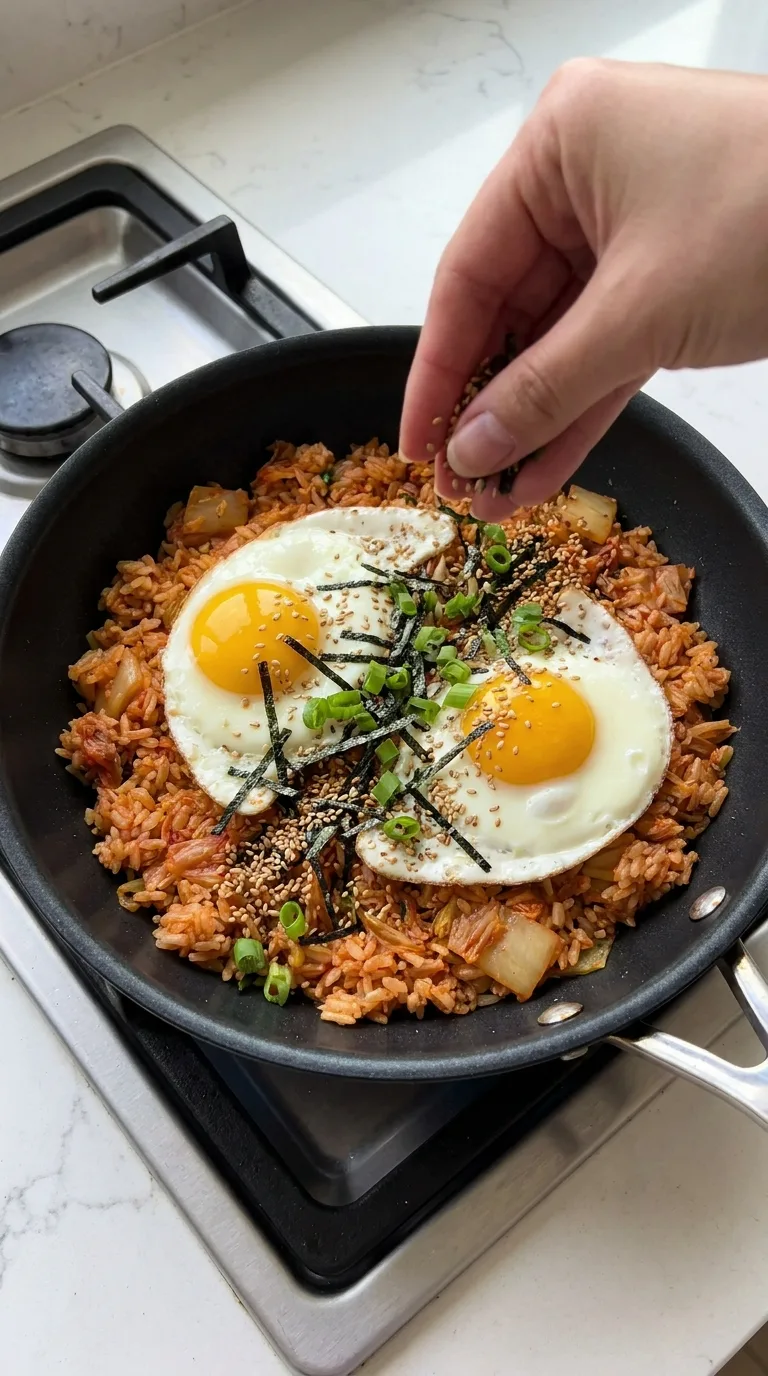
Step 14: Garnish
Sprinkle with sesame seeds, roasted seaweed strips, and the reserved green onions as desired. Serve immediately.
Storage, Freezing, and Make-Ahead Instructions
- Cool leftover Kimchi Fried Rice promptly and transfer it to an airtight container within 2 hours of cooking. Refrigerate for up to 4 days.
- Store leftover fried eggs separately when possible. Reheat the rice in a skillet over medium heat with 1 to 2 teaspoons of water or neutral oil, stirring until it is steaming hot and reaches 165°F (74°C).
- Kimchi Fried Rice can be frozen without the eggs. Cool it completely, portion it into freezer-safe containers, and freeze for up to 2 months. Thaw overnight in the refrigerator or reheat directly from frozen until thoroughly hot.
- For make-ahead preparation, cook the rice up to 1 day ahead, cool it promptly, and refrigerate it in a shallow airtight container. Chop the kimchi and green onions several hours ahead and keep them refrigerated separately.
FAQ
Can I make Kimchi Fried Rice with freshly cooked rice?
Yes, but spread the hot rice on a large tray and let excess steam escape before frying. Chilled rice is easier to separate and usually produces a less sticky texture.
Why is my kimchi fried rice soggy?
The rice may have been too warm, the kimchi may have contained excessive liquid, or the skillet may have been overcrowded. Use cold rice and cook the kimchi until some moisture evaporates before adding the grains.
Can I make Kimchi Fried Rice without gochujang?
Yes. Omit it and use the kimchi juice and soy sauce as written. The rice will be less spicy and slightly less sweet, but the fermented kimchi flavor will remain prominent.
Can I add protein?
Yes. Cooked diced chicken, pork, beef, tofu, or shrimp can be added before the rice. Any raw meat or seafood should be cooked safely before being combined with the finished rice.
Can I make this recipe less spicy?
Use mild kimchi and reduce the gochujang to 1 teaspoon (6 g). You can also reduce the kimchi juice slightly and replace the difference with water.
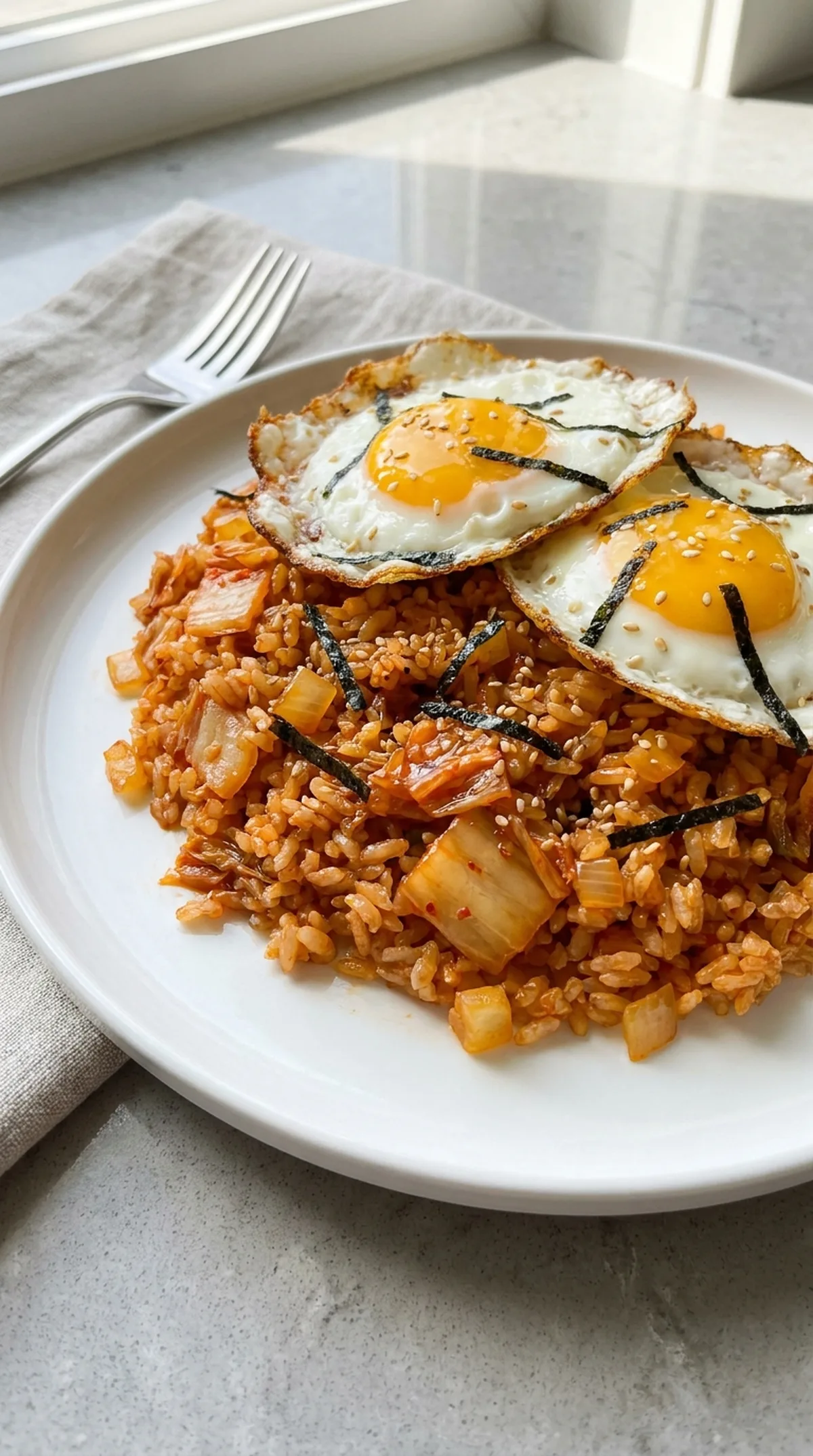
Kimchi Fried Rice with Fried Eggs
Ingredients
Method
- Remove the chilled rice from the refrigerator and break apart any large clumps with clean fingers or a fork. The grains should be loose enough to spread easily through the skillet.
- Roughly chop the kimchi into bite-size pieces: In a small bowl, stir together the kimchi juice, gochujang, and soy sauce until the gochujang is mostly dissolved.
- Heat 1 tablespoon (15 ml) neutral oil in a 12-inch wok or skillet over medium-high heat until shimmering.
- Add the diced onion and the white parts of the green onions. Cook for 2 to 3 minutes, stirring frequently, until softened and lightly translucent.
- Stir in the garlic and cook for about 30 seconds, until fragrant but not browned.
- Add the chopped kimchi: Cook for 3 to 4 minutes, stirring occasionally, until some moisture evaporates and the edges begin to soften and lightly caramelize.
- Add the chilled rice and remaining 1 tablespoon (15 ml) neutral oil. Toss and press the rice through the kimchi mixture until the grains are separated and evenly distributed.
- Pour the kimchi juice, gochujang, and soy sauce mixture over the rice. Stir and toss until the grains are evenly coated and turn a warm reddish-orange color.
- Spread the rice into an even layer and let it cook undisturbed for 1 to 2 minutes. Toss, spread it again, and cook for another 1 to 2 minutes. The rice should be steaming hot with a few lightly crisp areas.
- Remove the skillet from direct heat: Stir in the toasted sesame oil and most of the green onion tops, reserving a little for garnish.
- Heat 1 teaspoon (5 ml) neutral oil in a nonstick skillet over medium-low heat. Crack in the eggs and cook until the whites are fully set and the yolks reach the preferred doneness. For fully cooked eggs, cook until the yolks reach 160°F (71°C).
- Let the fried rice stand off the heat for about 5 minutes. The grains will settle slightly while remaining hot.
- Divide the kimchi fried rice among four bowls or plates and top each portion with one fried egg.
- Sprinkle with sesame seeds, roasted seaweed strips, and the reserved green onions as desired. Serve immediately.