Thai Coconut Curry Mussels are tender steamed mussels served in a creamy, savory broth made with coconut milk, Thai red curry paste, ginger, garlic, fish sauce, and fresh lime. The broth is rich and gently spicy, while lime and cilantro keep every spoonful fresh and bright.
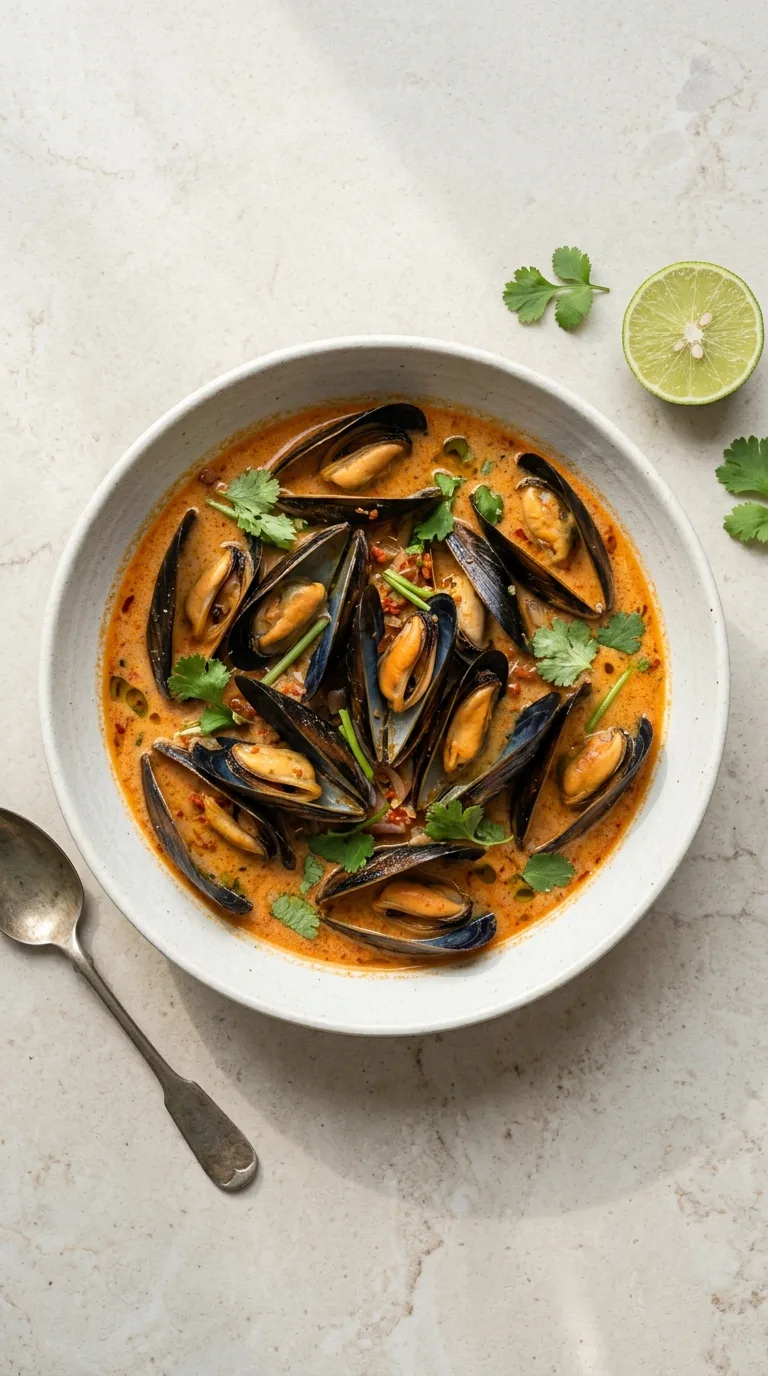
The mussels steam directly in the curry broth, so they cook quickly while releasing their flavorful juices into the sauce. Full-fat coconut milk softens the heat of the curry paste, and adding the lime juice after cooking keeps its flavor lively. Don't worry if the broth looks thin at first; it becomes flavorful as the mussels open and release their juices.
Recipe at a Glance
- Prep Time: 15 minutes
- Cook Time: 15 minutes
- Total Time: 30 minutes
- Yield: 2 pounds steamed mussels
- Servings: 2
- Difficulty: Easy
What You Need Before You Start
- 5 1/2- to 6-quart (5.2- to 5.7-liter) Dutch oven or heavy pot with lid
- Fine-mesh strainer or colander
- Cutting board
- Chef's knife
- Measuring cups and measuring spoons
- Wooden spoon or heatproof spatula
- Instant-read food thermometer
Ingredients and Helpful Swaps
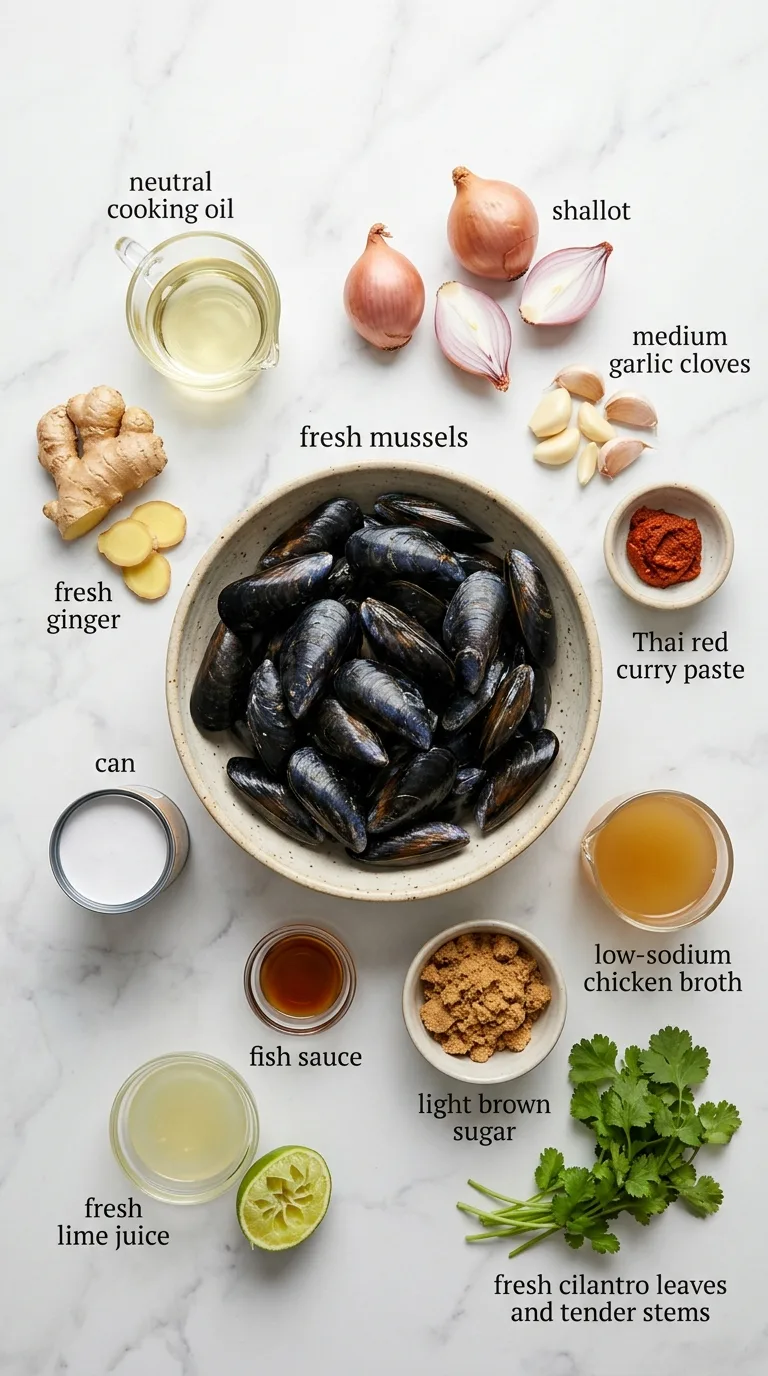
- ■ 2 pounds (907 g) fresh mussels, scrubbed and debearded
- ■ 1 tablespoon (15 ml) neutral cooking oil
- ■ ½ cup (75 g) shallot, finely diced
- ■ 3 medium garlic cloves (9 g), minced
- ■ 1 tablespoon (6 g) fresh ginger, finely grated
- ■ 2 tablespoons (30 g) Thai red curry paste
- ■ 1 can, 13.5 ounces (400 ml), full-fat unsweetened coconut milk, stirred
- ■ ½ cup (120 ml) low-sodium chicken broth
- ■ 1 tablespoon (15 ml) fish sauce
- ■ 1 teaspoon (4 g) light brown sugar, packed
- ■ 2 tablespoons (30 ml) fresh lime juice
- ■ ¼ cup (10 g) fresh cilantro leaves and tender stems, roughly chopped
- Thai red curry paste: It provides the main chile, herb, and spice flavor in the broth. Substitution: Use yellow Thai curry paste in the same amount for a milder, earthier curry.
- Full-fat coconut milk: It creates the creamy broth and balances the curry paste. Substitution: Use light coconut milk in the same amount; the sauce will be noticeably thinner and less rich.
- Fish sauce: It adds saltiness and savory depth that works especially well with shellfish. Substitution: Use an equal amount of low-sodium soy sauce; the broth will have a different but still savory flavor.
How to Make Thai Coconut Curry Mussels
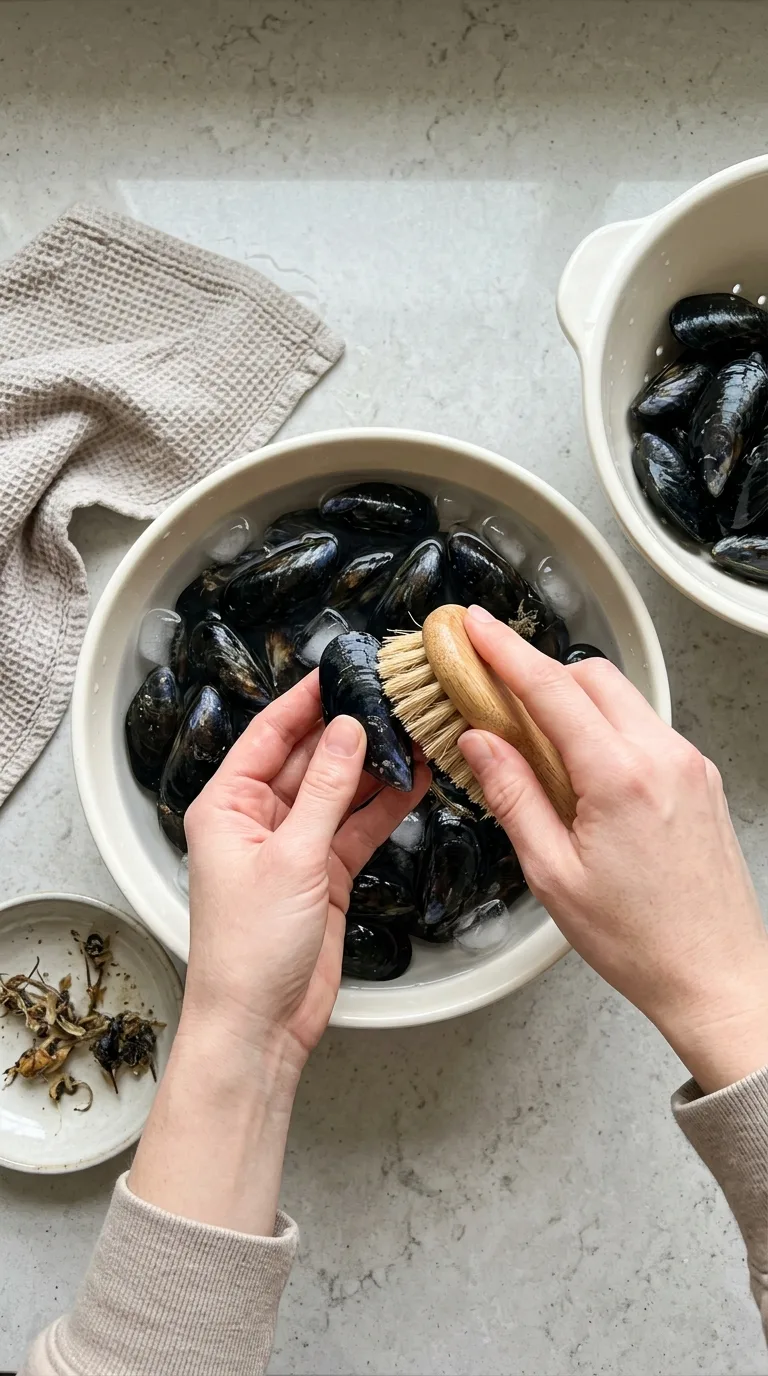
- Keep the mussels cold while you scrub and debeard them for about 5 minutes. Discard any cracked mussels and any open mussels that don't close when gently tapped; the remaining shells should be intact and closed before cooking.

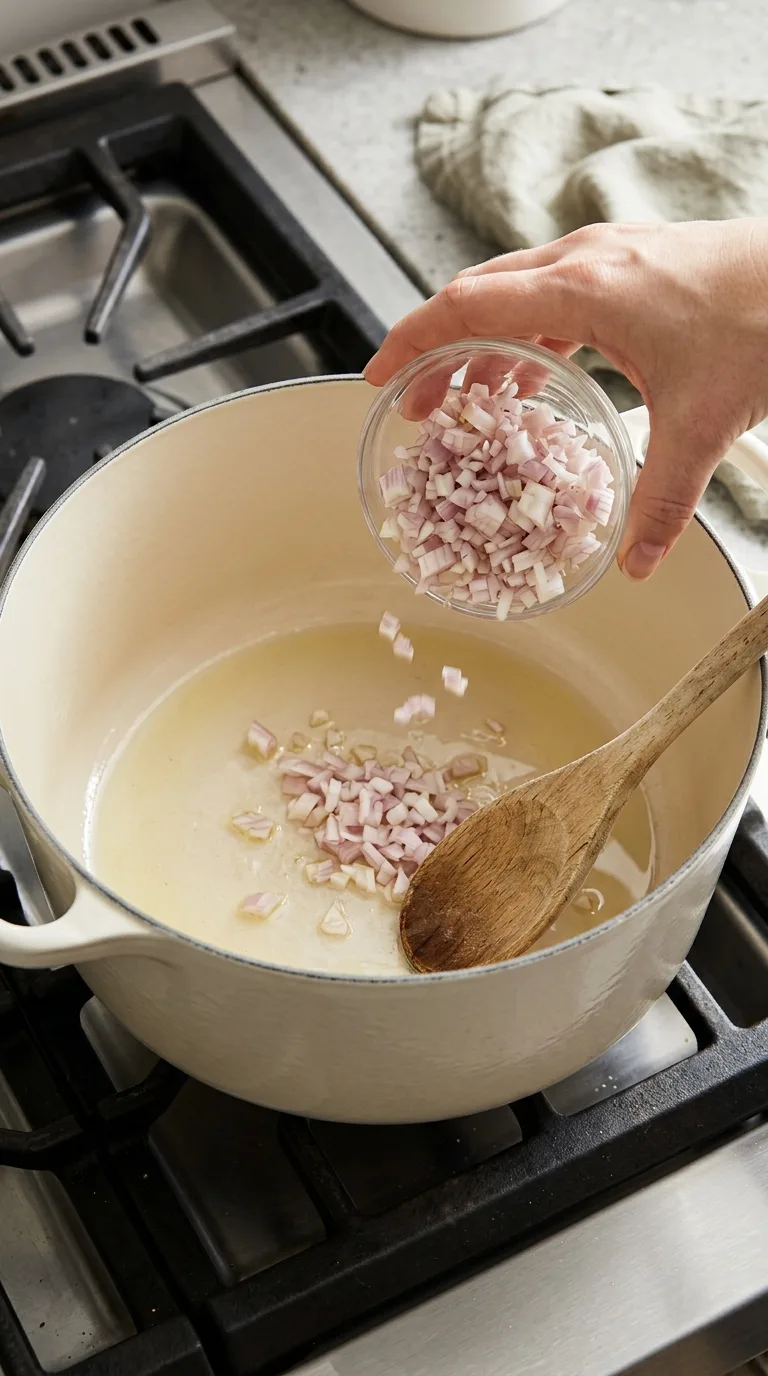
- Heat the oil in the Dutch oven over medium heat for about 30 seconds, then add the shallot. Cook for 3 to 4 minutes, stirring occasionally, until softened and translucent without browning.
- Add the garlic, ginger, and red curry paste and cook over medium heat for 1 minute, stirring constantly. The mixture should smell fragrant and the curry paste should be evenly distributed through the shallot.
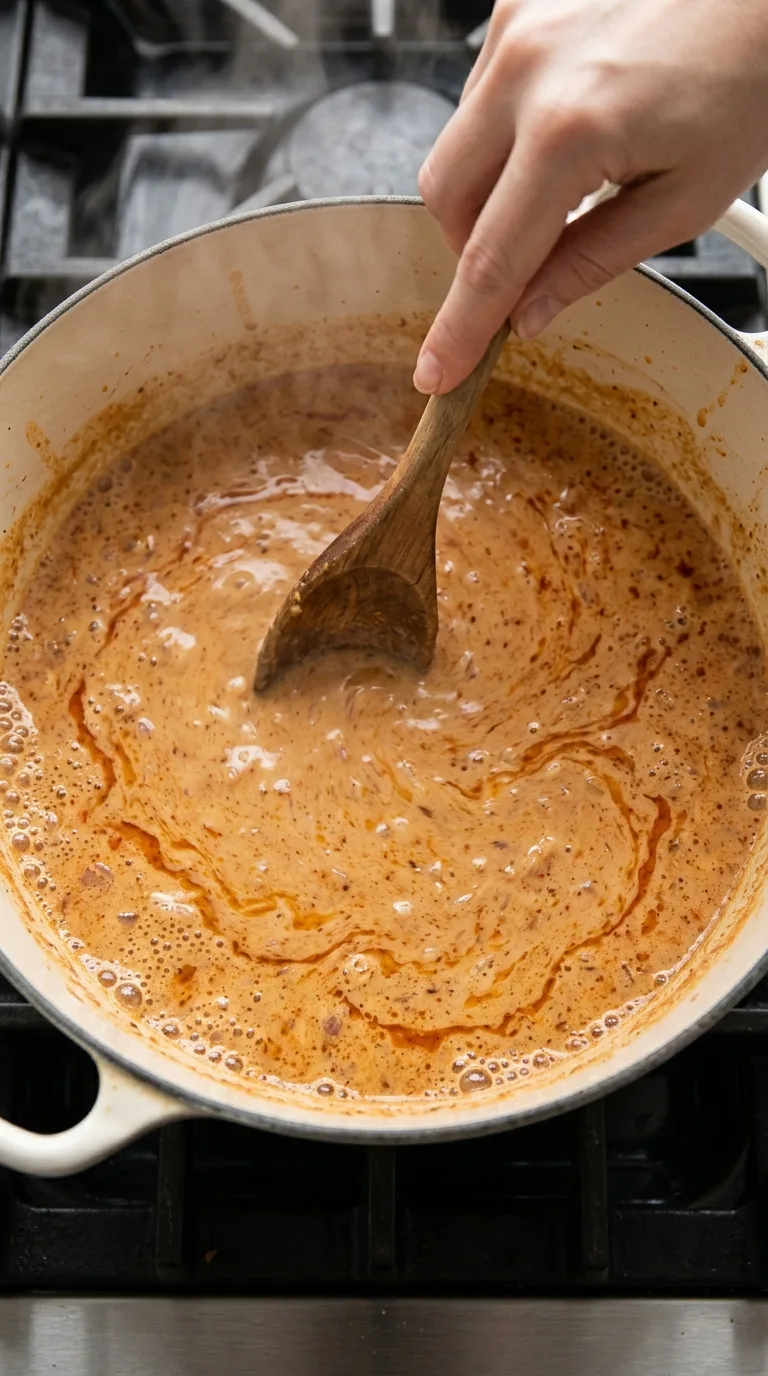
- Stir in the coconut milk, chicken broth, fish sauce, and brown sugar. Bring the mixture to a gentle simmer over medium-high heat and cook for 2 minutes, until the sugar is dissolved and the broth is steaming with small bubbles around the edges.
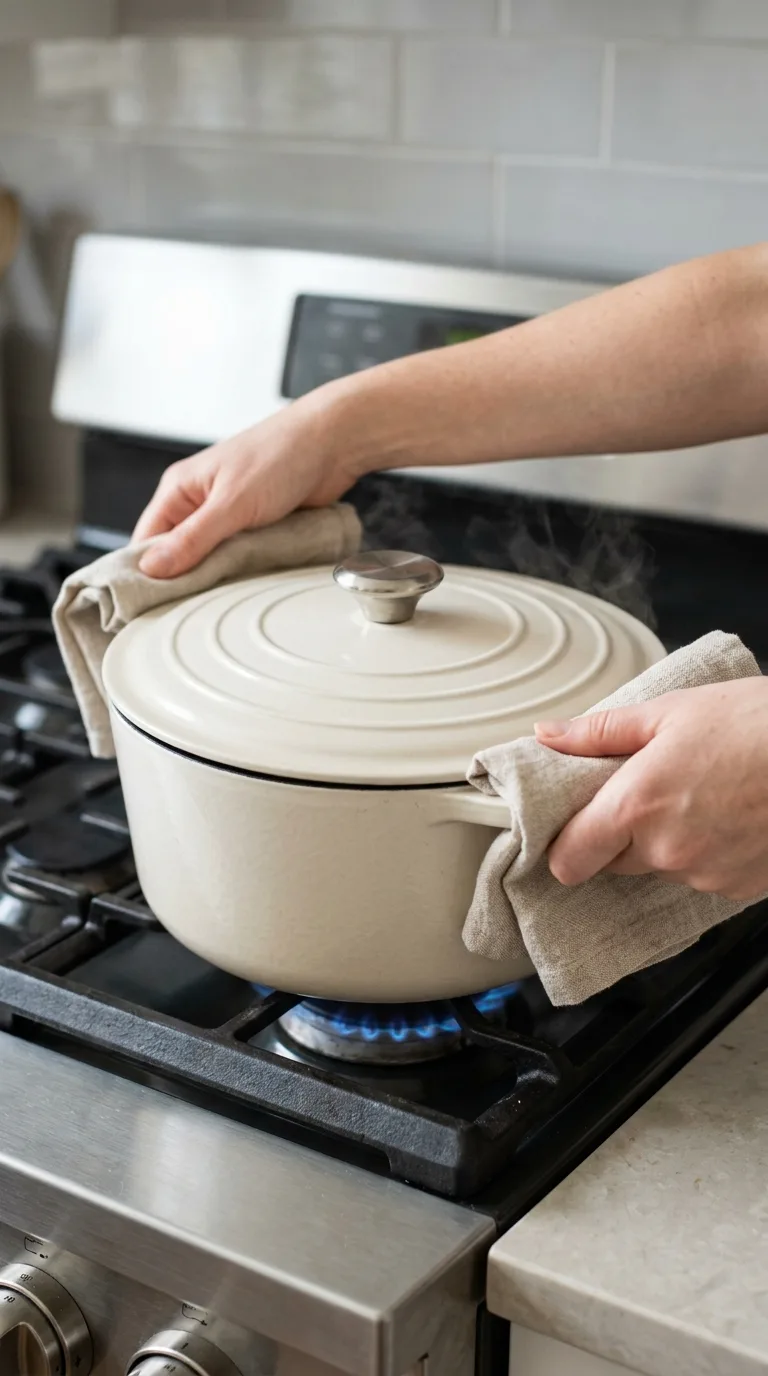
- Add the cleaned mussels, stir once, and cover the pot. Cook over medium-high heat for 4 to 6 minutes, shaking the covered pot once halfway through, until the shells have opened and the mussels reach 145°F (63°C).
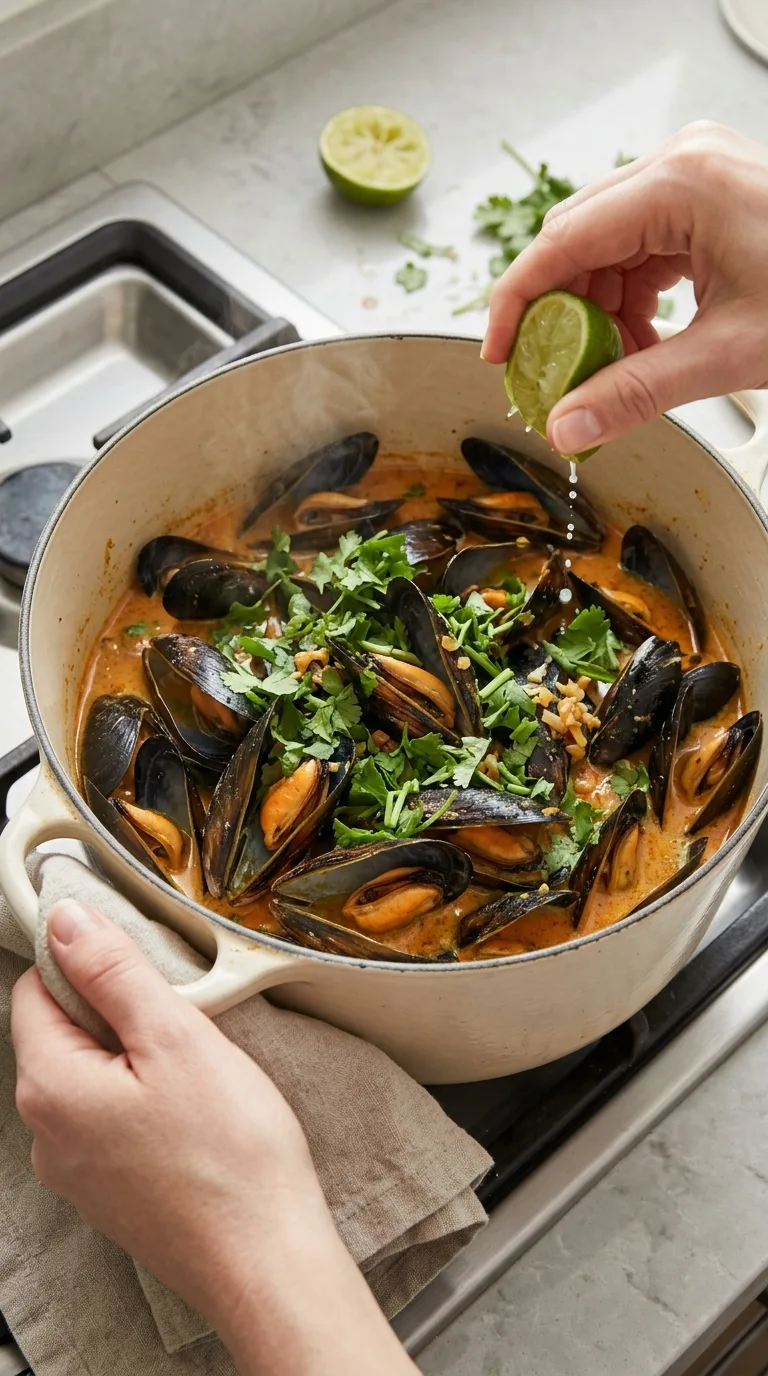
- Remove the pot from the heat and discard any mussels that remain closed after cooking. Stir in the lime juice and cilantro for about 30 seconds; the broth should look creamy and the cilantro should just begin to wilt.
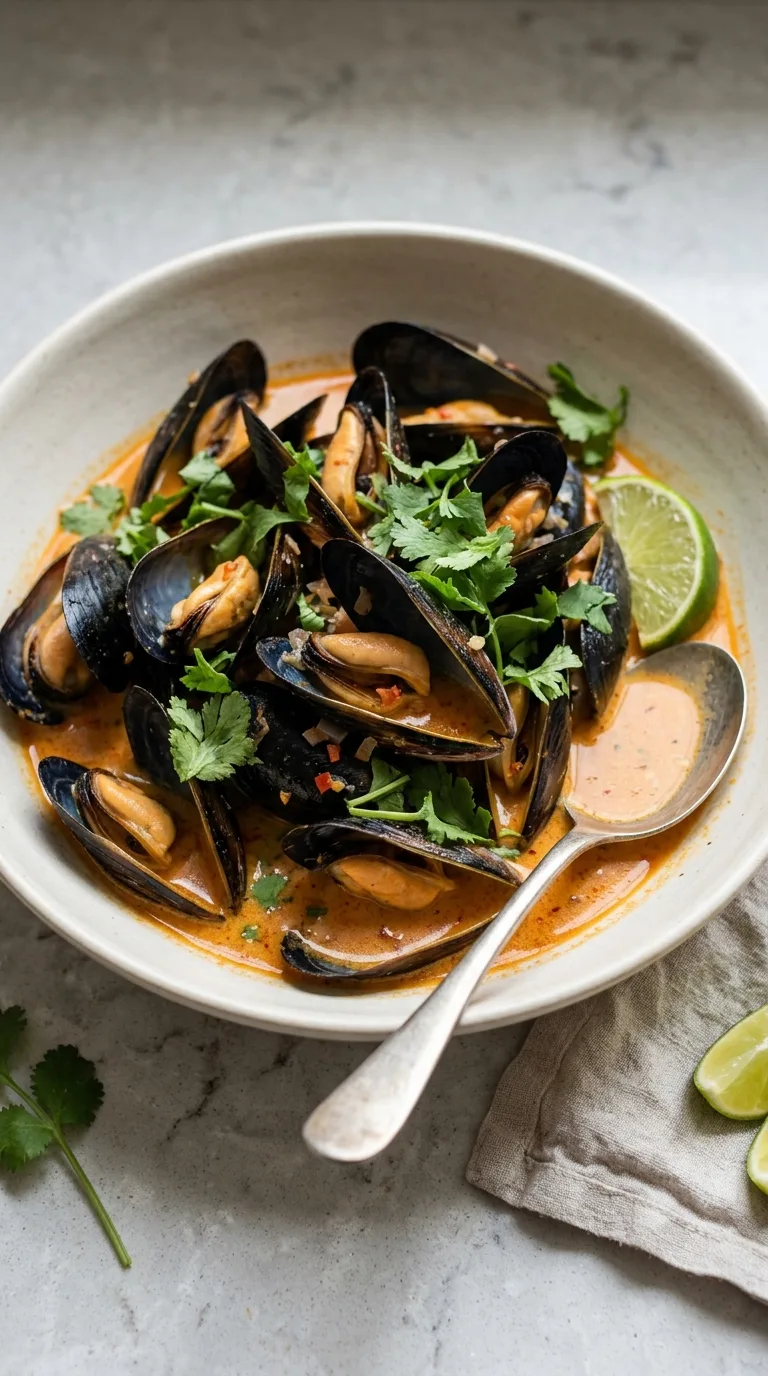
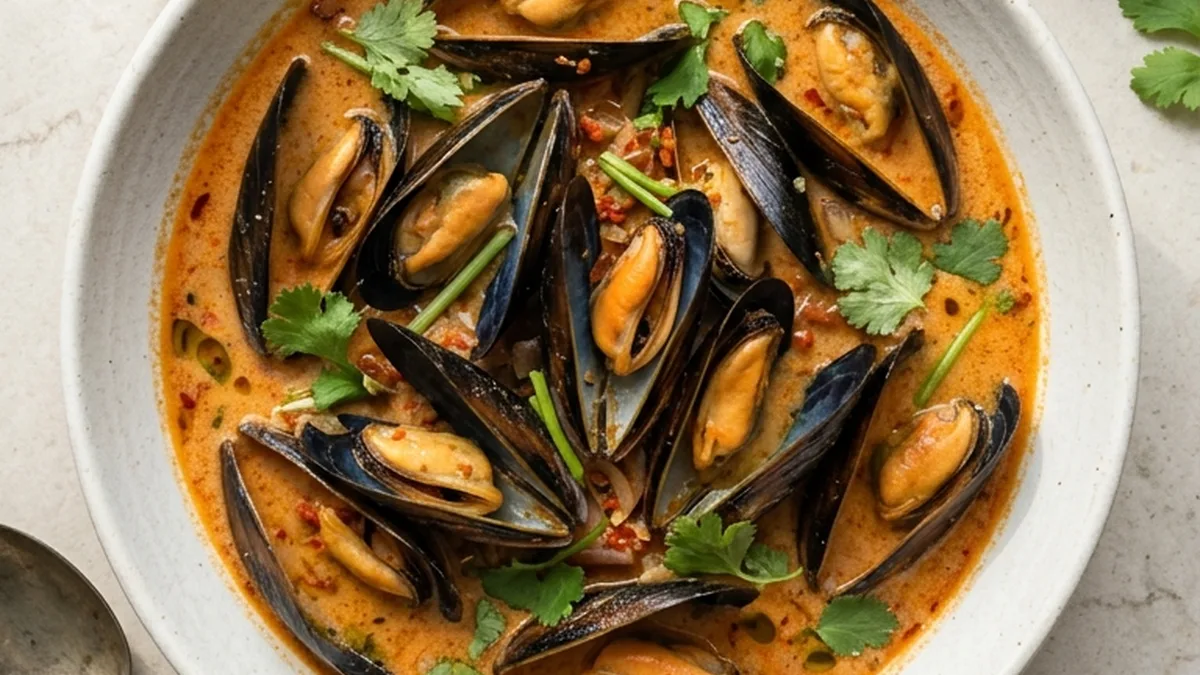
- Divide the mussels and hot curry broth between two bowls immediately, taking about 1 minute to portion them evenly. Serve while the broth is still steaming and the mussels are tender and fully opened.
Why You Will Love This Recipe
- Thai red curry paste blooms briefly in hot oil, helping its chile, herb, and spice flavors spread evenly through the coconut broth. You'll know it's ready when it smells noticeably fragrant.
- Full-fat coconut milk gives the sauce enough richness to balance the spicy curry paste and salty fish sauce without making the broth heavy.
- Cooking the mussels covered in simmering liquid surrounds them with steam so they open quickly and stay tender. Don't keep cooking them once they've opened or they can become chewy.
Storage and Make-Ahead Tips
- Refrigerator: Remove leftover mussels from their shells and refrigerate them with the curry broth in a shallow airtight container within 2 hours of cooking. Keep refrigerated for up to 3 days; if anything smells unusual, don't use it.
- Freezer: Cooked mussel meat can be removed from the shells and frozen submerged in the cooled curry broth in an airtight freezer container for up to 2 months. Thaw overnight in the refrigerator before reheating; the mussels may be slightly softer after freezing.
- Make-ahead and reheating: The coconut curry broth can be prepared without the mussels, lime juice, or cilantro up to 2 days ahead and refrigerated. Reheat the broth to a simmer before cooking fresh mussels in it; for cooked leftovers, heat gently on the stovetop until the mussels and broth reach 165°F (74°C), then stir in fresh lime juice and cilantro.
Common Questions
How do you know when mussels are cooked?
The shells should open after about 4 to 6 minutes of covered steaming, and the shellfish should reach 145°F (63°C). Discard mussels that remain closed after cooking.
Do you need to soak mussels before cooking?
No, commercially sold mussels generally only need to be rinsed, scrubbed, and debearded. Keep them cold while cleaning, and don't leave them sitting in fresh water.
Can I make Thai coconut curry mussels less spicy?
Yes. Use 1 tablespoon of Thai red curry paste instead of 2 tablespoons; you'll still get curry flavor with noticeably less heat.
What can I serve with coconut curry mussels?
Steamed jasmine rice or crusty bread works well for soaking up the coconut curry broth. Keep the side simple because the broth already has plenty of flavor.
Thai Coconut Curry Mussels
Ingredients
Method
- Keep the mussels cold while you scrub and debeard them for about 5 minutes. Discard any cracked mussels and any open mussels that don't close when gently tapped; the remaining shells should be intact and closed before cooking.
- Heat the oil in the Dutch oven over medium heat for about 30 seconds, then add the shallot. Cook for 3 to 4 minutes, stirring occasionally, until softened and translucent without browning.
- Add the garlic, ginger, and red curry paste and cook over medium heat for 1 minute, stirring constantly. The mixture should smell fragrant and the curry paste should be evenly distributed through the shallot.
- Stir in the coconut milk, chicken broth, fish sauce, and brown sugar. Bring the mixture to a gentle simmer over medium-high heat and cook for 2 minutes, until the sugar is dissolved and the broth is steaming with small bubbles around the edges.
- Add the cleaned mussels, stir once, and cover the pot. Cook over medium-high heat for 4 to 6 minutes, shaking the covered pot once halfway through, until the shells have opened and the mussels reach 145°F (63°C).
- Remove the pot from the heat and discard any mussels that remain closed after cooking. Stir in the lime juice and cilantro for about 30 seconds; the broth should look creamy and the cilantro should just begin to wilt.
- Divide the mussels and hot curry broth between two bowls immediately, taking about 1 minute to portion them evenly. Serve while the broth is still steaming and the mussels are tender and fully opened.